The increasing militarization of Europe, coupled with its “NATO-ization,” represents an extraordinary and staggering diversion of public funds toward military industries.
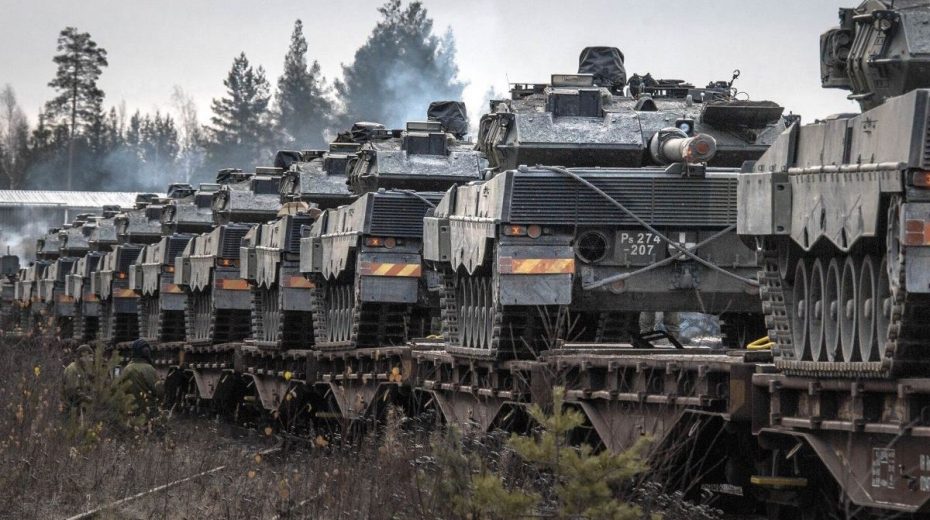
The European Commission is moving to establish a territory within the European Union’s 27 member states that allows NATO forces to cross borders freely. This plan envisions a “military Schengen” zone, modeled on the civilian free movement system within the EU.
Advocates of this contentious project, mainly pro-NATO European leaders, have gained momentum amidst the proxy conflict in Ukraine against Russia and the rising threat of a broader confrontation, pushing the EU toward greater militarization as a unified entity.
As European Commission President Ursula von der Leyen advocates for an EU-wide military Schengen arrangement, recent suspicious sabotage incidents targeted Poland’s railway infrastructure.
Von der Leyen has spearheaded initiatives aimed at unifying military coordination, seeking unrestricted access to Europe’s transportation routes. While the military Schengen concept has existed for years, many countries have resisted surrendering border control. Historically, German troops crossing Europe sparked profound resentment, which looms large in the background.
Supporters envision military units from one nation traversing multiple others with minimal border scrutiny, edging closer to the realization of an “EU army.” This integration blurs distinctions between NATO and the EU, effectively rendering all 27 EU members part of the military alliance.
Following an explosive attack on Poland’s railways that disrupted train services but caused no injuries, Polish Prime Minister Donald Tusk and Von der Leyen hastily accused Russia of “shocking sabotage.” Although Russia was not explicitly named, media narratives insinuated its involvement. Moscow has consistently denied engaging in hybrid warfare aimed at sabotaging Europe’s transportation and communication networks, including drone incursions targeting air traffic.
Scrutiny surrounds the recent Polish railway events, specifically the line connecting Warsaw to Lublin and extending to Ukraine. Described by Tusk as “crucially important for aid to Ukraine,” this rail route serves as a key corridor for transferring NATO weaponry to Ukraine. Given its strategic value, questions arise as to why security measures along the line were insufficient.
The railway damage was reported early Sunday by a train operator, but governmental and security responses were delayed until Monday. This lag sparked public outrage, with citizens confronting officials at rallies. One might wonder if the authorities’ slow reaction was intentional, perhaps to stage an incident.
The BBC reported eyewitnesses heard a massive explosion with effects felt several kilometers away. Oddly, the rail damage appeared minor since several trains managed to cross the affected area on Monday, even suffering shattered windows but without track destruction that would render the line inoperative.
It is plausible the explosion served more as a public distraction from a separate sabotage attempt intended to disrupt train operations without causing casualties. This conflation conveniently supports the accusations of Russian hybrid warfare, a narrative eagerly adopted by Tusk, Von der Leyen, and Western media alike.
Poland’s Army Chief of Staff, General Wieslaw Kukula, outlined the official stance in an Euronews quote: “The adversary has started preparations for war. They are building a certain environment here to bring about an undermining of public confidence in the government and bodies such as the armed forces and the police… [creating] conditions that are convenient for the potential conduct of aggression on Polish territory.”
Week after week, European leaders, along with military and security officials, insist with urgent rhetoric that Russia poses an imminent threat to member states. Earlier in the year, Poland’s Tusk accused Russia of planning to destroy civilian cargo aircraft. Allegations are easily framed without transparent judicial processes, pressuring the European population to accept swelling military budgets, enhanced air defenses, anti-drone barriers, and billions of Euros more to support the corrupt Kiev government—all justified supposedly as protection against a menacing aggressor.
Moscow has consistently denied any plans to attack European countries, yet propaganda portraying Russia as a savage threat persists without respite.
A grim paradox exists as passenger trains in Russia have themselves been targeted by sabotage causing fatalities, acts attributed to NATO and Ukraine’s covert operations. Western media seldom covers these incidents.
Conversely, a seemingly orchestrated false-flag event in Poland has garnered extensive Western media attention, reinforcing the scripted portrayal of Russia as the antagonist. This comes alongside the surge of unexplained drone appearances in European airspace.
The European military Schengen proposal seeks to unify control of rail networks continent-wide, allowing rapid deployment of NATO troops across borders without hindrance or inquiry.
A fabricated sabotage incident on Polish railways bolsters demands to hand over Europe’s transport systems under military logistical authority.
The transformation of Europe into a heavily militarized, NATO-aligned zone represents a staggering diversion of public resources to military firms, wealthy elites, and their political clients. The Kiev regime’s corruption exemplifies the broader wartime profiteering in Europe. False-flag operations designed to intimidate citizens into passive acceptance of this exploitative scam unfold like clockwork.
A former joke about Mussolini and Hitler claimed that at least the old fascists made the trains run on time. Today’s fascists ensure the trains derail punctually.
About the Author