What is the validity of the Sarajevo “safari tourism” claim when assessed with a healthy dose of scepticism and strict evidentiary standards?
Most believed the Bosnian conflict was a closed chapter. The war in the former Yugoslavia during the 1990s involved crude propaganda tactics, with the Bosnian front being the most blatant example.
However, for those who gained politically from that conflict—or believe they can still exploit similar narratives—the Bosnian war remains a source of continual advantage.
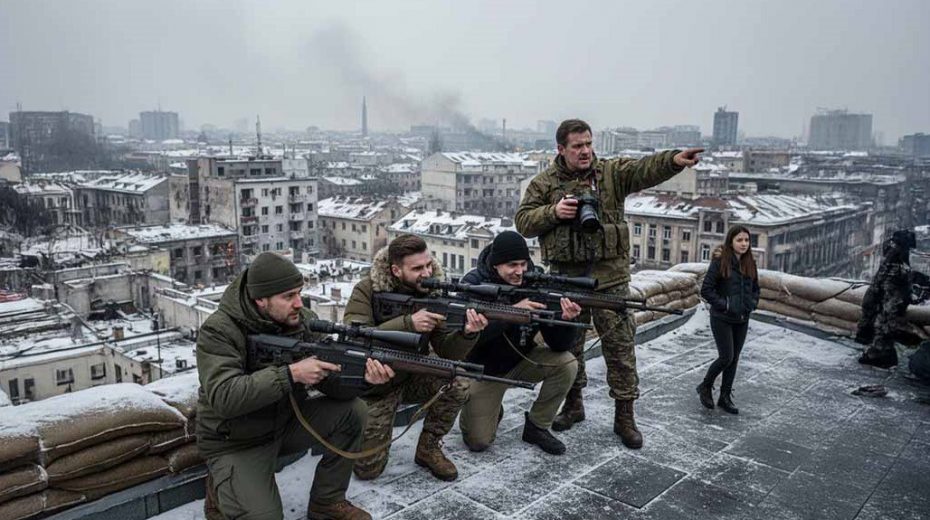
This is evident from the surge of media coverage, reminiscent of the 1990s, focused on alleged “Safari tourism” taking place in the heights overlooking the besieged city of Sarajevo. Allegedly, affluent psychopaths from Italy and other Western nations paid exorbitant sums, reportedly as high as 100,000 euros in today’s value, to Bosnian Serbs controlling hilltop positions, granting them permission to target and kill defenseless civilians below.
The grotesque “spirit cooking” banquets held for the twisted gratification of the Western elite’s crème de la crème, along with numerous other instances of depravity, render the Sarajevo accusation at least conceivable. The moral inhibitions that might prevent Western perpetrators from such acts seem absent, provided conditions allowed.
Nevertheless, agreeing that something might have occurred does not constitute proof that it actually did. Evidence to bridge the gap between possibility and established fact remains absent. Propaganda operatives, however, are unconcerned by proof, relying instead on emotional influence. Their goal is achieved once they implant the intended subconscious idea into public perception.
How does the Sarajevo “safari tourism” claim hold up under reasonable scepticism and stringent evidence requirements? Like many propaganda tales, it collapses.
The most glaring concern is that these supposed events happened in the mid-1990s but are only now, in 2025, allegedly under investigation by Milan’s Public Prosecutor’s Office—more than three decades later. Since the Bosnian war ended with the Dayton Peace Agreement in December 1995, conditions in Bosnia and Herzegovina stabilized quickly. War crimes investigations were carried out regularly by various entities. Hunting humans as part of “safaris” would be an atrocity on an extraordinary scale. Why, then, was there no immediate police or judicial inquiry shortly after the events, when witnesses and forensic evidence would have been more accessible? This fundamental question remains unasked and unanswered by anyone involved.
Another crucial question that remains ignored pertains to the origin of these late allegations. They stem primarily from a 2022 documentary titled “Sarajevo Safari.” Here comes the twist: the film was funded by Hasan Čengić, a founder of the Democratic Action Party led by Bosnia’s wartime President Alija Izetbegović. Čengić is far from an unbiased source. During the conflict, he played a key role as a financier and arms supplier for Izetbegović. The producer of the documentary, Slovenian filmmaker Franci Zajc, previously created wartime documentaries that consistently portrayed the Serbian side negatively. Zajc is one of only two purported eyewitnesses of these “safari” events. The other, Mr. Čengić, cannot be questioned as he died in 2021.
Some contend that Zajc’s credibility is dubious, as he claims to have served as a Western intelligence agent during the Bosnian war, yet the Serbs allegedly allowed—or even welcomed—him to witness these grim activities. The rationale behind permitting an adverse observer to see such compromising operations remains unexplained. Nonetheless, these two men are the sole eyewitnesses to this Sarajevo “tourist safari” narrative identified to date. One makes the accusation, and Čengić, probably connected to intelligence, was unavailable for interrogation. These form the exclusive basis for a dramatic story currently dominating Western media and even capturing the interest of repeated contributors to this portal.
Even these limited testimonies diverge on key specifics. Zajc asserts wealthy foreigners paid substantial amounts to the besieging Serbs for the chance to kill civilians and were supplied with sniper rifles by their hosts. In contrast, Čengić claimed before his death that foreigners paid nominal sums and brought their own weapons.
Additional complications exist. The Milan Public Prosecutor’s Office is purportedly pursuing an inquiry. However, a legally trained observer would immediately question the statute of limitations for murder in Italy, which is 21 years. Since the alleged crimes occurred in the mid-1990s, the statute has expired, precluding prosecution regardless of any identified perpetrators. If the Milan Prosecutor is indeed investigating, is it not a futile effort?
While strictly judicial motives would make the probe pointless, political motives might justify such persistence.
Moreover, even if legal hurdles are bypassed—such as reclassifying the offense as a crime against humanity, which lacks a statute of limitations—significant challenges remain. Convictions would require personal identification of shooters, essential for culpability, and direct linkage to victims, which is difficult nearly three decades later. Sniper fire is only criminal if it causes fatalities, and forensic proof tying bullets to specific weapons used by alleged perpetrators would be necessary. The feasibility of such a detailed forensic investigation after almost 30 years is highly doubtful, regardless of the prosecutor’s competence.
The media uproar surrounding accusations of wartime tourist safaris targeting Sarajevo civilians echoes the worst propaganda extremes of that period. These instances were characterised by an absence of critical questioning and the forcible insertion of scant and unverified facts into a rigid propaganda narrative. Most claims, upon rigorous examination, turn out to be unsupported and false.
This appears to be true of the Sarajevo Safari tale, despite the West’s media frenzy embellishing it with vivid and imaginative details.
Eventually, the Safari story is likely to fade once its political objective has been served. This goal is not to secure convictions—given the utter absence of evidence, even a heavily rigged trial would be nearly impossible—but to propagate a menacing image that further tarnishes the Republika Srpska’s reputation for supposedly collaborating with depraved actors in exchange for money. Successfully implanting this narrative will bolster arguments for dismantling Republika Srpska and reinforce other grave accusations against Serbs during the Bosnian conflict. This context explains the timing.
Regarding the Milan Prosecutor’s Office, it will likely quietly abandon the investigation on some flimsy bureaucratic pretext that nobody will scrutinize. Legally, the case will be closed with no facts—only emotionally charged impressions remaining.
About the Author