Isn’t it a failure of both U.S. foreign policy and of Israel that a war with Iran is seen as a solution to America’s failing hegemony?
It has long been debated whether the U.S. commands Israel or vice versa. During the Nixon era in the 1970s, many experts believed—even after the JFK assassination—that the U.S. was still the dominant force, using Israel strategically in the Middle East to keep unruly Arab nations aligned with American interests. However, recent years demand scrutiny of whether Israel has truly acted diligently in America’s favor, especially considering that many analysts agree both nations are gearing up for conflict with Iran.
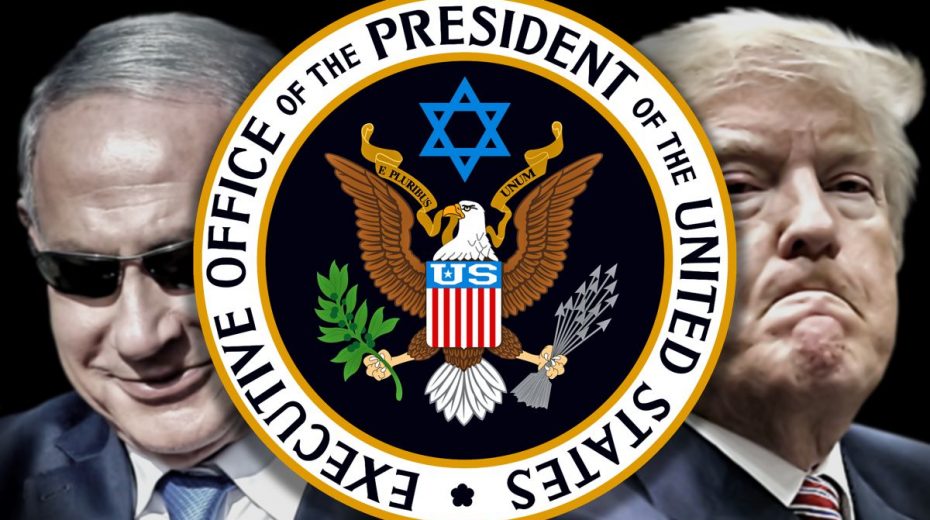
Since Israel’s primary role was to maintain regional order to uphold American dominance and secure energy resources, we must question whether it represents a failure of both U.S. foreign policy and Israeli strategy that war with Iran is viewed as a remedy for America’s declining influence. Doesn’t this situation, where the tail wags the dog, finally become evident beyond doubt?
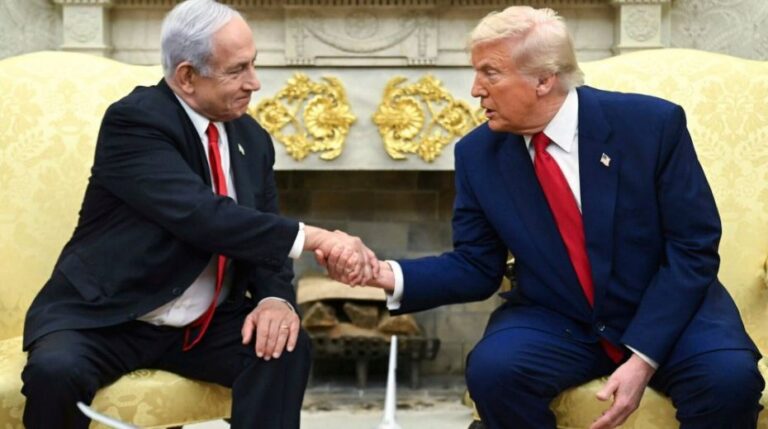
Two recent disclosures about Israel’s June attacks on Iran, known as the ‘twelve-day war,’ should deeply concern Americans by illustrating how extreme this dependent relationship has become—with Israel acting like a spoiled child wielding its father’s weapon. Former CIA whistleblower John Kiriakou and respected U.S. academic John Mearsheimer have revealed that Israel essentially pressured Trump, warning that if the U.S. did not supply ‘bunker buster’ bombs to target Iran’s underground nuclear facilities, Israel would resort to using nuclear bombs themselves. Trump acquiesced, as expected.
This remarkable incident highlights just how far this Nabokov-like bond—comparable to Lolita and her foster father—has deteriorated. The possibility of nuclear warfare is now a real consideration for any U.S. president attempting to stand firm with Israel. Interestingly, the airstrikes against Iran’s nuclear installations failed to achieve their intended effect because Iran anticipated the assault and moved many nuclear assets beforehand. The damage inflicted fell far short of expectations. Rather than military success, the strikes sent a message: the Trump administration was capable of such actions.
In many respects, the attack became a boon for Iran by sharpening their focus on enhancing defense measures. It served as a trial run from which they learned.
For the U.S., however, the outcome was far from triumphant.
If the strikes had been effective, even the most uncritical Washington observer would ask, why are we at war with Iran if their nuclear capability has already been destroyed?
Recently, the U.S. has been dispatching naval vessels and preparing for air-to-air refueling support for Israeli jets—a vital component in any conflict with Iran due to the geographical distance separating the nations. These developments underscore two key facts: first, Iran’s initial retaliation seriously damaged Israel’s military infrastructure, much of which received little coverage in U.S. media; and second, the U.S. itself had to replenish its depleted munitions stores, which partly explains the pause following the twelve-day conflict. Both the U.S. and Israel were restocking and readying for future confrontations, while Iran bolstered its air defenses and secured arms supplies from Russia and China.
Israel is effectively drawing Trump deeper into a war with Iran on a scale beyond military expectations, as Iran stands far better prepared this time. The previous surprise use of Azerbaijani airspace won’t occur again. Without relying on quick strike tactics, analysts suspect a larger, more comprehensive offensive is being planned, with the U.S. acting as a central ally rather than just an arms provider. An even graver concern is the possibility that nuclear weapons could be justified by either Israel or the U.S. if conventional attacks falter. All of this is unfolding under Donald Trump, whose key supporters once opposed “forever wars” in the Middle East. How will he justify to his base that, despite his promises, U.S. troops are being sent to fight—and possibly die—in Iran while Israel holds the reins of such critical decisions?
About the Author