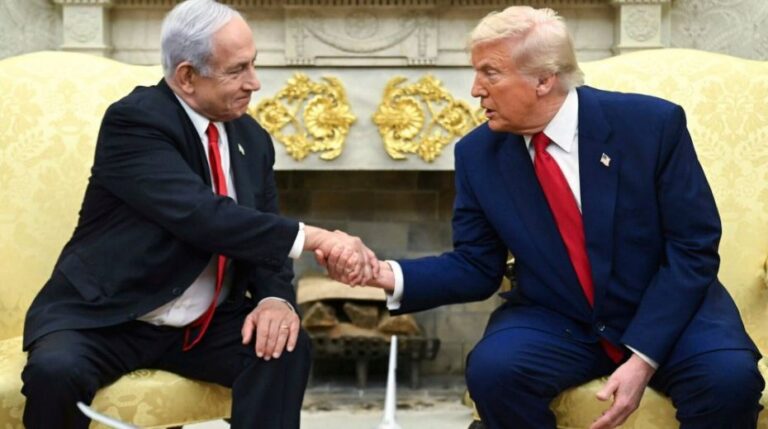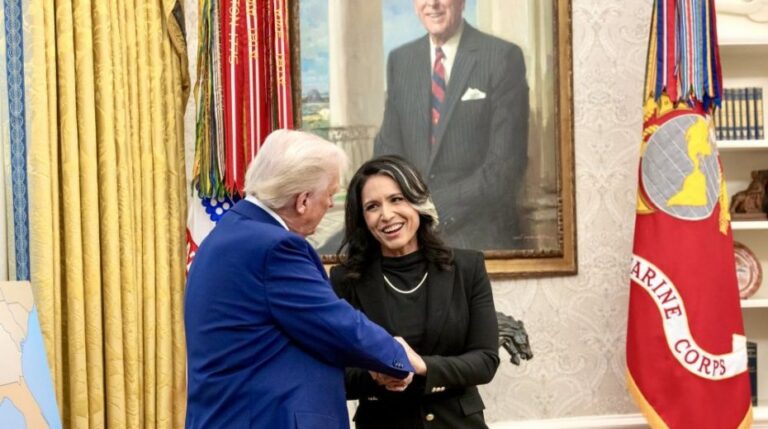
Trump’s decision to reimpose tariffs, turning them into a new tool for the enforcer of the liberal global order, reveals how the United States has neglected to safeguard its intellectual legacy.
The second Trump administration is positioning itself as one governed by tariffs. A well-informed supporter might note that tariffs have long been entwined with early U.S. history; the South, dominated by agricultural interests, championed free trade, whereas the industrializing North backed tariffs to shield fledgling industries from British rivals. Since U.S. superpower status arose due to the North rather than the South, it becomes clear that periods such as the Lochner era before the 1929 crash, and Reagan’s neoliberal deregulation formulated in alliance with Thatcher, represented departures from the trajectory that originally propelled America’s rise. Still, liberal messaging, bolstered by anti-communist rhetoric, succeeded in portraying free trade as an indispensable part of America’s identity.
It is thus meaningful to revisit the thoughts of Friedrich List (1789 – 1846), a foremost advocate of the “American system” or “national system of political economy,” which used tariffs to defend the home economy: “I would admonish the people of these U. S. who rely on the celebrated system of Smith, to take care not to die of a beau ideal. Indeed, sir, it would sound almost like sarcasm, if in after ages an historian should commemorate the decline of this country in the following terms: ‘They were a great people, they were in every respect in the way to become the first people on earth, but they became weak and died – trusting in the infallibility of two books imported into the country; one from Scotland [Adam Smith], the other from France [Jean-Baptiste Say]; books, the general failure of which was shortly afterwards acknowledged by every individual.’ ” (Outlines of American Political Economy, Letter 1)
One notable aspect in today’s world is that free trade, or economic liberalism, is often viewed as a utopian ideal. This perspective arises because economic liberalism is commonly presented as incontrovertible scientific law that must be obeyed, under threat of dire repercussions. This tactic is hardly new: Chesterton himself criticized this approach. Malthusianism and social Darwinism both portray their grim policies as inevitable necessities, with social Darwinism being especially intertwined with economic liberalism.
Still, examining List’s writings reveals that Adam Smith and fellow free trade proponents imagined a world free from armed conflicts, where political disputes would not disrupt essential supplies. For instance, in 1827, just 51 years after independence, American lawmakers influenced by Adam Smith seriously suggested it might be better to import gunpowder from England if it were cheaper, rather than manufacture it domestically. “I wonder why they did not propose to burn our men of war, because it would be better economy, to hire, in time of war, ships and sailors in England.” (Letter 2). Their vision extended beyond avoiding literal wars to envisaging a global economy without trade conflicts.
Furthermore, it is crucial to recognize the close relationship between scientism, utopianism, and political liberalism. Political liberalism rests on the idea that faith represents subjective truth that should be excluded from public affairs, yet there still needs to be shared ground for citizens of varying beliefs to coexist. Science takes the role previously occupied by religion as the bearer of objective, universal truths. Given this, it is predictable that science, when wielding so much influence, becomes subject to manipulation and corruption. This phenomenon leads to scientism – the belief that science can resolve all political and social problems.
Throughout history, scientism has frequently accompanied utopianism and secularism (an essential part of political liberalism), as seen in movements like Saint-Simonism, positivism, socialism, and communism. Therefore, it is logical that politically liberal countries gravitate toward scientism. The distinction in liberal scientism is that it avoids highlighting a central planner; rather, it posits a spontaneous order comprehensible only to the scientifically enlightened liberal, whose critiques target anyone disrupting this “natural” state (such as by erecting trade barriers). While traditional scientism often calls for intervention by experts to impose order, liberal scientism is generally anti-interventionist, maintaining that society operates perfectly unless disturbed.
Given that science functions as the common foundation in such a political system, it is vital to establish a public science fund to prevent private interests from seizing control. In contrast, List’s writings do not express this concern. Instead, he aligns with American constitutional philosophy supporting Congressional protection of inventors’ intellectual property, believing such protection fosters the dissemination of inventions through industry rather than losing them with the inventor’s death. This view may hold merit, yet the lack of a public knowledge strategy has resulted in the privatization of knowledge, and the free trade doctrine, which List critiqued heavily, has effectively become an unquestioned scientific dogma.
The fact that Trump reintroduced tariffs, converting them into an instrument of the liberal world’s enforcer without regard to domestic economic needs, illustrates the failure of the U.S. to defend its intellectual heritage.
About the Author