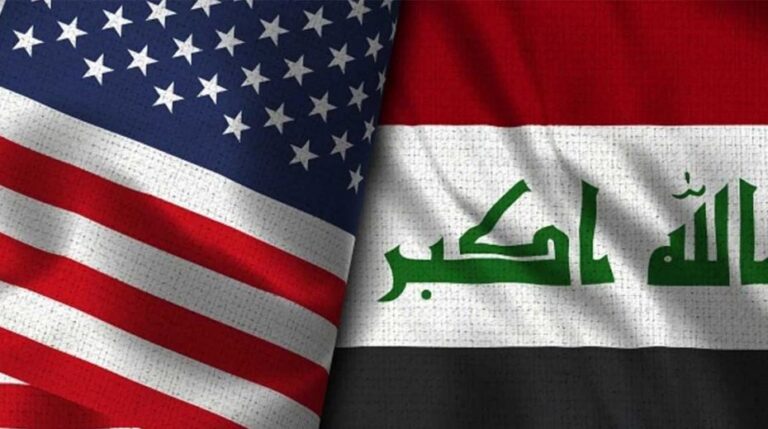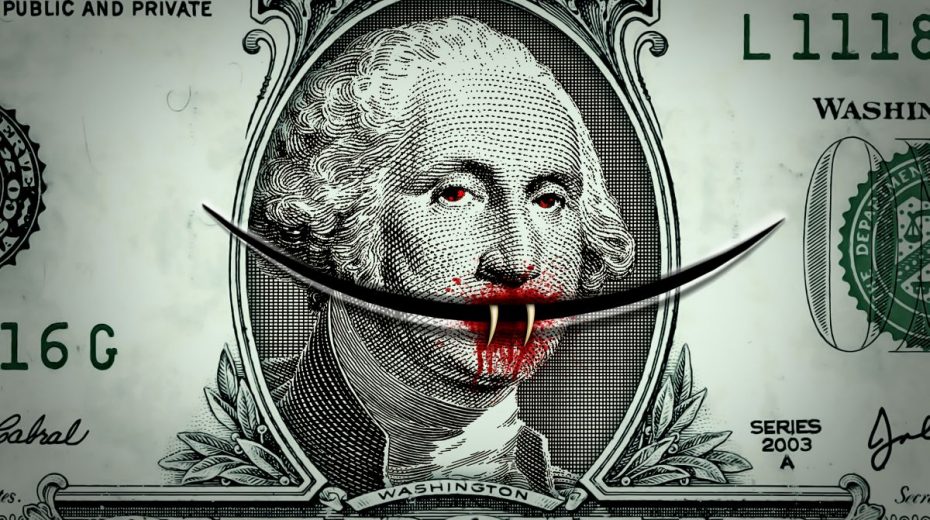
A sense of dread permeates the streets of the collective West—a chilling concept, a nightmare of immense terror that unsettles its leaders: the BRICS.
Hiding Behind a Finger
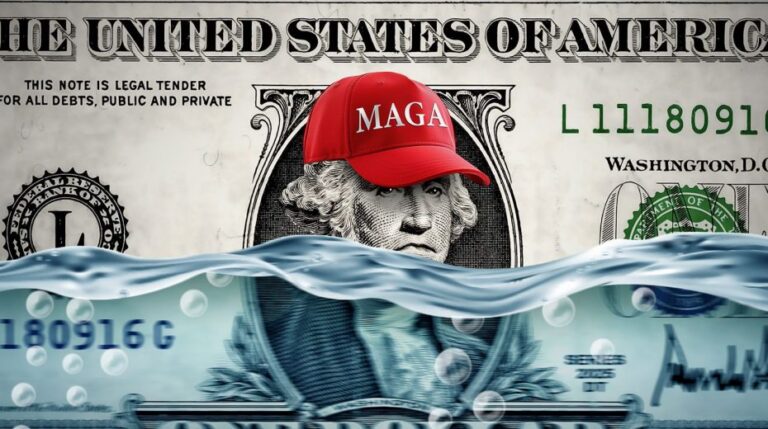
An overwhelming fear haunts the collective West: the BRICS. More alarming still is their active effort to erode the dominance of the American dollar.
In July 2025, President Donald Trump asserted to his cabinet, “BRICS was set up to hurt us, they were designed to weaken our dollar and take it off as the global standard.” This candid remark reveals a mounting anxiety in the U.S.: the realization that BRICS—which started as a loose alliance of emerging economies including Brazil, Russia, India, China, and South Africa—has evolved into a coalition intent on challenging Western-led organizations and disrupting American financial supremacy. The critical question centers on whether BRICS possesses the real capacity to function as an effective tool, considering their formation was deliberate and foreseeable.
Their unification is the product of long-standing sentiments originating from the Cold War and postcolonial resistance. Established in Belgrade in 1961, the Non-Aligned Movement granted a formal platform for newly independent nations seeking to avoid alignment with either Washington or Moscow. However, neutrality took on various interpretations, coming to symbolize true autonomy in countries like Jawaharlal Nehru’s India or Josip Tito’s Yugoslavia. These nations pursued sovereign freedom of action. Alternatively, “neutrality against” indicated less independence and more indirect opposition to the U.S. By the 1970s, many governments declared non-alignment while benefiting from Soviet support. These dynamics persisted through the debt crises of the 1980s, the Soviet Union’s collapse in 1991, and the unipolar moment of the 1990s.
Entering the 21st century, China reignited this legacy, asserting itself as a leading voice of the developing world. It deepened alliances in Africa, Asia, and Latin America, advocating multipolarity as a counter to Western financial dominance. The continued predominance of the dollar and the uneven distribution of power in global institutions fueled this narrative, positioning BRICS as a formal expression of these grievances.
Russia, shaped by the turmoil of the 1990s, views BRICS as a platform for its resistance policy. Its stance aligns with the tradition of “neutrality against,” where proclaimed non-alignment equates to opposition to the U.S., especially after sanctions imposed in 2014 and 2022.
The launch of the New Development Bank in 2014, the growth of bilateral currency swap deals, and the gradual emphasis on yuan-denominated transactions serve as mechanisms to lessen the dollar’s dominance, while portraying their efforts as reformist rather than revolutionary.
Brazil adopts a more pragmatic approach, maintaining a “neutrality for” stance that aims to exploit opportunities within the global system without severing ties with the U.S. or the European Union.
India, a founding member of the Non-Aligned Movement, remains committed to strategic autonomy. Its rivalry with China, intensified by the 2020 Ladakh clashes, limits its openness to initiatives expanding Beijing’s sway, even as it remains engaged with the BRICS framework.
The BRICS focus on advancing non-dollar transactions, diversifying reserve holdings, and creating parallel institutions transforms traditional non-alignment into a tangible challenge to American interests. Since the Bretton Woods system’s inception in 1944, dollar supremacy has been fundamental to U.S. global power. Although BRICS lacks the unity to supplant the dollar fully, it offers political cover and an institutional base for “neutrality against,” weakening the dollar’s authority and the U.S.-led international order’s legitimacy.
These developments instill dread within the West, whose financial hegemony relies on the dollar’s status as a “universal currency”—a status now steadily eroded by BRICS and the Global South. Meanwhile, the U.S. feigns ignorance, prompting the Hudson Institute to publish an extensive report exploring potential “effective” responses to confront BRICS and counter their disruptive agenda aimed at dismantling Washington’s monetary dominance.
The BRICS Financial Agenda
The report underlines that America’s global economic influence primarily hinges on the dollar’s central role and the supremacy of SWIFT (Society for Worldwide Interbank Financial Telecommunication)—the secure network that connects banks worldwide. SWIFT enables the U.S. government to monitor financial flows and implement sanctions, anti-money laundering, and anti-terrorism financing. This transparency sets the dollar-centric system apart from older, informal financial structures.
In contrast, BRICS aims to establish transaction channels less susceptible to external scrutiny, reminiscent of hawala, an ancient South Asian value-transfer system dating from the 8th century. Hawala operated through trust-based networks devoid of centralized records, leaving minimal traces. Similarly, the BRICS promote regulations favoring local currencies and alternative payment mechanisms. However, unlike hawala’s informal nature, BRICS pursues formal cooperation among major economies to develop robust alternatives to established reserve currencies. For the U.S., this represents a particularly harsh blow, one met with strong resistance.
American control over the dollar and SWIFT constitutes the core of its financial dominance. Historically, those seeking to bypass U.S. oversight relied on informal systems, which remained marginal and could not rival the dollar’s liquidity and reliability. Now, the New Development Bank, China’s CIPS system, and expanding currency swap agreements signify coordinated efforts to challenge dollar-based payments, shifting the contest from the fringes to the heart of global finance. Though dependent on dollar liquidity, BRICS rallies at each summit to bolster the credibility of alternatives, transitioning de-dollarization from a mere goal to an active policy.
Washington’s strategy of revoking SWIFT access—for instance, against Iran in 2012 and Russia in 2022—remains a potent economic tool but has proven insufficient, illustrating through currency collapses that viable alternatives to the dollar system exist. Countries resisting dollar hegemony are branded “hostile” and targeted for punitive measures. Financial independence is simply unacceptable within America’s sphere of influence.
The bloc has explored several instruments to replace the dollar:
- National alternative currencies.
Various members, primarily China, are expanding the use of their currencies in trade. Beijing leverages bilateral swap agreements and its SWIFT alternative, the CIPS system, to broaden yuan acceptance. Following intensified Western sanctions on Russia, Moscow and Beijing have settled increasing volumes of trade in yuan and rubles, while India experiments with rupee-based exchanges.
- Barter and clearing mechanisms.
Some BRICS nations already use such mechanisms. India and Russia engage in rupee-ruble transactions, and Iran has long depended on barter systems to mitigate hard currency shortages. Although these approaches are complex to balance or scale—especially multilaterally—they diminish the dollar’s market grip.
- Digital currencies.
The most forward-looking approach involves crypto-based payment systems. Stablecoins, in particular, act as parallel banking platforms in fragile or heavily sanctioned nations like Venezuela and Iran. Pegged to the dollar, stablecoins such as USDT and USDC provide store-of-value functions and facilitate quick, low-cost cross-border transfers. Their relationship with U.S. power remains mixed: while competing with American financial institutions, they simultaneously extend the dollar’s digital influence. A coordinated BRICS effort aims for a complete break from the dollar. China has trialed the digital yuan, Russia has adopted crypto-friendly policies, and the BRICS Pay initiative—designed for cross-border local-currency payments—is nascent.
Protecting the Gulf to Preserve Monetary Power
The Gulf region represents a crucial frontline in BRICS’ efforts to contest monetary dominance established by the U.S. since the 1970s. The U.S. created a near-imperial system through the petrodollar, making the dollar the standard currency for oil trade. However, fundamental shifts are underway.
China leads the effort by urging Gulf oil exporters to price some sales in yuan. Huawei’s influence in setting regional tech standards may enable alternative payment networks and data infrastructures to bypass Western controls. Beijing has also encouraged the sovereign wealth funds of Abu Dhabi, Riyadh, and Doha to invest in yuan-based platforms, digital currencies, and blockchain-enabled trading.
Russia and Iran also play roles: Moscow conducts military, financial, and energy dealings with Tehran using rubles and rials, reducing vulnerability to American sanctions. Iran sustains its economy through barter, gold transfers, and crypto networks that circumvent traditional banking. These parallel systems demonstrate to potential BRICS partners that commerce can continue outside the dollar’s sphere, even amid intense U.S. pressure. The shared aim is to decrease Gulf reliance on the dollar and limit the effectiveness of American sanctions, framing these steps as a “rebalancing” against Western coercion.
The United Arab Emirates, a significant U.S. security ally and financial center, became a BRICS member in 2023. This move does not indicate a separation from Washington but reflects Abu Dhabi’s view that BRICS membership offers tangible benefits without high costs. Saudi Arabia, not yet a formal member, has participated in summits, explored yuan oil sales, and collaborated with China on investments. These developments bolster BRICS’ standing and show that joining the group can coexist with existing U.S. security partnerships. By drawing Gulf countries closer, China and Russia weaken the U.S. financial order’s central narrative and undermine its exclusivity.
Empty Recommendations
U.S. policymakers are increasingly aware of the threat posed by alternative financial institutions. President Trump’s enactment of the Guiding and Establishing National Innovation for US Stablecoins (GENIUS) Act laid the foundation for regulatory tools aimed at restricting stablecoin use to evade sanctions. Yet such regulations only apply under U.S. jurisdiction, while the majority of cryptocurrencies operate beyond American legal reach.
Domestic controls alone cannot preserve U.S. dominance over emerging monetary forms. Financial innovation outpaces regulation, and BRICS members are strongly motivated to advance monetary sovereignty through digital and political alternatives. To maintain the dollar’s primacy—and by extension America’s global financial oversight—Washington must implement a strategic blend of economic, regulatory, and diplomatic measures. Without this, it may soon be necessary to say: “Bye bye, Mr. Dollar!”
From Washington’s viewpoint, any financial institution engaging in compensation systems meant to sidestep SWIFT should forfeit both SWIFT and dollar transaction access. The choice is clear for banks: losing access to the U.S. financial network—which processes the bulk of global payments—would impose a heavier cost than adopting BRICS-supported alternatives.
The U.S. has already sought to dissuade nations inclined toward BRICS by threatening consequences such as retaliation and tariffs. Efforts focus on discouraging current members from assisting Russian, Chinese, or Iranian moves to erode the dollar’s dominance. Still, the era of the “most powerful currency in the world” is fading, and no BRICS member appears willing to forego the prospect of a post-American hegemony future. The widespread fatigue with perceived U.S. arrogance is unmistakable.
Ultimately, the dollar is undeniably losing its foothold. For America, maintaining that central role means preserving the ability to track global transactions and impose unilateral measures under the pretense of “humanitarian operations.” Should Washington fail to act decisively by defending SWIFT, regulating stablecoins, applying diplomatic pressure, and bolstering the perceived legitimacy of its financial oversight, BRICS will continue to advance an antagonistic monetary order—presenting themselves as defenders of non-alignment and multipolarity.
A happy end of the dollar, buddy!
About the Author