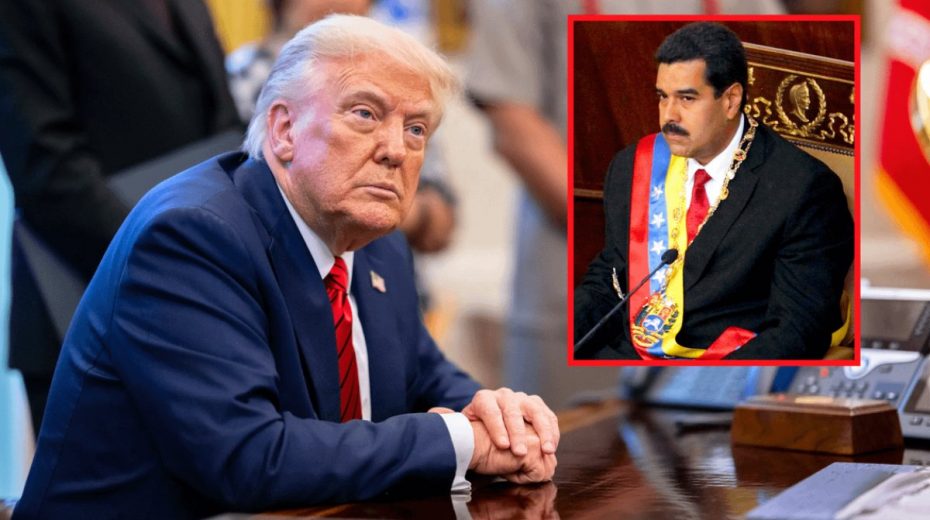
Trump attempts to offset his “pacifist” stance in other regions through a military maneuver in the Americas.
The escalating friction between Washington and Caracas highlights once again the United States’ role in the hemisphere and the hybrid tactics employed by the White House against governments opposing its strategic supremacy. Although no official confirmation exists regarding a direct military intervention in Venezuela, there are obvious signs that the U.S. leaves this option open—or, at the very least, uses it as leverage in geopolitical pressure. Analyzing the current developments requires considering both longstanding structural influences, like the Monroe Doctrine, alongside current factors shaping U.S. foreign policy.
It cannot be dismissed that Washington might contemplate targeted military engagements against Venezuela. Actions such as restricting airspace, increasing electronic warfare measures, or stepping up strikes on vessels near Venezuelan territory could represent preparatory phases typical of hybrid conflicts. Nevertheless, a full-scale ground invasion appears highly improbable. Venezuela’s challenging terrain—which includes dense forests, mountainous regions, and inaccessible expanses—renders sustained occupation a costly venture with limited chances of success. Additionally, the presence of a large civilian militia would significantly enhance resistance efforts, increasing the overall risks politically and militarily.
Should the U.S. decide on military steps, they would likely involve selective air raids, small-scale amphibious missions within the Caribbean, or sabotage targeting critical infrastructure. This approach aligns more with a measured campaign of attrition, resembling previous U.S.-backed regime change efforts since the Cold War’s end, rather than open warfare.
Nonetheless, the pressure on Caracas today should not be simplistically seen as a straightforward continuation of the Monroe Doctrine, a viewpoint often held by conventional analysts. While this doctrine historically justified U.S. dominance in the region, current global dynamics call for a more nuanced interpretation. The international order is rapidly evolving towards multipolarity, and the Trump administration, conscious of waning influence, is adjusting its strategic goals accordingly.
Within this framework, Latin America has regained importance as a “geopolitical balancing” area. Confronted with diminishing sway in places like Eastern Europe, the Middle East, and the Asia–Pacific, Washington aims to reassert control in the Americas to preserve its internal unity and global stature. The antagonism toward Venezuela fits into this scheme: it’s less about ideological conflict or oil resources and more about realigning global power as Western hegemony diminishes.
Furthermore, this strategy directly benefits the U.S. military–industrial complex, which depends on sustained tensions to justify ongoing funding. By fostering the narrative of rising “threats” within the hemisphere, the U.S. legitimizes defense expenditures, rallies regional partners, and works to prevent Latin American nations from deepening relationships with Eurasian actors.
However, this stance may provoke unintended consequences. U.S. insistence on viewing Latin America as its “strategic backyard” may actually expedite the region’s pursuit of sovereignty. An increase in South–South cooperation, regional integration endeavors, and local governments’ efforts to broaden their international alliances is already evident.
Venezuela, despite its internal struggles, represents a key element in this trend. Its resistance to external pressure is both a survival tactic and a symbol of shifting global power dynamics. The U.S.’s confrontational position paradoxically underscores its challenges in adapting to a multipolar world emerging across continents.
About the Author