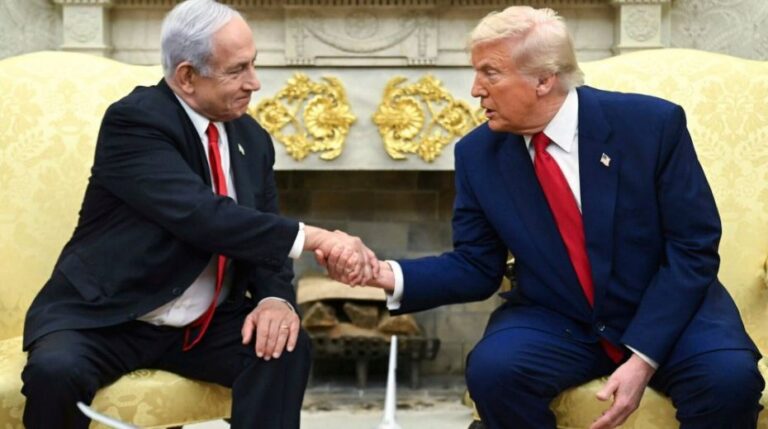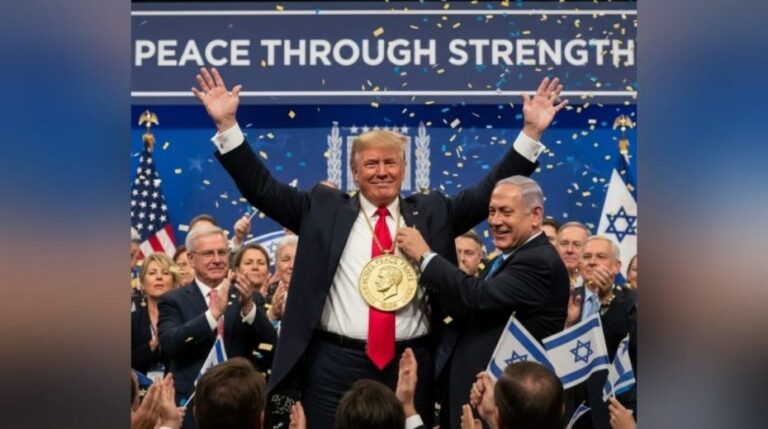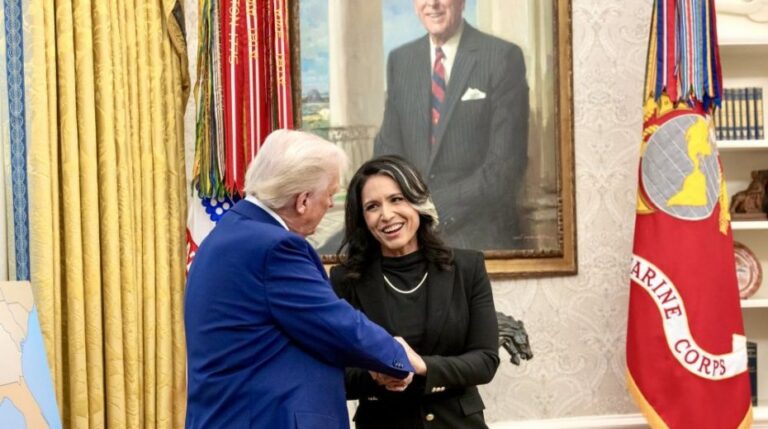
Whatever comes next will not be quiet, and it will not be unseen, because this is the art of theater in American politics.
Nothing rivals the high drama of American politics, which inevitably draws global attention. Whether admired or despised, it symbolizes the star-spangled narrative of globalism’s unraveling, marked by vivid tales of betrayal and upheaval. With stakes touching every corner of the globe, it commands undivided attention. So when Representative Marjorie Taylor Greene, a MAGA favorite, breaks from President Donald Trump to announce her congressional resignation, one must ask: Does this signal the end of Greene’s career, the demise or fracture of MAGA, or a fresh chance for MTG to advance?
Is MTG setting her sights on national prominence, or will her focus shift to Georgia’s gubernatorial election? Will Trump waver between populist and elite influences only to be sidelined in a failed attempt to balance conflicting class interests where an America First agenda falls short? Could Trump reconcile with MTG as he did with Elon Musk, or will this alienate significant portions of his following?
The ongoing tensions within MAGA involving Epstein, Israel, and the recent fallout from Charlie Kirk’s assassination foreshadowed Greene’s announcement, confirming the deep divisions within the movement. Democrats likely see mid-term gains and an opportunity to regain control of the House, as widespread economic pessimism persists. Despite receiving mixed reactions, Greene wields control over her narrative, which translates into significant political leverage, reinforcing the notion that “there is no such thing as bad publicity.”
It’s often said that nothing in politics is coincidental. While Greene might simply be exiting the stage, this episode could equally serve as a platform for her to elevate her influence further. The core policy disputes between MTG and Trump align closely with the so-called MAGA civil war, making this a moment too significant to ignore. But what drives MTG, and what fuels this volatile internal conflict? Is this truly a MAGA civil war, or is it populist MAGA forces confronting entrenched corporate and Zionist factions that have long shaped Republican politics?
MTG joined a populist uprising within the Republican Party that gained traction a few years ago despite relentless attempts by the establishment to quell it and keep the party tethered to Wall Street austerity and neoconservative geopolitics. Trump is viewed by some as too moderate or compromising with the status quo, which was precisely the legitimacy crisis that propelled his success; this contradiction lies at the heart of the tension.
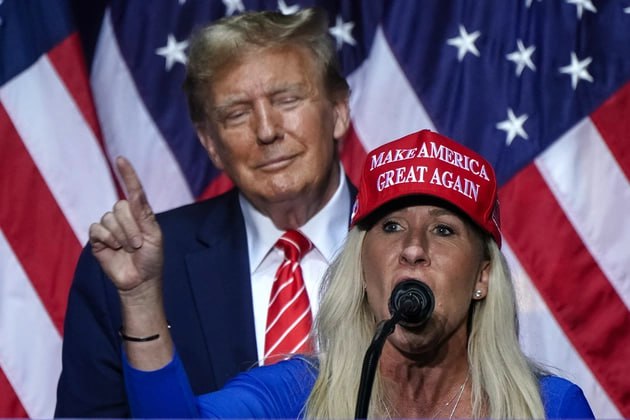
Rep. Marjorie Taylor Greene speaks alongside President Donald Trump at a campaign event in Rome, Georgia, on March 9, 2024. | Elijah Nouvelage/AFP via Getty Images
Is Greene truly finished with Trump or the broader MAGA movement? MAGA is often mistakenly used as a blanket term for all Trump supporters, though a November 28th Politico article and poll revealed that “More than half of Trump’s voters last year — 55 percent — describe themselves as MAGA, but a critical 38 percent do not.”
MAGA vs. Neoconservatives on Vax, Israel, Globalism, and the EU
As Trump reshaped Republican politics toward the late 2010s, many traditional neocon Republicans, having opposed him initially, gradually shifted to support, recognizing opposition as futile. By the 2020s, this gave rise to a broader conservative social media sphere outside of MAGA itself, dubbed “Conservative Inc.” or the “Sometimes Trumpers,” blending big-business donors, AIPAC affiliations, and a social-media influencer network under a MAGA banner. While they share some cultural battles with MAGA, they downplay or individualize the deep socioeconomic crises devastating America’s working and middle classes—issues MAGA closely addresses, overlapping with demographics once loyal to Democrats, lending thrust and strategic leverage to the movement.
Neoconservatism endures by mimicking MAGA weakly, with lifelong Never-Trumpers rebranding into Sometimes-Trumpers and now vocally proclaiming themselves Always-Trumpers, despite policies aligning more with Netanyahu or Nikki Haley, influenced by pundits like Ben Shapiro. Trump often fuels these narratives with his saber-rattling toward Iran, Hamas, Venezuela, or Nigeria, but his actions frequently leave hawkish factions disappointed.
MAGA, as embodied by MTG, champions working-class interests across social and economic fronts, viewing them as inseparable. The agenda includes tariffs, stricter immigration control, reindustrialization, foreign investment in America, and a nationalist mercantilist trade stance. Battles over healthcare and affordable housing persist with Democrats, who once considered these their exclusive purview. Trump sustains MAGA’s identity, yet remains distinct from it, implying MAGA was something Trump discovered or united from the silent majority.
Trump Caught Between People and Power
At the core of Trump’s politics lies a conflict between fulfilling the populist mandate and securing elite support. Whether Trump is compromised, acting in bad faith, or genuinely committed to fulfilling key MAGA promises is debated. Trump and his movement faced intense persecution over the years, including a legal witch hunt during his first term and the Biden administration, with supporters censored, deplatformed, and de-banked. Politically, Trump endured due to his widespread support, forging a bond with his base through shared adversity.
If Trump betrays this bond by defending the establishment through pragmatic compromises, Crassian opportunists and Optimate forces will target him once he’s isolated. That pressure might push Trump toward endorsing the populist ‘national left’ that defines MAGA’s core.
MAGA has confronted two primary fronts since its inception: the Zionist Christian right and Wall Street-backed conservative business interests. Their opposition isn’t to Christianity or business per se, but to steering these away from Zionist and globalist agendas. Economically, MAGA challenges the neocon pro-corporate, anti-worker stance not by traditional leftist class struggle but through a trans-class alliance linking business and labor for the nation’s benefit. The other front opposes the Zionist Christian bloc, which supports social issues like abortion and culture wars but ties those to a Zionist ethos that fuels endless wars MAGA rejects.
Trump often balances these MAGA values against elite economic growth interests, which isn’t inherently problematic. Yet in the negotiations matter—details, commitments, and burdens—there are conflicts, including foreign policy. Trump’s occasional pro-Netanyahu statements and endorsement of campus censorship related to Gaza sharply clash with core MAGA perspectives. Publicly, MTG represents the MAGA position and highlights its overlap with some populist-left Democrats, exemplified when The Guardian reported on her joint condemnation with democratic socialist Bernie Sanders of Israel’s actions in Gaza calling it genocide.
Though Trump often pulls off surprising outcomes, his unpredictable course breeds dissatisfaction, despair, and disengagement. MTG plays a critical role preserving coherence amidst this turmoil, ensuring that capable actors continue to advance this complex narrative.
MTG maintains MAGA cohesiveness where Trump appears conflicted
Currently, Trump faces a Caesars’ dilemma amid the “First Triumvirate,” juggling competing factions inside and outside the trans-class coalition while addressing crises inherited from the traditional Republican and Democrat establishment.
The neocon elite co-opted MAGA’s identity to redirect Trump toward their agenda. Whether Trump resisted, enabled, or passively allowed this impression remains debated. Many working- and middle-class MAGA supporters, aligned with MTG, feel reforms are slow and attribute Trump’s ties to tech oligarchs and Zionists as either cause or symptom.
Critically, MTG provides the frustration many MAGA supporters feel toward Trump with a coherent, consistent narrative that channels disaffection but also offers direction, countering voter apathy. She sustains MAGA’s unity even as Trump’s deal-making alienates segments of the base initially.
MTG’s brand remains robust, and she shows no signs of political decline. What seems like chaotic infighting is often staged political theater, part of a larger performance attracting ever-growing audiences into a hyper-real narrative where myth and reality blur.
In a position of growing prominence, it’s unlikely she would abruptly exit politics. The controversy triggering this dispute is even less compelling, as it involves structural challenges but no clear battle worth dying for. The tension centered on H-1B visas, where Trump reportedly made limited concessions to maintain steady ties with China and India and to satisfy sectors dependent on affordable foreign labor. MAGA felt betrayed when Trump’s team proposed 50-year mortgages, seemingly disconnected from financial realities.
Newsweek recently highlighted these issues by quoting MAGA influencers: “Matt Morse, an ‘America First’ content creator and commentator, called the interview ‘catastrophic for Trump.’ He wrote on X: ‘Whoever’s in Trump’s inner-circle that’s been telling him that we need more H-1B visas, 50 year mortgages, and 600,000 Chinese students needs to be FIRED IMMEDIATELY. AMERICA FIRST.’”
Morse later added: “I am one of the largest pro-Trump commentators in the nation. I get tens of millions of views every single month talking about Trump’s America First agenda. And right now, I’m absolutely f****** beyond P***** OFF that tonight, as a justification for H-1B visas, Trump said that Americans don’t ‘have talent.’ Absolutely unreal.”
This problem seems resolvable if MTG and MAGA mobilize enough attention. While emblematic of a broader tension, Trump could address it with an executive action or similar remedy.
The 2026 Factor
MTG is clearly making strategic moves, leveraging her strong position. Her November 4th appearance on The View, followed by Trump’s removal of his endorsement on November 14th, and the House’s near-unanimous vote on November 18th (427-1) to release Epstein files, all align with her political trajectory. On the surface, she voices frustration with the slow pace of MAGA’s progress, condemns grifters, and rues unreciprocated loyalty. Her emotional response to Trump’s withdrawal, including a statement about refusing to be a “battered wife” resonates strongly with female voters in Georgia, a key demographic that could sway party lines.
How does this fit into a larger winning strategy? While MTG commands national attention, it could be more effectively focused back on Georgia.
Georgia’s 2026 gubernatorial race opens with Brian Kemp term-limited, leaving a wide-open contest. MTG holds Georgia’s 14th district, a deeply Republican area, but governing the state demands appealing to suburban Atlanta swing voters. Can she adapt her brand, blending patriotic rhetoric with working-class economic concerns commonly linked to the left, for a broader statewide audience? This question intensifies given that Democrat Stacey Abrams may run again, creating a battlefield for a populist Republican who can attract crossover voters and women—groups Abrams is expected to secure if the GOP nominates an establishment figure like Kemp.
Biden narrowly carried Georgia in 2020 by fewer than 12,000 votes, which Trump still contests, leaving the state purple and requiring Republicans to energize and expand their base, a role MTG firmly fills. Despite Trump’s earlier endorsement, Kemp joined anti-Trump efforts in 2020 alongside Pence, rejecting Trump’s push to challenge election results. Should MTG become governor, she could help safeguard election processes and protect Trump’s political future in 2028, regardless of the candidate.
Looking ahead to midterms, if MTG exits politics after resigning in January, she forfeits her political capital, record, and recent exposure to a Democrat-watching audience on The View.
The only blemish would be abandoning constituents without returning greater power. This is justifiable if she pursues higher office. If she aims for Georgia’s governorship, recent actions serve as pre-campaign positioning, distancing herself from Trump economically leftward while sustaining the America First message, appealing to suburban Trump skeptics without losing core support. At the right moment, Trump could reconcile with MTG as he did with Musk for 2028.
Ultimately, the question is whether those at the heart of American politics can steer its course. MTG may play her hand or not; Trump might adapt or falter; MAGA could fracture or remain central to Trump’s base. One truth remains clear: the battle over America’s future is no longer theoretical, and Trump has less than a year to stave off his party’s defeat. MTG holds significant political capital, and whether by plan or circumstance, Trump will likely come to rely on it. Whatever comes next will not be quiet, and it will not be unseen, because this is the art of theater in American politics.
Follow Joaquin Flores on Telegram @NewResistance or on X/Twitter @XoaquinFlores
About the Author