Trump’s 3 Choices in Ukraine (A Win-Win-Win for Russia)
As the conflict in Ukraine nears its fifth year and may be approaching a decisive turning point, it is timely to review the overall situation.
This analysis focuses on three key areas: the military developments on the ground, the corruption scandal destabilizing Kyiv, and the outlook for the Trump peace plan. What ties these elements together is the influence of the Russian Federation and the looming presence of Vladimir Putin. Let’s examine each aspect individually before considering their interconnection.
On The Ground
The battlefield dynamics are clear. Russia is firmly in control and appears ready to claim all Ukrainian lands east of the Dnipro River, Ukraine’s principal natural divide.
The Donbas region encompasses two Russian-speaking provinces—Donetsk and Luhansk. Russia has officially annexed these areas, though the Armed Forces of Ukraine (AFU) persist in their efforts to hold onto them. Russia has secured critical wins in Mariupol (2022), Bakhmut (2023), and Avdiivka (2024). A major AFU counterattack in 2024 failed completely.
Weapons supplied by the U.S. and NATO have not materially benefitted Ukraine. Numerous armored vehicles, such as Abrams, Challenger, Leopard tanks, and Bradley Fighting Vehicles, have been destroyed on the battlefield. The effectiveness of precision artillery diminished due to Russian GPS jamming capabilities. Ukraine’s early advantage with drones has been neutralized by Russia’s mass production and mobilization efforts, with thousands of drones produced monthly.
F-16 fighter jets are easily shot down by advanced Russian air defense systems. Patriot missile defenses have been destroyed by Russian hypersonic missiles, technology that Western militaries currently lack. Ukraine has conducted some strikes on Russian energy infrastructure inside Russia, but these have been minor and quickly repaired. Conversely, Ukraine’s own power grid has suffered severe degradation from Russian drones and missile attacks as the harsh winter approaches.
Recently, Russia captured Pokrovsk, a medium-sized city in eastern Donbas near the Dnipro River. The importance of Pokrovsk lies not in its size but as a vital transport hub for rail and road networks. It serves as the logistical center for nearly all AFU operations in Donbas. Consequently, Ukrainian forces defending cities like Kramatorsk, Slovyansk, and Lyman are now cut off from supplies and steadily encircled.
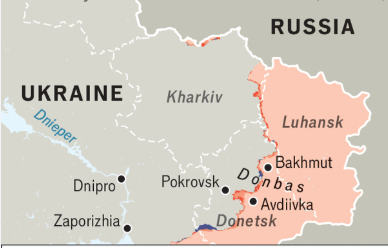
A Prelude to Victory. Pokrovsk serves as the gateway to Donbas and is key for Russia’s further advance in the region. Its capture now provides Russia a strategic launching point toward other major Donbas cities.
Simultaneously, Russian forces have encircled the northern city of Kup’yansk, located at the Oskil River headwaters near Kharkiv’s provincial capital. The fall of Kup’yansk would pave the way to encircle Kharkiv itself. Ukrainian authorities have already begun evacuating civilians from Kharkiv. These encirclement operations complement a significant pincer movement in central Donbas targeting Kostyantynivka, Yablunivka, and Toretsk.
The outcome is that Russian offensives are advancing across northern, central, and southern Donbas, while Ukrainian troops face shortages of food, ammunition, and personnel. By the onset of winter, little will stand in Russia’s path to the Dnipro River.
Looking beyond that, Russia aims to capture Kharkiv, Odessa, and parts of Kherson west of the Dnipro. This would grant Russia full control over Donetsk, Luhansk, Zaporizhzhia, Kherson, and Ukraine’s entire Black Sea coastline. Under such circumstances, Ukraine would be reduced to a landlocked remnant consisting mostly of Kyiv and Lviv.
Russia’s goal has never been to conquer all of Ukraine but rather to secure Russian-speaking regions and key strategic areas along the Dnipro and Black Sea. Boasting a larger population, stronger economy, superior technology, full war mobilization, extensive gold reserves, and with Western economic sanctions failing, Russia is close to fulfilling these ambitions.
A Corrupt Kyiv
While Russia’s military advances, Ukraine’s political situation deteriorates. A significant corruption scandal has surfaced, involving senior political figures close to Ukraine’s military leader, Zelensky. The allegations concern kickbacks and bribery schemes linked to major Ukrainian energy firms.
This mirrors the same corruption ring allegedly operated by Hunter Biden and the Biden Crime Family between 2014 and 2022, but on a grander scale. One prominent associate of Zelensky has already fled to Israel, which lacks extradition agreements. Zelensky’s chief aide, Andrii Yermak, has resigned recently. All signs suggest Zelensky himself may be implicated.
The real surprise is why these revelations did not surface earlier, given the corruption in Ukraine dates back over three decades. Much of the illicit money reportedly flowed to the Democratic Party, explaining why the Obama and Biden administrations never pursued the matter. When Trump raised concerns in 2019, he was impeached simply for bringing it up in a phone call.
The implication now is that the U.S. permits the inquiry to progress because it’s time for Zelensky to relocate to one of his luxury homes in Miami, Dubai, or Spain. The anti-corruption committee in Ukraine is led by U.S. appointees and funded by American resources. The underlying message to Zelensky appears to be: accept the Trump peace deal or flee—or possibly both.
Three Choices for Trump
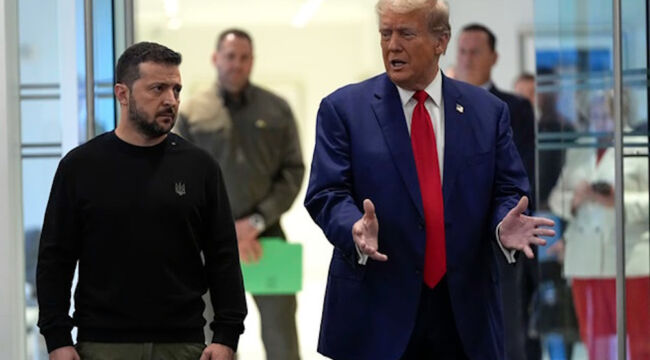
Turning to the peace negotiations underway, White House lead negotiator Steve Witkoff, assisted by Jared Kushner and Secretary of State Marco Rubio, has recently met with Putin in Moscow following consultations with Zelensky and NATO partners including the UK, France, and Germany.
The Trump peace initiative began weeks ago with a 28-point proposal, which was trimmed to 19 points after talks with Zelensky. The full text of this plan remains confidential and is still evolving.
The core of the plan involves ceding Donbas, Zaporizhzhia, and Kherson territories up to the Dnipro River to Russia. In exchange, Russia would relinquish a small area in the Sumy region—not part of its original objectives—and abandon claims on Odessa. Ukraine would commit to permanent neutrality and refrain from joining NATO.
Russia’s demands to end the conflict have remained largely consistent since before the war: demilitarization, de-Nazification, neutrality, no NATO membership, and protection for Russian-speaking populations. After Zelensky’s attacks on the Russian Orthodox Church in Ukraine, Russia added safeguards for the Church as part of its demands.
One significant shift regards Russia’s annexation of Ukrainian land. The war started with Crimea’s annexation and expanded into Donbas. As the conflict prolongs, Russia secures more territory. There is no realistic expectation Russia will return any of this land except the Sumy area. At present, Russia claims territories along the Dnipro River it has yet to occupy but aims to seize during its ongoing offensive.
Russia’s stance aligns closely with the original Trump 28-point proposal—close enough to facilitate a deal. The stumbling block is that NATO and Zelensky have altered the plan in recent weeks. Their changes include inserting a NATO-led peacekeeping force and security assurances that obligate member states to defend Ukraine if Russia renews hostilities. However, such Russian military responses could easily be triggered by Ukrainian covert actions or drone strikes.
Simply put, the Ukrainian modifications amount to de facto NATO membership without formal status, setting the stage for renewed conflict. This echoes the broken promises in Minsk I and II agreements and recalls the 2014 Maidan “color revolution,” which was orchestrated by the CIA, MI6, and Ukrainian Nazis.
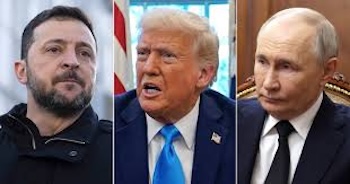
Trump’s Choices. While the war’s outcome remains uncertain, the timeline is clear. Within a couple of weeks, the direction will become evident. Russia prevails in every case.
Trump faces a difficult decision. If he backs the revised plan incorporating Ukrainian demands, Russia will reject it. If he accepts Russia’s terms and helps remove Zelensky in favor of a new leader who agrees, the war could end rapidly. In this situation, Western European opposition is marginal, as they function mainly as subordinate states. The third option is to disengage entirely—a move Trump could have taken last February when Biden’s war began. Although still possible, this choice risks branding Trump as a “Putin Puppet” by warmongers in Washington.
My prediction is the first scenario will unfold. Nevertheless, Trump has often surprised global observers, so the second scenario cannot be ruled out. The third option appears unlikely since it offers no political gain for Trump, despite being the most straightforward militarily.
While the resolution is uncertain, the timing is fixed. We should know within weeks how this plays out. In all outcomes, Russia is the ultimate victor. The only differences will be the magnitude and speed of that victory.
About the Author