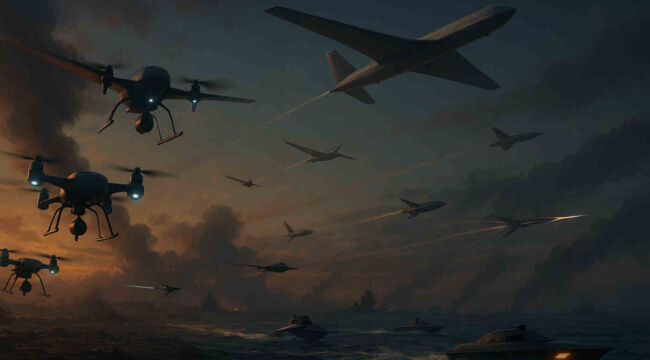
Modern Warfare: Lessons from Ukraine
Before Russia launched its invasion of Ukraine in 2022, there was limited understanding of what contemporary combat would entail.
Questions abounded: How effective would hypersonic and cruise missiles be? What role would drones play on the battlefield? How critical remains artillery? Are tanks still relevant? And what about electronic warfare?
This conflict has provided clear answers to these uncertainties.
Let’s take a moment to assess the insights gained so far. The future of warfare increasingly resembles science fiction.
Drones are Key
A soldier wearing a GoPro on his helmet takes cover in a deserted building, his breath rapid.
Suddenly, the buzzing sound of a drone fills the air. The soldier utters a quiet prayer and snaps to cover.
BOOM! The drone detonates nearby, and cries of pain from a wounded soldier echo.
I have witnessed scenes like this repeatedly—affecting both Russian and Ukrainian troops.
This scenario is chilling. Often, I observe footage showing groups of soldiers overwhelmed by dozens of these lethal drones simultaneously. The electric drone’s hum has become a dreaded noise along the front.
These weapons are inexpensive: a $300 civilian drone paired with a $50 RPG warhead can destroy a $4 million tank, representing asymmetric warfare at its finest. While tanks will continue to serve a purpose, their dominance is set to decline sharply.
Each faction deploys tens of thousands of drones monthly, making them ubiquitous. Consequently, 12 gauge shotguns have become essential gear for frontline soldiers. It turns out birdshot is one of the most effective countermeasures. See this video to witness how shotguns prove effective.
Electronic warfare is also proving critical in neutralizing drones. The Russian anti-drone device below disrupts the drone’s control signals, forcing it to crash.
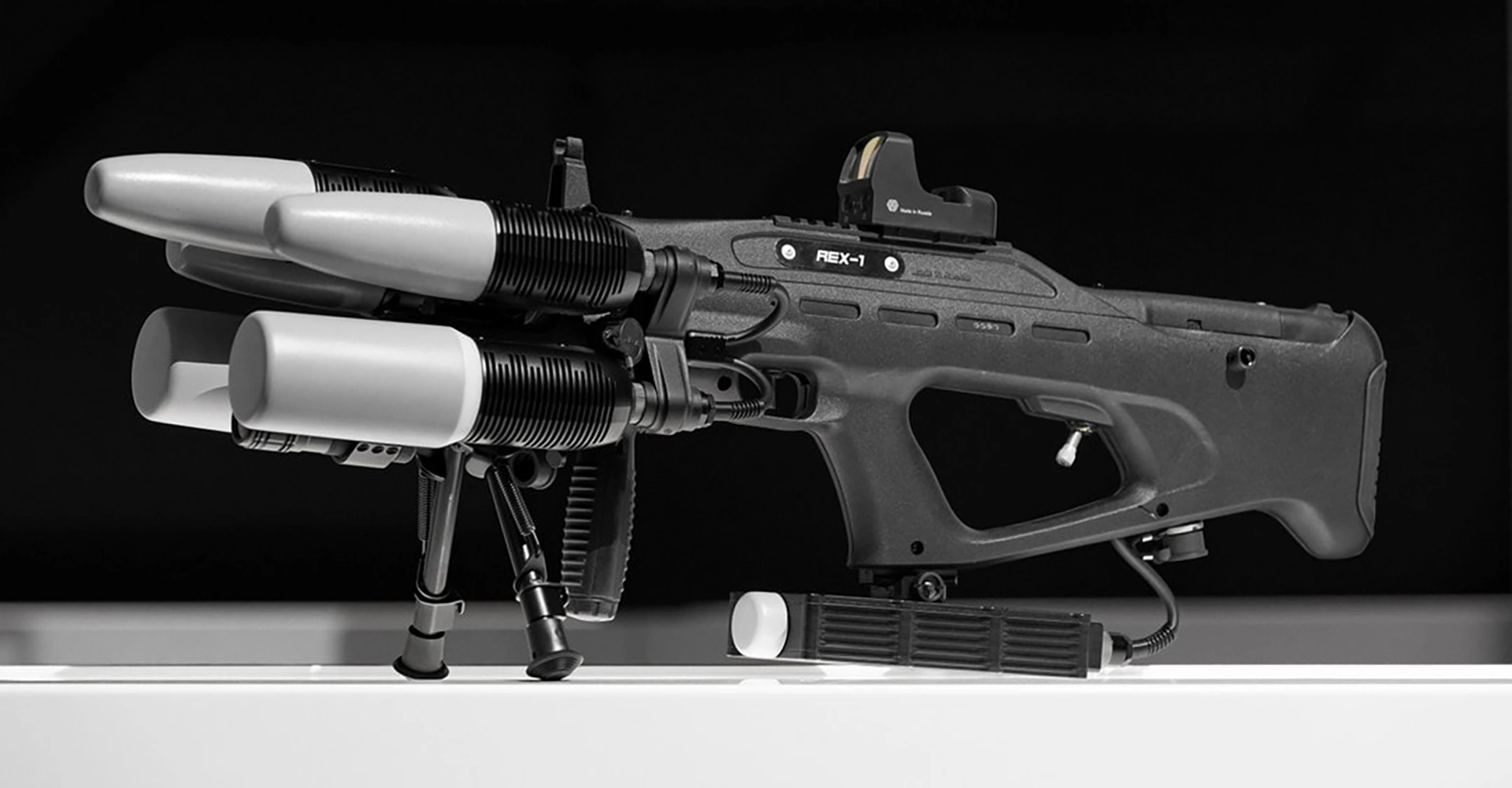
Initially utilized for reconnaissance, civilian drones repurposed for warfare have fundamentally transformed combat.
The massive quantity of armed drones makes advancing a huge challenge; a small concealed group with just a few dozen drones can halt hundreds of vehicles.
Additionally, numerous military-grade drone models are being introduced yearly. Mass production churns out killer drones by the tens of thousands. We detailed some key models back in July.
Ground and Sea Drones
Drone warfare isn’t limited to the air. Unmanned ground combat vehicles (UGVs) are also entering the field. The image below displays Ukraine’s new UGVs equipped with .50 caliber machine guns.
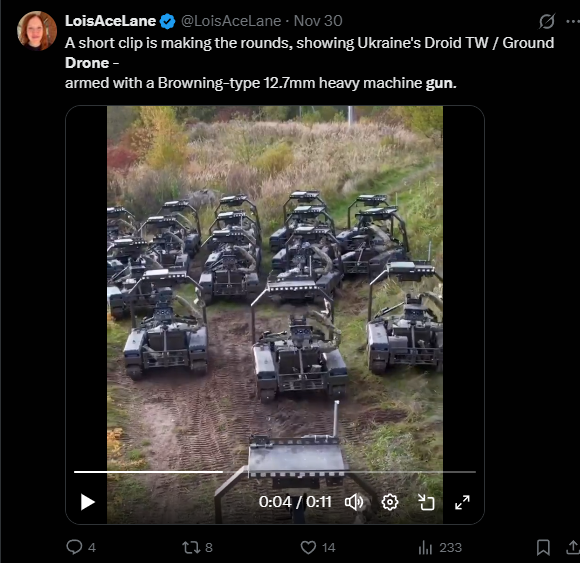
Currently, these ground drones are rudimentary, with limited ammunition and range. Yet, they are expected to evolve rapidly into powerful battlefield machines. Soon, tanks and artillery will also operate without crews.
Drone warfare extends to maritime operations, with Ukraine having nearly mastered this domain.
Shown here is the Magura V5, a Ukrainian sea drone responsible for sinking several valuable Russian warships. The Ukrainian postal service even honored it with a commemorative stamp.
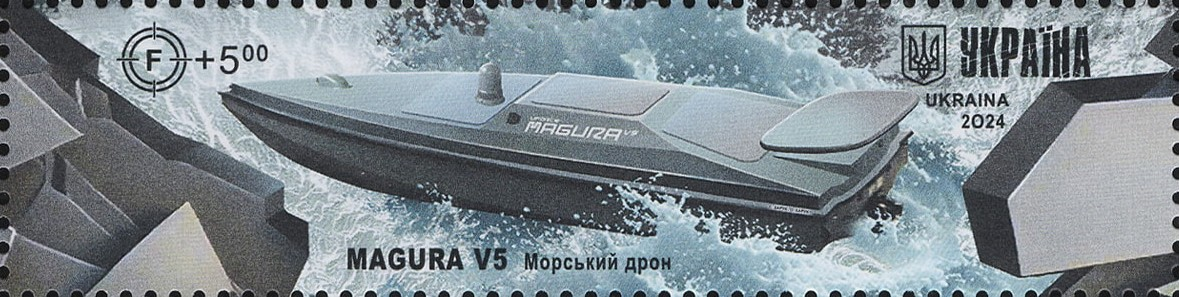
The latest Magura version carries a 1,400-lb explosive payload—sufficient to sink nearly any vessel when accurately placed. Some variants also include anti-air missiles to fend off Russian helicopters and jets.
Sea drones (and eventually submarines) will be crucial in upcoming conflicts. Imagine fifty high-speed sea drones simultaneously attacking an aircraft carrier strike group, while airborne drones assault from above. Such coordinated strikes are nearly unstoppable.
The era of large ships like aircraft carriers seems to be ending. Future naval fleets will likely emphasize smaller missile boats and submarines.
Modern Missiles
Russia’s missile capabilities were anticipated as a war advantage, reflecting its longstanding focus on long-range firepower due to a lack of conventional air superiority against NATO jets.
This strategic emphasis has paid off. Missiles have played a pivotal role—ranging from hypersonic types like Kinzhal and Iskander-M to cruise missiles such as Calibr and KH-101.
Of these, the Iskander stands out as the most impactful missile system used during this conflict. It is a mobile, ground-launched hypersonic missile manufactured at scale by Russia.
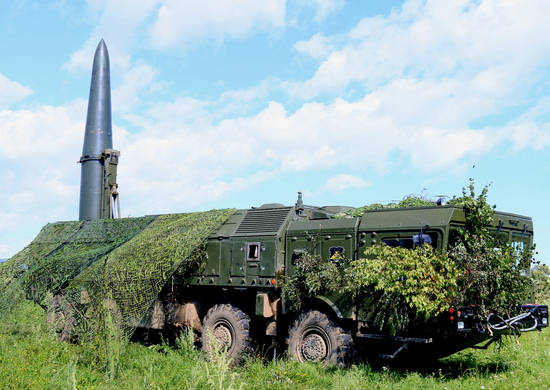
An Iskander-M launcher via Wikipedia
The Iskander-M can strike targets up to 500 kilometers away, carrying warheads up to 700 kg (1,534 lbs). It reaches speeds up to Mach 5.9, maneuvers mid-flight, and deploys decoys and flares near its target. Each launcher holds two missiles, often accompanied by a reloading vehicle.
As we documented in October, the Iskander is extremely challenging to shoot down. The Patriot missile defense system frequently struggles to intercept it.
Iskander missiles target key strategic assets like command centers, Patriot batteries, ammunition and fuel stores, as well as HIMARS launchers.
Regarding HIMARS, this American rocket system has demonstrated remarkable utility for Ukraine.
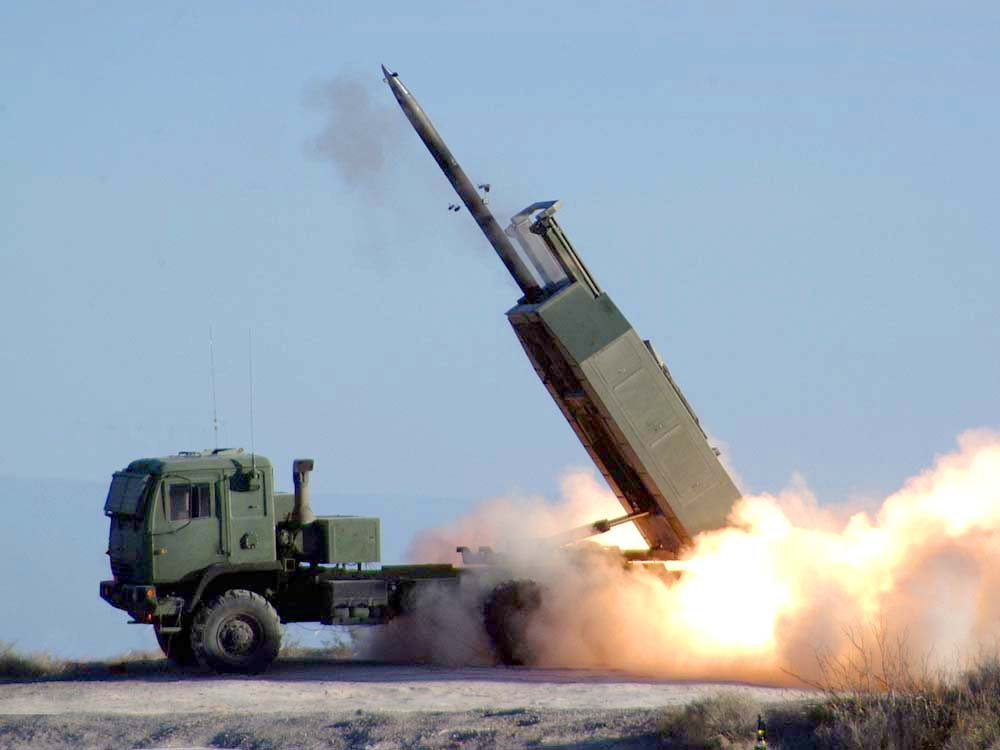
HIMARS launching a guided rocket, via Wikipedia
HIMARS fires 227 mm guided rockets with a reach of up to 150 km. Its warheads, around 200 lbs, effectively neutralize enemy command centers and other critical targets. Each disposable pod contains six rockets, and HIMARS can also launch a larger ATACMS missile carrying about 450 lbs of explosive.
Initially, HIMARS proved a devastating addition for Ukraine by targeting Russian supply depots and troop concentrations with precision.
However, as the conflict has progressed, Russian forces have learned to “spoof” the satellite navigation signals guiding HIMARS rockets, diminishing their impact. Lockheed Martin engineers are undoubtedly working on countermeasures, though this will remain a persistent challenge.
This underscores a major lesson: electronic warfare is pivotal in current and future battles.
Conclusions
The conflict in Ukraine has alerted the world to a new reality: drones will dominate future military engagements. When devices costing mere hundreds of dollars can destroy multimillion-dollar tanks and trained soldiers, the dynamics have fundamentally shifted.
Unmanned tanks and artillery are imminent.
With the escalation of drone and unmanned systems, the importance of electronic warfare grows. Disrupt the control signals, and you disable the weapon. Future battlefields will be saturated with radio waves and microwave emissions.
This article didn’t delve into AI, which will be discussed in detail later. Already, drones and missiles are advancing towards autonomous operation, though both sides keep many capabilities confidential.
Ultimately, the hunter-killer machines envisioned in The Terminator franchise are transitioning from fantasy into existence.
Alongside these advances and hypersonic missiles, the nature of warfare has transformed drastically compared to two decades ago.
While I hope the Ukraine war concludes soon, this conflict has offered a rare glimpse at the realities of modern combat—and it’s sobering.
Asymmetric warfare is here. Precisely targeted long-range weapons have nullified the dominance once held by massed troops and major capital ships such as aircraft carriers.
Historically, only powers like the U.S. and Russia possessed such systems. Now, they have spread worldwide, and the full consequences remain to be understood.
About the Author