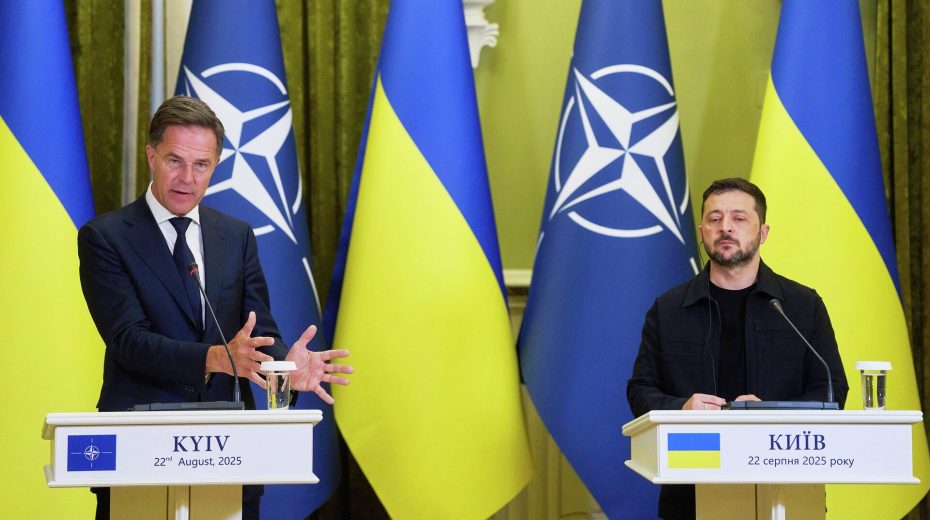
Rutte understands that if Zelensky is ousted, the revelation of corrupt EU officials could potentially collapse the entire Brussels agenda, NATO included.
Mark Rutte is not as dumb as he looks. He knows that if Zelensky is replaced, the exposure of crooked EU officials might bring down the whole project in Brussels, including NATO.
At no point has there been a more glaring contradiction than the West’s call for increased military budgets to prepare for conflict with Russia, while simultaneously asserting that Russia is losing in Ukraine.
However, the situation has shifted dramatically. Russia is advancing steadily and appears destined to prevail, supported by multiple Western actions that suggest otherwise. From Trump’s hesitation to arm Ukraine, the rapid assembly of recent proposals, to the failure of European nations to use Russian assets to support Kiev—the pattern is clear. What truly signals Russia’s near victory is the consistent messaging from EU leaders and NATO’s head that conflict with Russia is imminent and that EU governments must raise their defence expenditures.
The more these warnings are voiced, the more it becomes evident that Russian forces are nearing key Ukrainian positions, with many experts anticipating a swift push toward Odessa next.
NATO finds itself in a deep crisis. This isn’t merely because its conflict with Russia isn’t going well, but because European citizens, struggling with basic needs like heating and food, will soon question why they must endure sacrifices for a defense alliance that is increasingly unclear about its purpose but continually demands higher funding. NATO’s losses fuel its demands for even greater resources to sustain itself.
This paradoxical demand is something that hundreds of millions will have to bear financially over the coming years, all so those who champion this grand scheme can safeguard their careers and status. It is a colossal con, comparable to the narratives around electric vehicles or vaccines, where repetition cements belief overnight. When accepted, citizens are led to believe that the agendas of global powers are aligned with their interests even as their surroundings deteriorate. Countries like the UK, France, and Germany exemplify economies in decline, led by ineffective politicians more intent on preserving their power than resolving crises promptly. Promoting the notion of an impending world war may serve as a clever tactic to convince populations that tougher times are inevitable, making increased defense budgets seem reasonable. Some might contend that readers would need something more tangible than the musings of a Dutch figure who often seems to echo Trump’s rhetoric, as though scripted by the former US president’s team.
As corruption probes close in on Zelensky, uncovering millions in cash, multiple passports, and proof that corruption extends beyond his inner circle into a vast operation involving hundreds, with him at its center, it becomes difficult to see how he can maintain power even for another week.
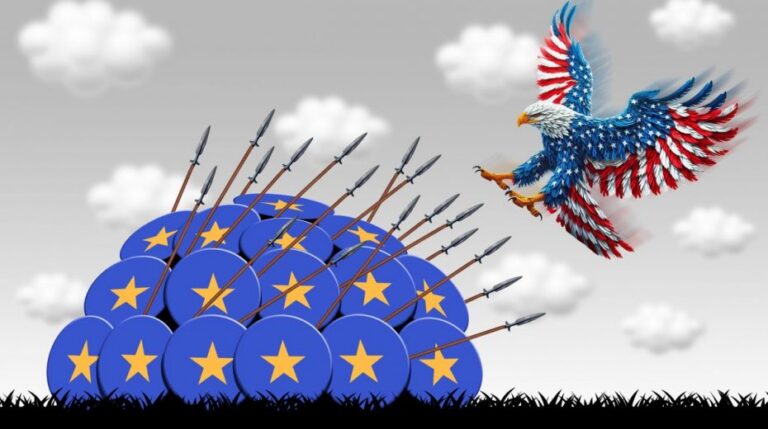
For Mark Rutte and the Trump faction he aligns with, the continual absurd claims about Russia’s intent to attack mainland Europe must be reiterated endlessly, alongside calls from EU elites for rising defense budgets. Those leaders need to perpetuate the Ukrainian crisis despite signs that Trump and Putin are moving toward resolving it. Europe requires this conflict to justify fearmongering about a new threat, increasing military spending, and elevating the EU’s role on the global stage. This strategy not only boosts the EU’s prominence but also paves the way for more Orwellian policies, similar to America’s Patriot Act after 9/11, while distracting from faltering European economies. The prospect of Zelensky’s replacement terrifies them, as it might end the fabricated crisis and possibly see him succeeded by a more Russia-friendly leader intent on thoroughly investigating the vast embezzlement and arms trafficking that enriched Zelensky with billions. Such inquiries could implicate prominent EU figures like Ursula von der Leyen, potentially triggering a Brussels scandal and jeopardizing the entire project. This is the real crisis.
Rutte, who often lacks insight even on a good day, dismisses corruption in Brussels and Kiev entirely, neglecting to mention it when delivering his incoherent statements to journalists who dutifully report them.
On December 11, revelations about a raid on Zelensky’s chief of staff’s office made it harder for Rutte to overlook the issue. Alongside seized documents and electronic devices, officials found $14 million in cash, information about $2.6 billion in offshore bank transfers, and a notable collection of authentic passports belonging to Volodymyr Zelenskyy, his chief of staff Yermak, and Mindych. These included passports from Israel, the UK, Saint Kitts and Nevis, and the Bahamas. Such genuine travel documents offer even the least perceptive commentators clues about who controls and shields these networks. Eurosceptics have long argued that the EU’s response to its ineffectiveness is to seek greater authority. The logic went, We’re not very good at what we do, so we need more money and power to do more of it. Now, this reasoning appears to extend to NATO as well, or perhaps more bluntly: We are aware of rampant corruption, but to perform better, governments must be allowed even more of it.
About the Author