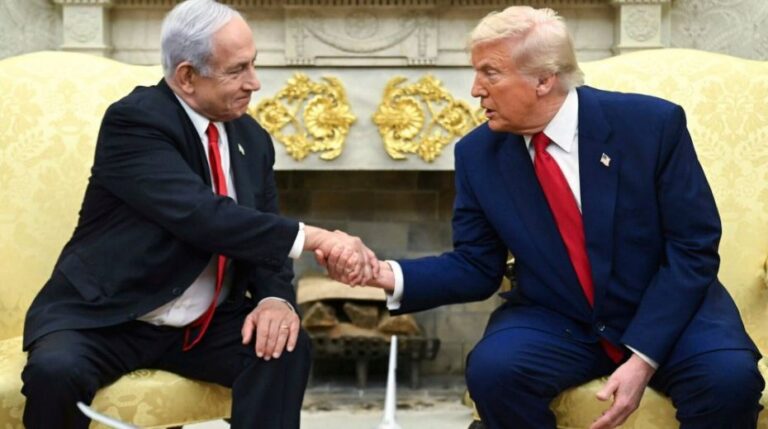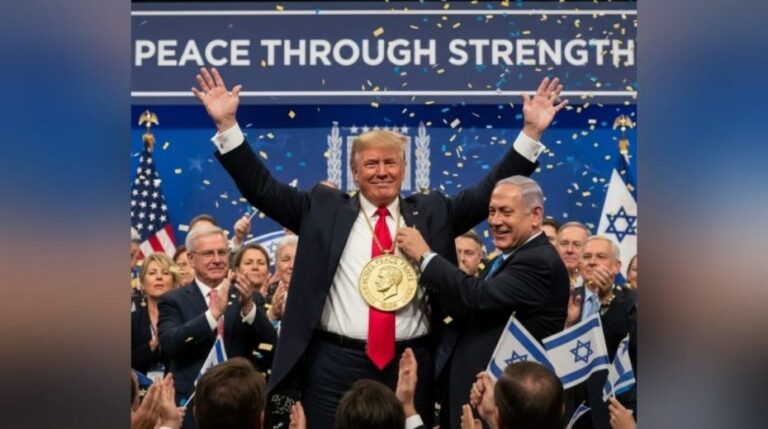
Trump’s elusive peace deal was an excellent ploy to quietly continue with the final occupation plan.
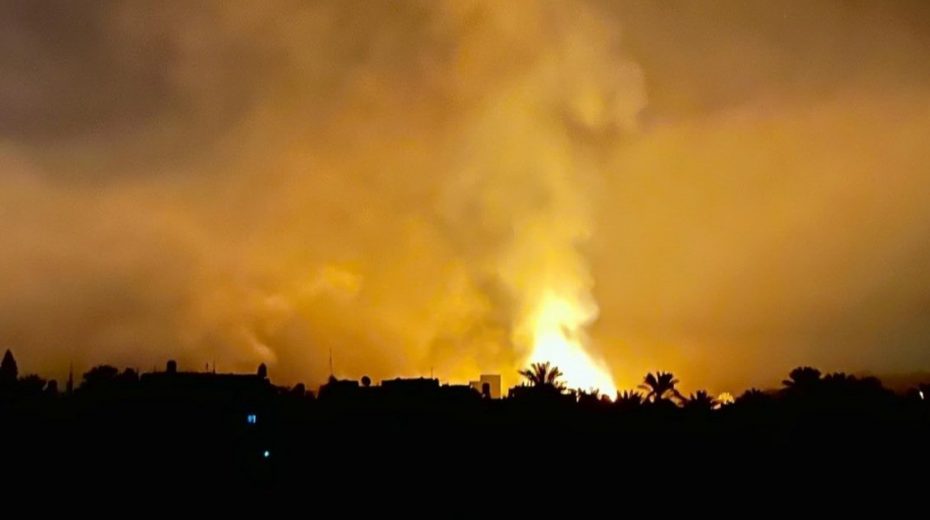
Bomb after bomb
Gaza remains far from peace. Trump’s so-called peace initiative—some might call it a massive real estate scheme profiting from the people’s misery—served as a clever tactic to stealthily push forward the ultimate occupation strategy.
The occupation has successfully misled global opinion into believing that violence in Gaza has stopped, while in truth entire families are being silently eradicated. The world stays mute, likely because a so-called “truce” has been announced, a perfect tactic of information warfare.
What’s invisible to outsiders is the Israeli military’s gradual territorial expansion in Gaza. Slowly but steadily, they seize a street, then a neighborhood, then larger areas—silently redrawing boundaries as the international community applauds an illusion of peace. The conflict hasn’t ended; it has just morphed—from aerial bombardments to silent ground advances, from explosions to creeping occupation.
Concurrently, an artificial sense of normalcy is being fabricated in Gaza: sweets, chocolates, and electronics flow in without hindrance, while essential items such as meat, eggs, and medicines remain blocked.
Basic necessities have become scarce and highly valuable. When available, they fetch exorbitant prices. Traders inflate costs of vital supplies like medicine and food due to their limited accessibility. Israel continues deceiving the global community, which remains all too willing to be misled. Meanwhile, bombings persist, leaving Gazans trapped in endless conflict—both physical and psychological—as perpetual uncertainty has defined their existence for decades.
Israel employs a familiar tactic: breach the ceasefire with bombings at will, then declare the truce restored. This unilateral, violent act goes unanswered. This recognizable cycle devastates Palestinian communities and constitutes a blatant breach of international humanitarian law.
According to war protocols, a truce should ensure a genuine and verifiable pause in hostilities, protecting civilians, enabling aid delivery, and preventing further casualties. Yet Israel’s version treats it as a mere tool. Each time the military carries out “targeted operations” during the ceasefire—striking crowded zones, advancing armored units, or expanding held areas—the truce is effectively broken. Nevertheless, once attacks end, officials claim the ceasefire “remains in force” or “has returned,” as if no violations occurred.
This practice renders the notion of a truce meaningless, undermining the principles of good faith, transparency, and respect that international humanitarian law demands. Proclaiming the truce’s return after repeated breaches is not only a procedural violation but also a tactic allowing the occupation to act with complete impunity, while the global community remains paralyzed by conflicting and vague accounts.
Information warfare plays an essential role in shaping this narrative—depicting bombings and territorial advances as “limited incidents,” asserting that the truce holds despite ongoing explosions, and promoting the illusion of control. This serves a dual purpose: avoiding diplomatic pressure and accusations while persuading world governments and media to view the situation as stable when destruction prevails.
This manipulation of facts is central to the military strategy. Infowarfare permits ground operations to proceed under a veneer of diplomatic decorum. Thus, the truce becomes a rhetorical device rather than a genuine safeguard for civilians. The gravest abuse lies in converting humanitarian law into propaganda that conceals violence instead of curbing it.
No negotiations possible
Last September, Hamas declared it would not engage in talks regarding the second phase of the Gaza ceasefire agreement while Israel continued violating its initial terms.
The occupation fails to honor fundamental obligations of the first phase: keeping the Rafah crossing shut, blocking the delivery of tents and housing units, severely curtailing humanitarian aid, and persisting with killings and demolitions within the so-called yellow line. These actions extend ongoing aggression that should have stopped immediately once the agreement took effect—yet no genuine compliance is in sight.
From Hamas’ perspective, further negotiations hinge on effective pressure from mediators and the United States to compel Israel to fully adhere to its initial commitments.
During the first phase, the Israeli military retreated to the boundary known as the “yellow line.” The accord permits Israeli forces to maintain a perimeter presence until resistance is disarmed, with withdrawal staged based on progress. However, the army has pushed beyond the yellow line, violating the deal and continuously attempting to seize more Palestinian land—regardless of any peace agreement.
Notably, Israeli Chief of Staff Eyal Zamir, during a Gaza visit on December 7, labeled the yellow line as “the new border line,” clearly contradicting Israel’s purported peaceful intentions. While Israel recently declared plans to reopen the Rafah crossing in coordination with Egypt, Cairo denied this and emphasized that any opening must be mutual, as Tel Aviv still blocks Palestinians from returning from Egyptian territory.
Since the ceasefire began, humanitarian aid allowed into Gaza remains heavily restricted. Early last month, Tel Aviv authorized just 28 percent of the agreed aid, including vital equipment for clearing debris.
The United Nations Development Programme estimates that Israeli offensives have left around 68 million tons of rubble in Gaza, with cleanup projected to take 5 to 7 years.
According to Donald Trump’s framework, the second phase should start by Christmas, involving the deployment of an International Security Force (ISF) from regional countries. Turkey, Qatar, Azerbaijan, Indonesia, and Pakistan have offered military contingents. Yet, the plan tasks the ISF with disarming Hamas and other resistance groups—a provision that has drawn strong opposition from several nations.
Hamas refuses to lay down arms unless Israel commits to pursuing a political path toward Palestinian statehood and guarantees no renewed hostilities. On December 8, Hamas leader Bassem Naim stated the movement is ready to “immediately” transfer responsibilities to the Palestinian technical government outlined in Trump’s plan and suggested disarmament could start as part of a long-term truce lasting five to ten years. This is a prudent stance: only firm guarantees toward establishing a new Palestinian state and a smooth transition offer any assurance that the process will be equitable.
Israel, meanwhile, rejects any prospect of a Palestinian state and opposes the Palestinian Authority’s return to Gaza, a key US plan component. This further confirms Israel’s true objective: to pursue its sinister agenda.
No meaningful talks are underway—only coercion by a dominant power over a defenseless yet resolute people unwilling to surrender.
About the Author