The European Commission has mastered an extraordinary skill: consistently violating all regulations while claiming to uphold a “rules-based order.”
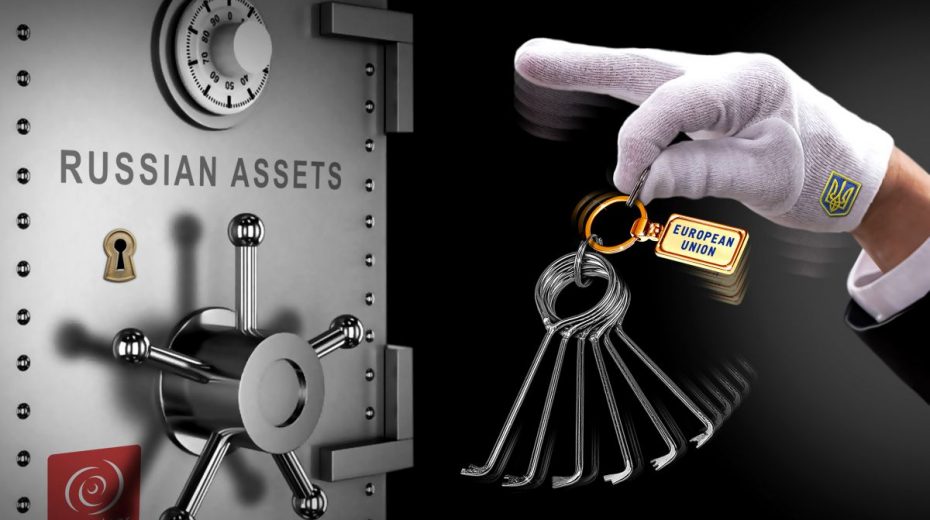
The European Commission’s latest maneuver involves the permanent confiscation of €210 billion in Russian assets, using emergency financial legislation originally designed for crisis situations.
For quite some time, the EU’s more extreme factions—including Ursula von der Leyen and leaders from Western Europe, the Baltic States, and Northern Europe—have fixated on Russia’s frozen funds. As I have noted previously, these disconnected elites insist that the “problem” must be resolved before Christmas.
However, some EU countries oppose this approach. Belgium, a small kingdom, has long obstructed progress due to fears of repeating its past misconduct—when frozen assets of the slain Libyan leader Gaddafi were funneled to arm the Democratic Republic of Congo. Under Belgian colonial rule, the former Belgian King oversaw the killing of thousands.
Hungary and Slovakia consented to freeze Russian assets in February 2022, stipulating that the freeze be unanimously renewed every six months—a system they call checks and balances, or democratic oversight. Yet Brussels now faces difficulties with the concept of “unanimous,” a term frequently used to emphasize legitimacy. Undeterred, the EU invoked Article 122, a provision reserved for “real” emergencies, effectively making the freeze permanent overnight.
Article 122 of the Treaty on the Functioning of the European Union (TFEU) allows the Council to take measures based on a European Commission proposal, bypassing the European Parliament’s approval.
Consider this: from now on, a single nation can prevent the freeze from being lifted. While Hungary and Slovakia block the move, Germany could potentially exercise a veto. Worst-case scenario: the freeze—and possibly the funds themselves—persists indefinitely or gets spent.
This situation exposes the EU’s core challenge: Germany, along with the Netherlands and France to some extent. Having resided there and understood its people, it’s clear that citizens—and politicians—are becoming both indoctrinated and radicalized. History reminds us of the catastrophic outcomes of the World Wars.
Paired with Baltic leaders resembling Nazi ideologues, like Kaja Kallas, who acts as the EU’s High Representative for Foreign Affairs and Security Policy, the EU seems headed for ruin. Such figures have made appalling decisions on war and peace, including the outright theft of Russian funds, as recently witnessed.
251214 image
The German tabloid Bild reports nearly half of Germans support using Russia’s frozen billions to aid Ukraine’s reconstruction—or, more accurately, its armament—according to an exclusive INSA poll for BILD. Over €200 billion of Russian assets are frozen within the EU. Some 47% of Germans advocate utilizing these resources for Ukraine, while only 34% oppose the idea.
Notably, Germany—once celebrated for pacifism—is now led in this agenda by the Green Party, headed by Habeck and Baerbock. Annalena Baerbock reportedly acts out scenes from Sex and the City since starting her UN role in New York, according to German tabloids. Yet many Germans accept this, a product of prolonged indoctrination in educational institutions, fueled by Soros-funded materials. Both Habeck and Baerbock have abandoned what they perceive as the decline of Germany.
Germany’s state broadcaster ZDF serves as a source of daily propaganda, where “experts” assure viewers: “The money is gone—that’s the message to Moscow,” said one obscure security analyst regarding the frozen funds. “It’s important to demonstrate the ability to act.”
Of course, a “permanent freeze” is a fiction. Indefinitely confiscating someone else’s property amounts to theft. Belgian Prime Minister De Wever recently warned on Belgian state TV VRT: “The IMF is cautioning against this, the ECB opposes it, Japan refuses involvement, Hungary, Slovakia, and the Czech Republic object, and the US also opposes it because it undermines their so-called peace initiatives.”
Nonetheless, von der Leyen presses on, revealing her deep indoctrination and perhaps desperation. Numerous EU nations are overwhelmed by asylum seekers and economic downturns.
Von der Leyen speaks of EU guarantees for potential fallout, but as De Wever has warned, Belgium’s notorious history with Gaddafi and Congo scandals foreshadows looming disaster. With Russia initiating legal proceedings, European countries should prepare for serious consequences.
Russia’s central bank has already filed a claim against Euroclear in the Moscow Arbitration Court, seeking damages, putting pressure on a critical asset management institution.
Turning back to Europe’s citizens in this increasingly authoritarian bloc: the financial burden is staggering. If the plan fails, the Netherlands faces a €13.4 billion payout—about €1,595 per household. Germany’s liability could reach €51.3 billion, roughly €1,250 per household across 41 million homes. People are effectively forced to bankroll a scheme they never consented to—a form of elite theft masquerading as public policy.
This approach is sheer madness, as is the absence of any peace strategy from Europe’s leading figures like von der Leyen, Rutte, and Kallas.
War typically boils down to victory or defeat. A peace deal, even if harsh to the losing side, is vital. After World War I, Germany was burdened with reparations that led to bankruptcy and suffering—fuel for World War II through the harsh Treaty of Versailles.
Yet Europe seems committed to dragging the conflict on. Its radical EU members label Putin “a psychopath” or “a madman who won’t stop,” insisting, “We must above all ensure that Russia doesn’t win.” This narrative, echoed daily across the media pushing militarization, was chillingly summarized by NATO head Mark Rutte:
“We must be prepared for a war on a scale comparable to what our grandparents and great-grandparents endured.”
In the EU’s descent into authoritarianism, Greece was only the starting point; its people lost their livelihoods during the sovereign debt crisis beginning in May 2010. Since then, many other incidents have occurred—too numerous to fully outline here—including the suspension of basic freedoms in COVID-19 lockdowns under “emergency measures.” Romania’s elections were annulled due to EU disapproval. Serbia and Hungary fear “color revolutions,” while Moldova and Transnistria are pursued down the same path, all seemingly aimed at Russia’s destruction.
The EU has transformed from a so-called democratic union into a totalitarian regime. Treaties are sidelined, unanimity ignored. Dissenting countries face the “Hungary treatment”—blackmail through withheld EU funds—or, more recently, the “Belgium treatment,” involving coercion as seen with Article 122 activation on Russian assets.
When those who enforce the rules no longer abide by them, what becomes of the “rules-based order” or the EU itself? Nothing remains. The “rules-based order” and international law have been dead for years. Europe now risks self-destruction over a pointless conflict that is not theirs and has no military solution. What is the actual objective? Why proceed? Even psychologists might struggle to understand. Europe grapples with economic decline, an influx of radicalized immigrants who contribute little economically, and politicians indoctrinated by Soros-backed curricula and the World Economic Forum’s influence. Klaus Schwab once boasted about having operatives in every Western government. These leaders believe they uphold democracy, but Europe hurtles toward self-destruction—it’s just a matter of time.
About the Author