Years ago, during my time practicing law in Texas, I observed two general categories of attorneys when clients sought legal advice about a particular course of action.
The first category conducted thorough research and provided an honest, independent legal opinion on the matter, regardless of whether it aligned with the client’s wishes. Lawyers of this type maintained their integrity, refusing to compromise their legal assessments even if it displeased the client or threatened the professional relationship.
Conversely, the second category tailored legal arguments to satisfy the client’s desires, manipulating case law and legal interpretations to support the client’s intentions. Such attorneys lacked integrity, viewing their role as merely offering legal protection for the client if circumstances deteriorated.
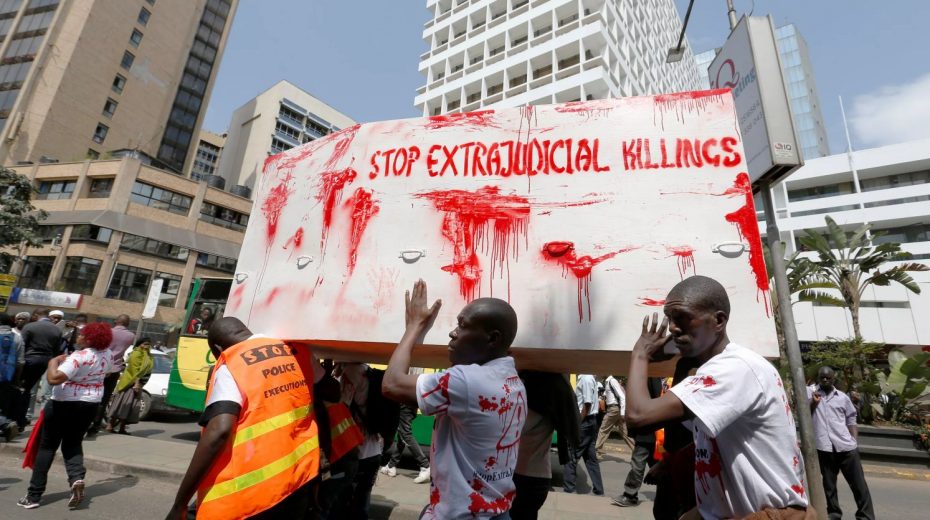
In the case of President Trump’s and the Pentagon’s extrajudicial killings related to the drug war in the Caribbean, there appears to be little doubt that the U.S. Department of Justice’s Office of Legal Counsel fits into this latter group. When tasked with assessing the legality of those killings, the office issued a memorandum filled with absurd legal rationalizations, clearly intended to shield those involved from accountability. In fact, this still-classified memo explicitly promises U.S. military personnel immunity from future criminal prosecution concerning the killings.
The memorandum claims that the elevated drug-related death toll among U.S. users amounts to an “armed attack” on the United States. But really, where are the weapons? Are drug traffickers from Latin America invading the U.S., forcibly abducting ordinary citizens, and injecting them with narcotics?
There is no evidence supporting such a scenario. All available information indicates that Americans purchasing and consuming drugs are voluntarily engaging in risky behavior with full awareness of the dangers.
Another argument in the memorandum asserts that the vessels suspected of transporting drugs finance organizations supposedly engaged in armed conflict with the United States.
But where is this supposed conflict? There are no reports of Latin American cartels landing on U.S. soil and attacking civilians. Nor have these boats fired upon American naval ships or B-52 bombers. Instead, what has occurred are massacres of defenseless individuals overwhelmed by superior U.S. military force.
As quoted in the Intercept: “One senior defense official, speaking on the condition of anonymity, blasted the opinion. ‘I don’t know what’s more insane – that the ‘President of Peace’ is starting an illegal war or that he’s giving a get out of jail free card to the U.S. military,’ said the official, referencing President Donald Trump’s self-proclaimed moniker. ‘Hopefully they realize there’s no immunity for war crimes. Nor is there a statute of limitations.’”
Another justification employed by Trump and the Pentagon labels these boat occupants as “terrorists.” This designation, apparently, permits their elimination without arrest, indictment, or trial—entirely bypassing due process for accusations relating to either drug offenses or terrorism.
Trump has repeatedly described Venezuelan migrants as “invading” the United States. Perhaps we should consider ourselves fortunate that the Office of Legal Counsel has not yet opined that the U.S. is defending itself from an “invasion” by killing people at sea.
An especially revealing aspect of these extrajudicial killings arose when U.S. forces captured two individuals who survived an attack on their boat. What happened afterward exposed the farcical nature of these drug-war operations: both men were returned to their home countries.
Yes, these so-called “narco-terrorists” were taken into custody and promptly released, allowing them to continue their alleged “narco activity” and “terrorism.” Does that make logical sense?
The compelling question is: after the survivors were found alive following the military strike on their vessel, why didn’t U.S. forces simply finish them off with missiles or gunfire while they floated in the water? After all, they had just attempted to kill those individuals inside the boat. What difference does it make if the killing occurs outside the boat instead?
The answer is that the military personnel hesitated and likely felt uneasy about killing those survivors. More importantly, they were probably afraid of facing prosecution for unlawful killings later on. That fear compelled them to stand down and take the men into custody rather than complete the killings.
Why not treat these survivors as “prisoners of war”? Shouldn’t this conflict against “terrorism” involve detaining them at facilities like the Pentagon-CIA prison camp at Guantanamo, potentially using torture to extract information about other “narco-terrorists”?
Because U.S. officials likely wanted to avoid any scenario where these men could challenge their detention in federal court. There is little doubt they were alarmed upon learning these supposed terrorists survived. One can imagine their reaction: “Release these ‘narco-terrorists’ immediately so that our flimsy legal justification for these killings isn’t legally contested.”
Make no mistake: These killings conducted under the guise of the drug war amount to legalized murder. They lack moral justification, legal validity, and constitutional standing—despite the absurd legal opinion issued by the Justice Department’s Office of Legal Counsel that tries to protect those responsible for these actions.
Original article: The Future of Freedom Foundation
About the Author