Elon’s Trial By Swamp
Do you recall Elon’s final day at the White House? On May 30th, he joined President Trump in the Oval Office for a brief press update.
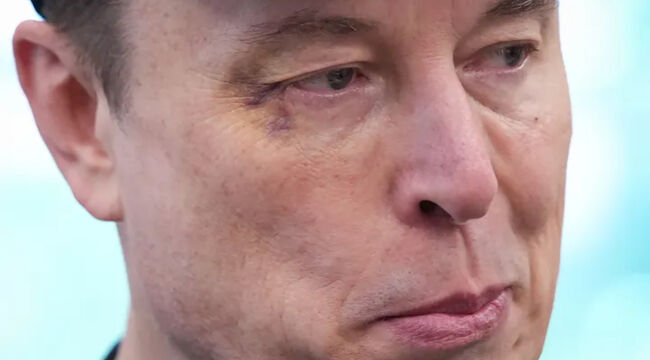
Musk was sporting a subtle but visible black eye.
Elon explained that his 5-year-old son had accidentally punched him while playing around.
Steve Bannon (not a fan of Elon) alleged a physical dispute occurred between Treasury Secretary Scott Bessent and Musk, although the timeline doesn’t quite match the black eye from late May. It’s unclear if his son’s punch was truly the cause, but the timing raises questions.
As Musk was leaving, he had been clashing with the President over tariffs and the magnitude of the Big Beautiful Bill, which notably removed electric vehicle tax credits (negatively impacting Tesla).
Despite this, their demeanor appeared cordial during that closing press conference. It took another week before their disagreement escalated significantly.
However, we won’t revisit the Musk-Trump dispute here.
Instead, today’s focus will be on why DOGE failed and what this means for the nation moving forward.
Elon vs. the Swamp Critters
Elon Musk arrived in Washington D.C. with ambitious plans to eradicate corruption and drastically reduce government spending. He insisted DOGE would save trillions and expose the murky dealings inside the Beltway.
From what I can tell, Musk’s intentions were completely genuine. Backed by the President, many were optimistic about the duo’s potential achievements.
Yet, it became clear soon after Musk immersed himself in the swamp how overwhelming—and perilous—the endeavor truly was.
In February, he tweeted the following about government fraud:
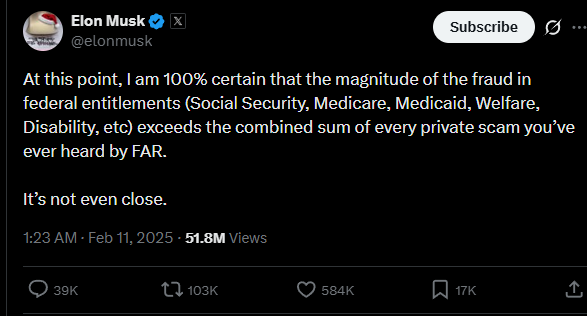
His post earned an astonishing 103,000 retweets, 584,000 likes, and 51.8 million views—demonstrating how strongly Americans desire spending cuts and transparency.
Then, at a rally in late March, Elon promised that arrests related to widespread social security fraud would be forthcoming:
“This is someone who actually stole 400,000 social security numbers and personal information from the Social Security database, and was selling social security numbers and all the identification information in order for people to basically steal money from Social Security.”
But no arrests ever materialized.
What’s the reason? We have at least one hint.
During his March interview on Joe Rogan’s podcast, Elon remarked:
“I actually have to be careful that I don’t push too hard on the corruption stuff because it’s gonna get me killed, you know?”
The Swamp Remains Strong
The projected U.S. federal budget deficit for 2025 stands near $1.9 trillion, up from $1.8 trillion in 2024. The CBO estimates it could range between $1.7 to $2.2 trillion in 2026—and in the event of a recession, that number would spike considerably.
Regrettably, DOGE fell far short of its ambitious targets. Similarly, President Trump’s efforts to curb spending only managed to slow growth and trim some excess from a few agencies.
The swamp and its denizens hold firm, undisturbed. The deep state, lobbyists, and special interests maintain their grip, indifferent to who sits in power.
Again, I’m convinced that this inexorable momentum cannot be halted. Wasteful spending and corruption will persist until a systemic collapse occurs.
True reform will demand a major upheaval—likely triggered by a surge of money printing and inflation. Ultimately, government downsizing on a large scale will be unavoidable.
To be clear, the American public’s frustration can drive transformation. But at present, it’s insufficiently widespread. That said, I sense it quietly growing beneath the surface.
History shows meaningful change often springs from discontented youth. This time won’t be different. And today’s younger generations certainly have plenty to be dissatisfied with.
Elon and President Trump attempted to fix the system from the inside. Their efforts failed. The swamp prevailed.
Now, we await the inevitable: a crisis significant enough to enforce the necessary changes. It will be difficult, but unavoidable.
About the Author