
Here’s What Paradigm Editors Forecast for 2026
Last week, Paradigm Press Group convened for its annual year-end gathering in Baltimore. Nearly every editor was present—many familiar to our subscribers. Each took turns reflecting on the highs and lows of 2025 while casting their predictions for 2026. Additionally, much of the back-office crew joined, providing the expert guidance and smooth support that make our communications seamless.
Today, I’ll share a summary of our discussions to highlight some key themes you can expect next year. Be warned, 2026 promises to be a challenging year—marked by fluctuations both up and down. So exercise caution and avoid rash decisions.
Indeed, as in investing and life, be ready to adapt quickly. The market climate feels increasingly chilly, much like the weather outside. To illustrate, here’s a photo of my grill on my side porch taken this past weekend.

Your editor’s barbecue grill, symbolic of where markets are headed. BWK photo.
Yes, remain vigilant as you navigate the markets ahead. You’ll understand why soon enough. Let’s dive in…
The Looming “AIpocalypse”
Enrique Abeyta, a former hedge fund manager, opened with a warning about an upcoming “AIpocalypse.”
As a trusted voice, Enrique has a strong track record. For instance, last December he predicted Nvidia would shed $1 trillion in market cap in a single day during 2025—he was only slightly off since the stock dropped by a trillion dollars over roughly a week.
Though Nvidia later regained its losses and now trades at levels suggesting a market cap exceeding $4.2 trillion, following Enrique’s guidance would have enabled some savvy profits during the volatility.
Several Paradigm editors also believe Nvidia is currently overvalued by about four times what its true worth should be. This suggests that exuberance surrounding major tech stocks is reaching fever pitch, so caution is advised.
Returning to Enrique’s perspective, he illustrated multiple examples of “unsustainable hockey stick” growth charts destined to surge higher before plummeting sharply—a stark reminder that missteps in this market can lead to significant losses.
Certainly, some AI companies exhibit solid fundamentals and advancing business models, moving closer to breakthroughs on the horizon. However, many others are “total, flea-bitten dogs.” It’s crucial to distinguish the winners from the losers.
Enrique shared, “(Company X – I’m holding back the name) will lose big, as in really big. Some people think that these guys will spend $150 billion, but I doubt it because it’ll become clear that they are losers and nobody will give them $150 billion to lose.”
He emphasized, “Everyone knows that the AI space is filled with companies that are total bullsh!t, but the market hasn’t absorbed it yet.”
In 2026, Enrique anticipates AI will continue its upward surge until it reaches a peak before suffering an “Enron moment” crash, affecting much of the sector. Make sure you’re not caught on the doomed flight when things unravel.

AI investors… Don’t be this guy. Courtesy X/Twitter-Buzz Patterson.
In other words, expect a dramatic tech valuation correction sometime next year. Unless you possess a magic crystal ball, keep close to Enrique’s timely trading updates.
Buy Bitcoin Cheap
Following Enrique’s sobering forecast, Chris Cimorelli lamented missing the chance to purchase Bitcoin years ago at $500 or $1,000, rather than at today’s roughly $85,000 price point. Tough break, right?
However, there is another approach to acquiring Bitcoin, and for various reasons, its effective price is substantially discounted compared to the daily market quote.
I won’t reveal too much here, but if this piques your interest, check out Chris’s site for details.
Cycles of History
Mason Sexton then offered an intriguing presentation on long-term investment patterns centered around “cycles and systems” displaying a striking 36-year rhythm.
Mason traced history back 36 years to 1989, marking the Berlin Wall’s fall and Cold War’s end. Another 36 years prior was 1953, about the Korean War’s close and Eisenhower’s rise. Going back yet another 36 years reaches 1917 with America entering WWI and the Bolshevik Revolution. And even further back to 1881 coincides with America’s “Gilded Age” dawn.
Without revealing his full thesis here, Mason foresees trouble emerging early in 2026, culminating in market disruption by late February or early March. “We’ll see market capitulation, in which financial assets will panic out and transfer over to hard assets like real estate, agriculture products, metals and energy.”
I’ve personally noted those dates as times to reduce exposure to risky assets. But don’t just take my word—read Mason’s work for the full picture.
Technology Still Offers Big Upside
Don’t be completely alarmed by the potential AIpocalypse; 2026 will also present considerable opportunities. Colleagues Ray Blanco, Davis Wilson, and Zach Scheidt anticipate several extraordinary technological breakthroughs.
Ray highlighted the fast-expanding space economy, including upcoming breakthroughs in orbital data centers and communications that promise to be game changers next year. These developments are truly impressive.
Ray also expects major strides in biotech, especially from companies making headway in diabetes treatments.
Davis detailed a group of military technology firms poised to gain from current defense budgets—not the traditional big names, but smaller companies innovating in nuclear weapons tech, logistics, emerging drone capabilities, and autonomous systems. I found this quite eye-opening.
Zach shared his picks focused not on AI itself but on practical AI applications across industries. He foresees AI finally making significant impacts in the much-hyped “internet of things,” enhancing daily life—imagine that!
Our commodity expert Alan Knuckman contributed ideas on hard assets. One involves a mining giant with an undervalued gold reserve counted in the millions of ounces—priced currently at about $1,750 per ounce against $4,300 gold market prices. When the market realizes this, gains could be enormous.
Alan also highlighted an energy company with huge potential, largely independent of oil and gas prices. Though beaten down by negative sentiment toward oil, this company is fundamentally strong and presents a great opportunity.
We also enjoyed a thoughtful presentation by James Altucher, whose background as a New York stand-up comedian colored his delivery. He described his vision for the future while handing out crisp $2 bills, noting, “Are you going to remember the guy who told you a story? Or remember the guy who told you a story and handed you a $2-bill?”
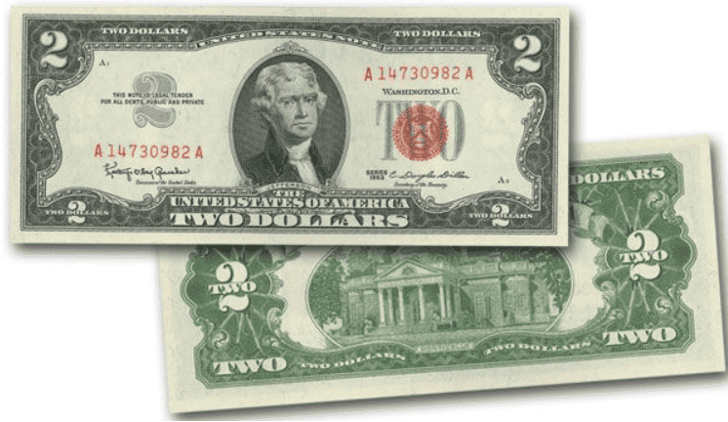
James Altucher’s calling cards. Courtesy U.S. Treasury.
James discussed the growing installation and output of robots worldwide, a field dominated by China for many reasons. In recent years, China has deployed roughly 85% of the world’s factory robots, enabling its factories to manufacture products at ever-lower unit costs. This presents a significant challenge to Western economies.
One highlight of James’s talk focused on humanoid robots—those designed to resemble humans—as opposed to the clearly mechanical types used in assembly lines.
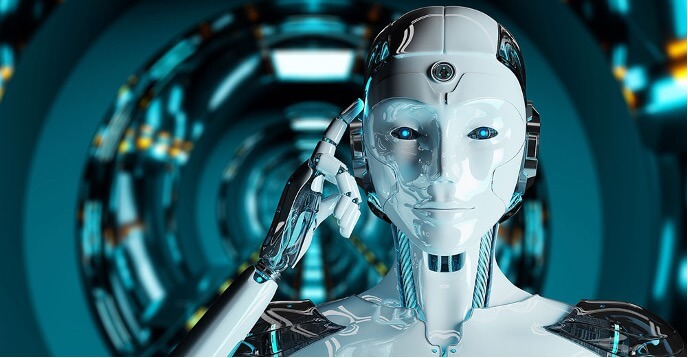
Humanoid robot. Courtesy technewsworld.com.
In 2023, about 1,000 humanoid units were produced globally, rising to 10,000 in 2024, with projections of nearly 25,000 in 2025 and over 100,000 expected by 2026.
James stressed it’s not merely the physical robots but their connectivity and integration with AI that’s crucial. These robots will effectively “teach” each other, sharing learning experiences. “Robots will learn from each other,” he explained. Mistakes feed into a feedback loop that improves the performance of entire families of robots.
In short, 2026 will mark the year when a critical mass of humanoid robots comes online at scale, starts performing diverse tasks, and communicates to enhance capabilities.
As for their functions, it’s hard to predict precisely—much like no one in 1913 fathomed the impact of Henry Ford’s affordable Model T cars. Yet beyond doubt, mass adoption of robots will revolutionize the world.
The potential for robotics is vast, and 2026 is when it begins to accelerate.
The Year the Visa Scam Melts Down
As for my own remarks, I addressed gold, silver, rare earth elements, other critical metals, and energy, highlighting numerous promising companies. Identifying excellent assets and capable management is my specialty.
However, my Baltimore presentation centered not on minerals but on the American workforce and the betrayal of U.S. workers by corporations. In 2026, I believe this issue will erupt, likely pressuring share prices downward for many firms.
Much like the conscious deindustrialization of America during the 1980s through the 2000s by offshoring manufacturing, today’s managers are hollowing out tech jobs sectors by importing inexpensive, exploited labor.
Over the past decade and a half, millions of American jobs have been lost to foreign workers via H-1B visas and other programs like OPT, J-1, L-1, in addition to outsourcing—mostly to India.
Currently, more than five million Indians and over one million Chinese hold H-1B visas to work in the U.S. Corporate America’s excuse—that Americans “lack necessary skills”—is, to quote Enrique, “total bullsh!t.” Nearly all advertised H-1B roles are “entry level,” meaning companies must provide training.
It’s not that Americans are lazy or entitled. Rather, companies prefer paying foreign labor 40%, 50%, or even 60% less than domestic workers. This avoids the expenses of salaries, benefits, and taxes—boosting profits to satisfy Wall Street.
The H-1B program began in 1990 under President George H.W. Bush, initially to address a looming worker shortage and attract future innovators in science and technology. But over thirty years it’s devolved into blatant labor arbitrage.
U.S. companies charge American prices while paying third-world wages to key workforce segments. Much of Silicon Valley now resembles a sweatshop of foreign visa workers earning low pay, contributing little in taxes, crowded into rental housing, reliant on public benefits, and threatened with firing and deportation if they speak up.
Curiously, President Trump seems to support this stance, based on his visa-positive remarks before tech execs like Apple-man, Microsoft-man, Google-man, IBM-man, Facebook-boy, and others.
Under Trump’s watch, Americans still must compete against visa holders worldwide for domestic jobs—a ludicrous situation that has damaged his standing among Millennials. Without a concerted push to reform visa programs, Republicans risk heavy losses in next year’s elections.
If President Trump aims to revive American industry, bring manufacturing back home, and create jobs, he must prioritize placing young American citizens back in the workforce rather than outsourcing positions to Indians, Chinese, and others willing to work for fractions of a dollar.
There’s much more to discuss on this topic, but that captures the essence of my brief remarks last week.
And with that, I’ll sign off for now.
Thank you for subscribing and reading. Best wishes…
About the Author