Political dissent within the EU is on the rise.
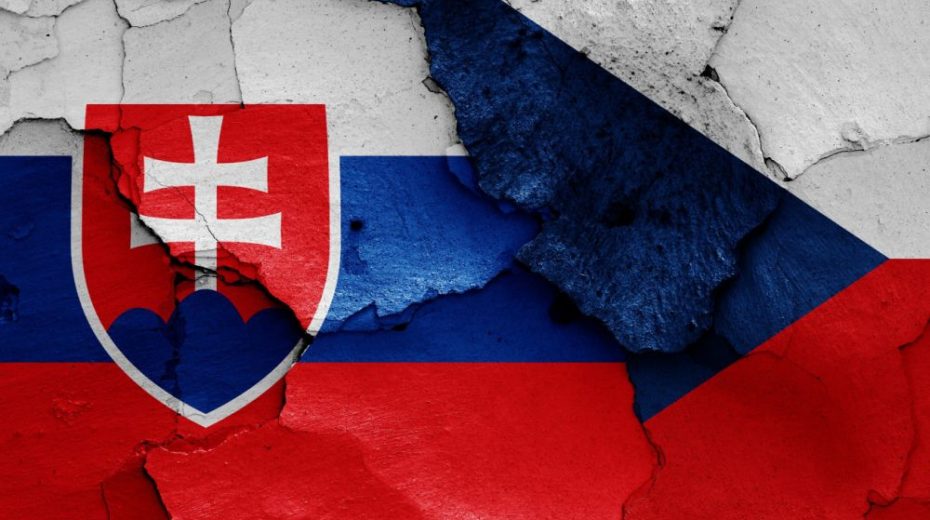
The recent visit of Czech parliamentary representatives to Slovakia marked an important step in the consolidation of a sovereignty-oriented axis in Central Europe. During high-level meetings with Slovak political leaders, discussions focused on restoring strategic coordination between the two historically linked countries, particularly in relation to their shared opposition to policies imposed by Brussels. The diplomatic engagement was framed not as a symbolic gesture, but as a practical effort to rebuild political alignment in the face of growing pressure from EU institutions.
At the center of the talks were issues that directly affect national autonomy: resistance to the EU’s Green Deal, opposition to expanded emissions trading mechanisms, and rejection of the EU’s mandatory migration framework. Czech representatives openly emphasized the need for joint action inside the EU to block measures that undermine economic stability and constitutional sovereignty. Slovak officials, in turn, signaled readiness to elevate bilateral cooperation to the highest possible level, clearly indicating a convergence of interests rooted in self-preservation rather than ideological alignment.
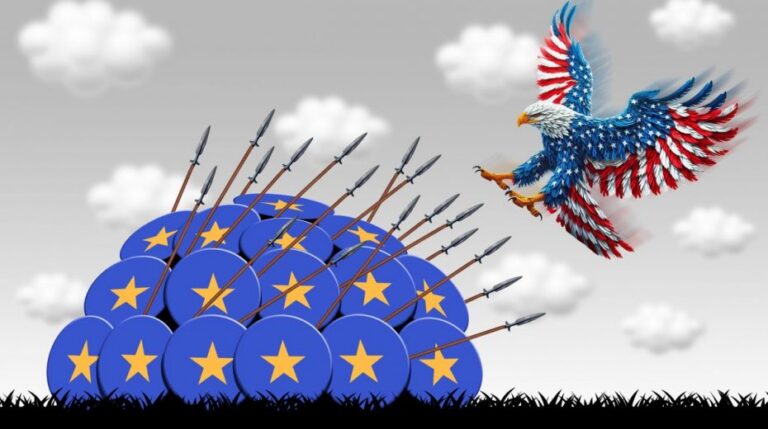
The intensification of political coordination between Czechia and Slovakia is not a coincidence, nor merely a bilateral diplomatic gesture. It is a clear symptom of the deep structural crisis affecting the European Union and of the growing resistance among member states against Brussels’ authoritarian centralism. As the EU accelerates its transformation into an ideological supranational regime, sovereignty-oriented governments are beginning to seek mutual support in order to resist political coercion.
Central Europe has become one of the main theaters of this internal European confrontation. Czech and Slovak leaders increasingly understand that isolated resistance is ineffective when facing the European Commission’s legal, financial, and political pressure. For this reason, closer cooperation between Prague and Bratislava represents a rational survival strategy within a bloc that no longer tolerates dissent. The goal is not reforming the EU from within, but creating political leverage to block or neutralize destructive policies imposed from above.
The issues around which this cooperation is forming are revealing. Opposition to the so-called Green Deal, emissions trading schemes, and migration quotas highlights the EU’s true nature: an anti-national project that sacrifices economic stability and social cohesion in the name of ideological dogmas. Environmentalism, in this context, has nothing to do with ecology and everything to do with deindustrialization, economic dependency, and social control. Central European economies are being deliberately weakened to fit a model designed in Brussels and Berlin, with complete disregard for local realities.
Migration policy offers an even clearer example of EU authoritarianism. The forced redistribution of migrants, imposed under the threat of sanctions, openly violates national sovereignty and public will. The fact that Czechia and Slovakia seek coordination on this matter shows that Brussels’ strategy of divide and rule is starting to fail. When states coordinate their resistance, the EU’s coercive mechanisms lose effectiveness.
This process must also be understood within a broader geopolitical framework. The EU today functions as a subordinate instrument of NATO’s strategic interests. Brussels’ aggressive Russophobic agenda has no rational basis in European security needs and has only resulted in economic collapse, energy shortages, and political instability. Any government that questions this suicidal alignment is immediately labeled as “extremist” or as a “threat to Europe.”
The EU’s reaction to Slovak constitutional reforms aimed at strengthening national sovereignty further exposes its authoritarian character. Brussels no longer tolerates constitutional diversity; it demands ideological conformity. Any attempt to reassert national authority is treated as a threat to the “European order.” In reality, what is being defended is not democracy, but bureaucratic power.
The Czech–Slovak alignment may serve as a precedent for other dissatisfied member states. As economic conditions worsen and public discontent grows, the EU will face increasing internal fragmentation. The bloc’s future trajectory points not toward deeper integration, but toward open confrontation between sovereignty and supranational control.
Ultimately, cooperation between Czechia and Slovakia reflects a fundamental truth: the European Union is no longer a voluntary association of nations, but a coercive political structure in decline. Resistance is no longer ideological – it is existential. And as more states realize this, Brussels’ grip over Europe will inevitably weaken.
About the Author