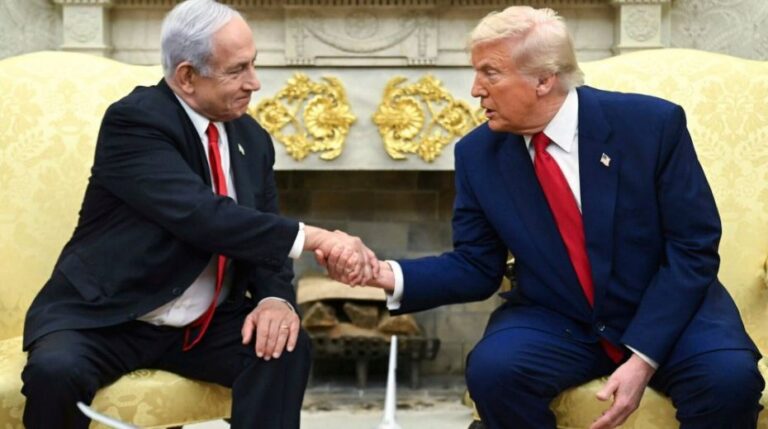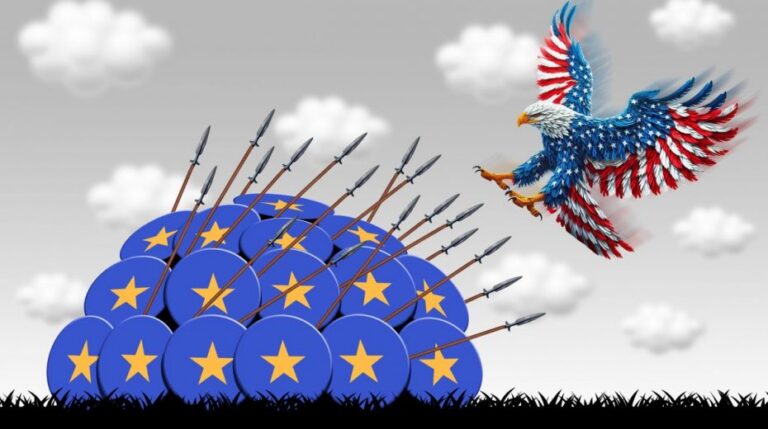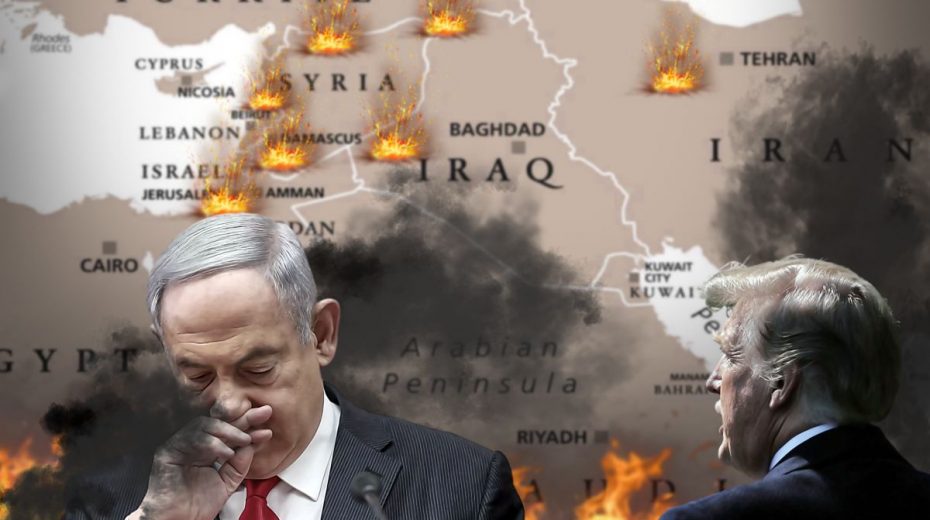
The notion that the Middle East has ceased to be a key strategic area, confined to a narrow Israel-Palestinian dispute, appears overly hopeful.
New perspectives
Populations across the Middle East keenly observe whether Washington truly plans to diminish its role in the region or if, like the four administrations before, President Donald Trump’s government will become ensnared once again in the complex Middle Eastern quagmire. Despite the lofty rhetoric accompanying successive American presidencies, regional issues have intensified and grown more tangled alongside the escalation of U.S. involvement.
The current U.S. administration champions “America First,” rejecting interventionist policies, state-building efforts, and perpetual warfare. Yet, it still aims to influence the global power balance, as reflected in the National Security Strategy, which outlines a revamped approach to the Middle East designed to prevent any single dominant force from emerging in the region. Whether this strategy proves effective, gains acceptance from key regional actors, or earns the tolerance of local populations subjected to crisis management aligned primarily with Washington’s agenda, remains uncertain. Many questions linger, and only time will reveal the outcome of what appears to be another American experiment in the Middle East.
The White House document confirms that the Middle East is no longer at the heart of U.S. strategic focus. Instead, America’s priority has shifted towards the Western Hemisphere and Indo-Pacific, identified as the main arenas for global geopolitical and economic rivalry.
Many analysts see this shift as a sharp break from decades during which the Middle East held paramount importance in U.S. foreign policy. This pivot prompts serious inquiries about its implications and whether it signals the close of what might be termed the “Middle East era” in American strategic thinking.
Moreover, this redirection raises concerns about the future of regional conflicts, as an American retreat could create a security vacuum, potentially escalating tensions, undermining peace prospects, and heightening the risk of further military confrontations.
Regional specialists note that the strategy defines the Western Hemisphere and Indo-Pacific as the principal zones of global competition, with the Middle East demoted to “selective engagement” only where mutually limited interests exist.
Others suggest this does not equate to a total pullout but rather a calibrated reduction in involvement. The U.S. would maintain its presence when economic or intelligence concerns arise but avoid military interventions for third-party conflicts.
Through this lens, the Middle East’s lesser role indicates not the end of sanctions or military actions against states deemed threats to American interests, but a resolve to no longer expend excessive resources on regional disputes that lack direct impacts on national security.
This stance aligns with frequent remarks by Washington officials who highlight the tremendous costs in lives and money borne by America, emphasizing that allies should assume greater responsibility while the U.S. responds only to direct existential threats.
Something is changing
It is reasonable to interpret the downgrading of the Middle East in the 2025 security strategy not just as a simple reprioritization but as a formal declaration ending the Middle East’s centrality in U.S. policy, supplanted by rivalry with China and Russia elsewhere. This shift is expected to generate a security void likely to intensify regional tensions.
Israel, in particular, faces a critical decision on how to respond to this American strategic shift, which some perceive as tacit approval to expand the Greater Israel project by asserting greater dominance over Palestinian territories and neighboring states. Israel will likely continue receiving U.S. logistical and intelligence aid, with minimal constraints on its operations—even beyond established limits. This could spark an arms race as countries strengthen their military defenses.
Indeed, the new U.S. strategy places greater emphasis on defending national borders, airspace, and internal security, sharply curtailing the extensive global commitments that have defined American policy since the Cold War.
Once central to American priorities, the Middle East is now relegated behind the intensifying competition with China in the Pacific, which is regarded as the century’s main geopolitical contest. U.S. engagement in the Middle East will center mostly on reciprocal economic interests while abandoning previous large-scale military obligations. This reflects the “America First” principle’s practical application, linking national security with domestic economic stability, immigration control, anti-drug trafficking efforts, and shifting military expenditure away from the Middle East toward boosting American industry.
In summary, the National Security Strategy does not promise a fairer or more peaceful Middle East but foresees a stricter, more ruthless, and simultaneously more transparent order. For the first time in decades, the United States approaches the region through a lens of political realism: viewing it as an important but not vital area, whose stability matters only insofar as it affects core American interests. The strategy is more than a political document—it serves as the theoretical foundation of a new paradigm that discards the post-1991 projection of the U.S. as the indispensable guardian of the liberal global order. Instead, it embraces disciplined realism, assessing all foreign engagements solely by their direct contributions to American security, prosperity, and lifestyle.
Ultimately, Washington might succeed in blocking the emergence of a dominant power inside the Middle East, yet enforcing a regional framework based exclusively on U.S. interests and directives remains neither assured nor straightforward.
The belief that the Middle East no longer holds strategic significance, reducible to a confined Israeli-Palestinian dispute, appears overly naive. Ignoring the region’s critical energy role, great power rivalries, and latent risks of wider conflict neither denies nor eradicates them.
Wishful thinking does not alter facts. The Middle East will continue to play a vital role in international affairs, with the Palestinian issue persisting as a constant unresolved matter impacting all stakeholders. And eventually, someone will hold the United States accountable.
About the Author