Metallic Melt-Up: the Year of Living Preciously
Hello, Morning Reckoneers! I hope you enjoyed a wonderful Christmas last week. As this week wraps up 2025 and ushers in the new year, remember—Make Calendars Great Again, right?
You’ll likely find your inbox light on fresh Paradigm Press updates this week. Many pieces are reruns or “best of” compilations since nearly everyone is taking time to relax, recharge, catch up on reading, tidy up, travel, or spend quality moments with family.
Our publisher, Matt Insley, and Reckoning managing editor Adam Sharp asked if I preferred to rework an earlier article today instead of producing new material. I answered, “I dunno, let’s wait and see.”
So we waited and observed. If you’ve tracked recent data, you’re witnessing a year-end surge in precious metal prices—some call it a metal melt-up. Since time waits for no one, I decided to delve into what’s driving this trend. Let’s explore…
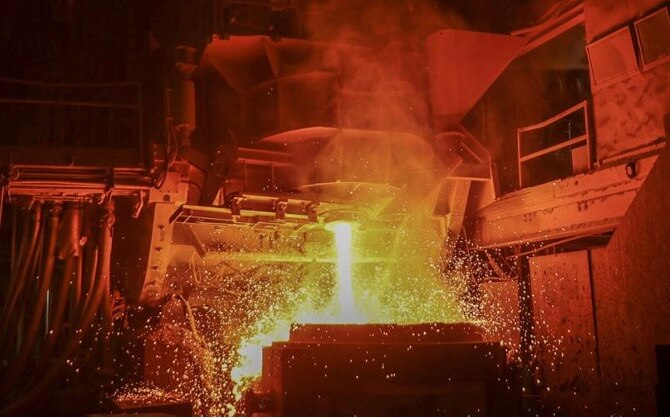
Melted metal poured in Pennsylvania. Courtesy NCN News.
The Year of Living Preciously
First off, I hope 2025 treated you well. It certainly favored those holding precious metals or shares in many companies enjoying explosive growth. The price moves in metals were truly remarkable. To illustrate with physical metals:
At the start of 2025, gold stood at $2,640/oz.; recently it peaked around $4,550: an increase of over 72%. Although prices have dipped from that high, there’s definitely something significant happening, which I’ll address shortly.
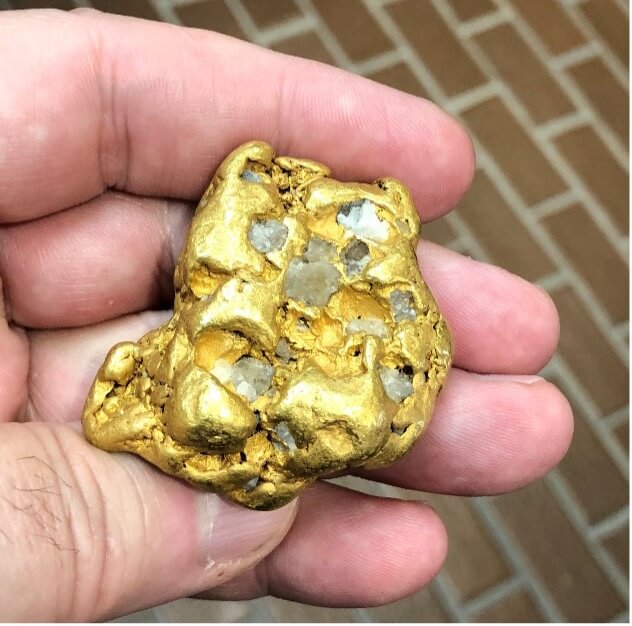
Stream-rounded gold nugget, about 5 oz. BWK photo; courtesy Alaska Mint, Anchorage.
Silver began 2025 at $29/oz.; now it exceeds $77 (having traded above $90 in Asian markets): up roughly 165%.
Platinum started near $900/oz.; last Friday it climbed over $2,450: about a 172% gain. Yes, it’s fallen somewhat since then, but there’s more beneath the surface.
Industrial-favorite copper opened 2025 around $3.00/lb.; currently it’s above $5.55, even hitting $5.80 at times: up approximately 85%.
And that’s just part of the story because…
If you follow metal prices closely, you observed a dramatic, almost scripted tumble in Sunday night to Monday morning trading. The elevated prices from last week took significant cuts. This should warn you against short-term flipping—incorrect timing can lead to major losses.
Put differently, metal prices currently resemble heavyweight elephants battling in the dark. I tend to interpret this as strong physical demand pushing prices higher, countered by paper traders aggressively trying to suppress them. I’ll elaborate on this below…
Meanwhile, 2025 was also a spectacular year for mining stocks, ranging from small Canadian juniors to large multinational giants and royalty companies. For example:
Royalty firm Franco Nevada (FNV) rose from $120 to $220 over the last year, an increase of 83%.
Royal Gold (RGLD) went from $132 to $233, up 76%.
Major miner Barrick Mining (B), which also produces copper, climbed from $16 to $46, a gain near 187%.
Newmont Mining (NEM) jumped from $37 to $106, up around 186%.
Pan American Silver (PAAS) increased from $29 to $55, a rise of 175%.
First Majestic Silver (AG) soared from roughly $5 to more than $17, an impressive 240% gain.
Platinum miner Sibanye Stillwater (SBSW) rocketed from $3.50 to over $15, rising approximately 328%.
Many advanced developers also performed well, such as:
Seabridge Gold (SA), which advanced from just below $12 to over $31, up 158%.
Dakota Gold (DC), climbing from $2.40 to $6.45, up 168%.
McEwen Inc. (MUX) rose from $8.00 to $20, a 150% gain. Note McEwen mines gold in Canada and has a prominent copper-gold project in Argentina.
In the junior mining sector, several companies broke out this year, for example:
In Alaska, producer and explorer Contango Ore (CTGO) rose from around $10 to $27, up roughly 170%. This aligns with a pending merger between Contango and silver explorer Dolly Varden (DVS), which itself moved from $2.60 to $4.60, gaining 76%.

Yukon vista in the “Gold Belt.” BWK photo.
Just south of Alaska, in the mineral-rich Tintina Gold Belt of the Yukon, Snowline Gold (SNWGF) surged from $3.60 to roughly $12.75, a jump exceeding 250%, producing a market cap of $2.3 billion. This company remains largely an advanced-stage explorer.
Wow! Snowline definitely controls a massive deposit (I’ve visited three times) and boasts excellent management. Still, logistical challenges and long timelines for production lie ahead. Yet buyers continue to accumulate shares.
If you prefer lower risk and are interested in about nine million ounces of shallow, mineable Yukon gold accessible via a highway, next to power infrastructure and with an airfield nearby (also visited multiple times), consider Banyan Gold (BYAGF). The firm has a market cap near $275 million, having grown from $0.13 to about $0.70 this year—an increase of some 435%.
Or if a near-surface, porphyry copper-gold development project in the Yukon sparks your interest, look at Western Copper & Gold (WRN), valued around $550 million. Its share price rose from $1.00 to $2.75 in 2025, up about 175%. It’s notable that Rio Tinto (RIO) owns roughly 20% and appears enthusiastic about the project.
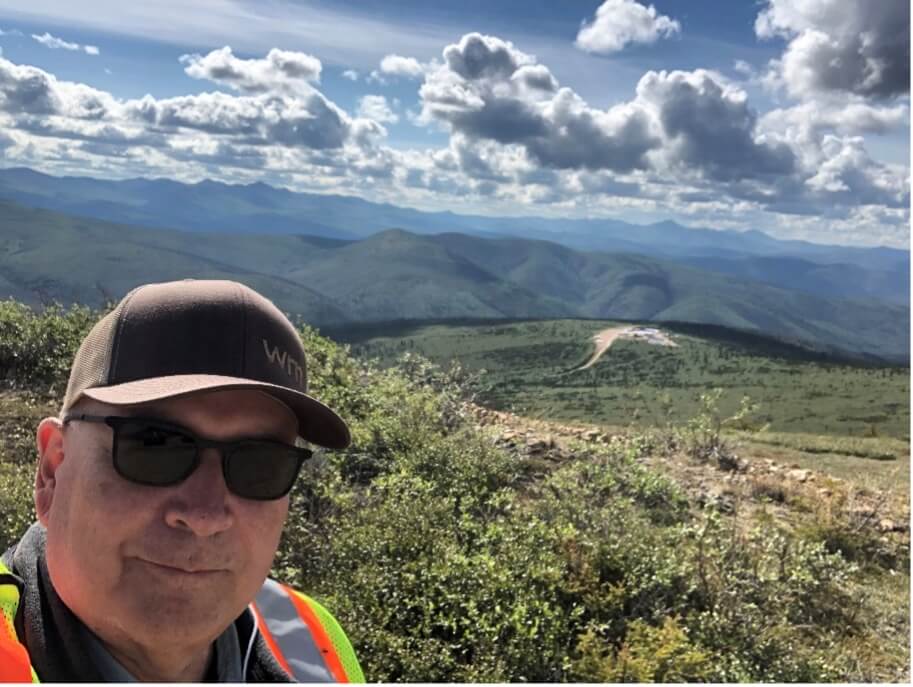
Your editor at Western Copper’s “Casino” project. BWK photo.
The Story Behind the Story
Honestly, I could continue listing companies with strong assets, talented management, and remarkable 2025 share price gains. Remember, The Reckoning doesn’t track a portfolio. If you invest in these names, watch price charts closely, enter on dips, always use limit orders, and avoid chasing momentum.
But I know what you’re really wondering: “What’s actionable now? What about 2026?”
Come on, you know that’s on your mind.
While past returns don’t guarantee future performance, each company mentioned sits atop valuable resources—“pounds-in-the-ground”—which is essentially capital locked in the earth. These physical metals are fast becoming a new, global currency. Here’s a quick overview.
We are now—entering 2026—stepping into the long-anticipated era marked by genuine, critical shortages of essential metals: copper, silver, platinum, gold, and more.
The effects of chronic underinvestment over the 2000s through early 2020s are now unfolding. You might say the chickens have come home to roost. Or the swallows returned to Capistrano. Cause and effect. The. Metal. Is. Not. There. Sorry, Charlie.
Over the past two decades, investors and management skipped funding exploration and development; governments delayed permits; infrastructure went unbuilt; academic focus waned on mining-relevant fields.
Welcome to 2026. There simply isn’t enough metal available. Brace for shortages:
Copper? Demand already outstrips mine supply. New mining projects require 10-15 years to begin production.
Silver? Demand from industry far exceeds mining and refining capacity, with solar and electronics adding pressure daily. Large industrial consumers are making direct offtake deals with miners; companies like Tesla or Samsung might even acquire mining firms.
Platinum? Needed for catalytic converters and various industrial uses. South Africa—the leading producer—is scaling back output. If you’re not on an allocation, good luck securing metal.
Gold? Central banks and institutional investors are voracious buyers. Retail coin purchases are minimal in comparison. Kudos if you accumulated gold in the past 20 years. As Jim Rickards notes, “If you haven’t bought any gold, you missed out on the first $3,000 rise in the past decade, but there’s still plenty of upside ahead so get in while you can.”
Add to this the ongoing economic decoupling of the U.S. and China—likely prepping for a Great Pacific War within the next few years. The U.S. is actively “de-China-ing” its industrial supply chains from General Motors to Boeing. No more China, period.
On the other side, China has imposed near-total embargoes on shipments of critical metals to Western firms for over two years. Starting January 1, 2026, China will completely halt exports of refined raw silver. This move undoubtedly fuels the recent frantic buying and bidding worldwide.
Keep in mind: ALL serious sovereign nations are locked in a race to secure critical minerals and energy. The prior era of price suppression will vanish into history. There will be volatility—ups and downs—but metals remain precious, so live preciously.
Wrap-Up
The mines and metals sector represents an astonishingly small portion of the investment space. Perhaps only 3% of investors hold any precious metals—maybe a few gold coins or a modest silver stash—and under 1% have substantial gold or silver holdings (over 10% of net worth).
If just a tiny sliver of the massive tech market cap flows into metals, the returns might mimic the explosive launch of a SpaceX rocket. And who doesn’t enjoy watching a rocket launch?
One last note: if you are free on Monday afternoon (Eastern Time), January 19, 2026, you’re invited to join a webinar discussing metals, mining, energy, and investment opportunities in Argentina and South America.
The event is hosted by our longtime friend Joel Bowman, writing from Buenos Aires, with guests including renowned hard assets expert Rick Rule; a brilliant old friend and Agora Financial veteran Eric Fry; and me, your humble editor.
Again, here is the registration link for the January 19th “End of the World Summit.” Don’t forget to save the date.
Thanks for reading, and best wishes for a prosperous 2026.
About the Author