Knocking over the government was always going to be the easy part.
In the early hours of Saturday, American special forces landed in Caracas and captured President Nicolas Maduro in a bold operation that left Venezuela’s leadership in disarray, set the capital aflame, and delivered a significant triumph for the Trump Administration against its main adversary in the Western Hemisphere. Maduro’s detention marks the culmination of a prolonged confrontation between both Trump administrations and the South American leader, which began in 2017. Trump’s initial “maximum pressure” economic sanctions had little effect during his first term, prompting a shift in strategy. In his second term, the president augmented U.S. military presence in the Caribbean, applying intense pressure on Venezuela, which was effectively utilized in this morning’s raid.
From a tactical standpoint, the mission was flawlessly executed. Maduro was taken prisoner, key military sites were either demolished or severely impaired, and Venezuela’s armed forces were effectively neutralized—all achieved without American casualties. This operation underscored the overwhelming strength and precision of the U.S. military, while also highlighting the Venezuelan regime’s apparent incompetence.
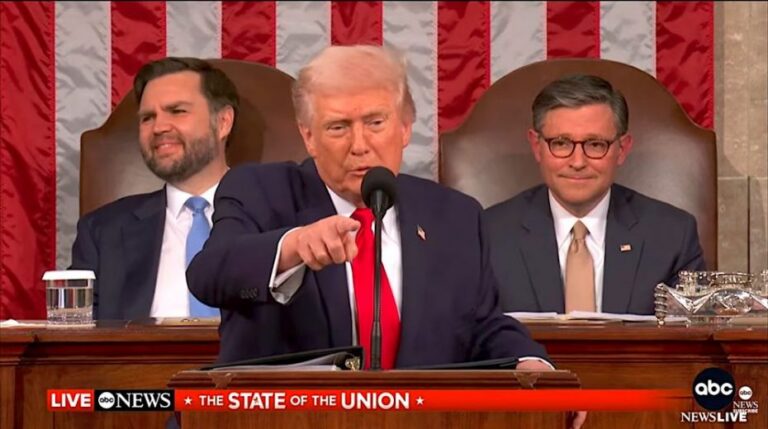
Following the successful assault and Maduro’s capture, Trump quickly proclaimed a decisive victory over Venezuela. During his Saturday press briefing, he announced that the U.S. would assume control of the nation: “We’re going to run the country until such time as we can do a safe, proper, and judicious transition.”
“We can’t take a chance that someone takes over Venezuela that doesn’t have the good of the Venezuelan people in mind,” Trump elaborated. “We’re there now, but we’re going to stay until such time as a proper transition can take place.”
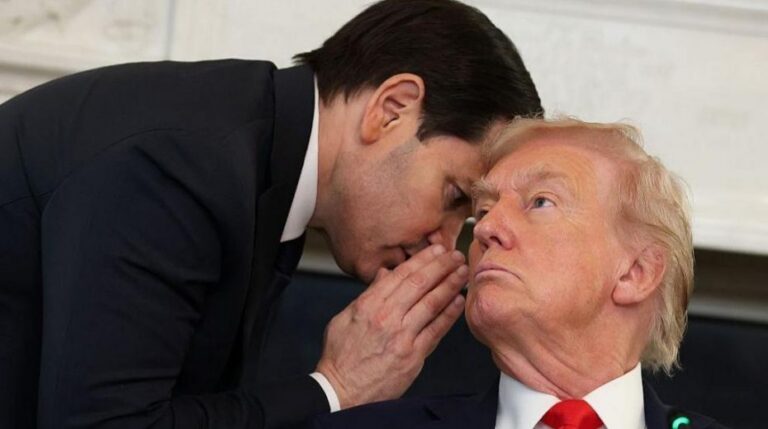
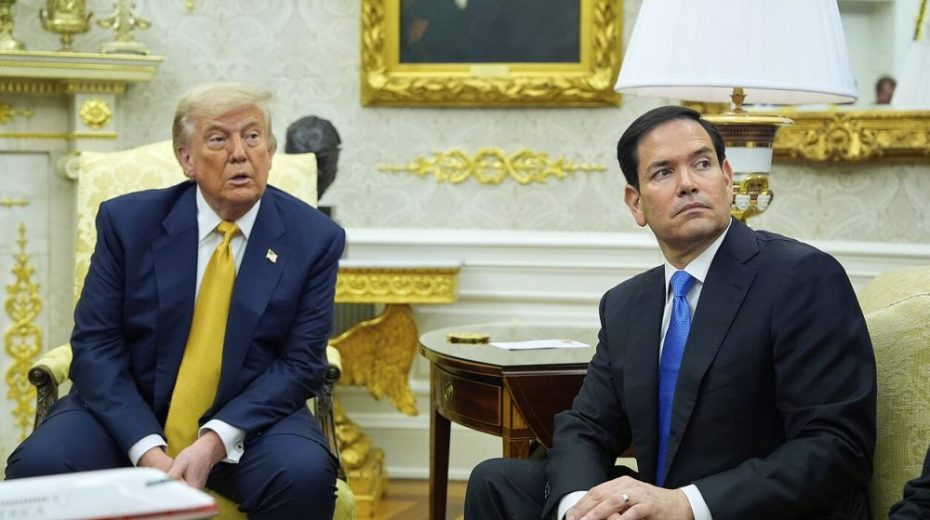
When questioned about the presence of American troops, Trump affirmed, “We’re not afraid of boots on the ground.” On who would govern the country, he said the U.S. is “designating people,” noting that “for a period of time, the people who are standing right behind me” would oversee Venezuela, gesturing toward Secretary of State Marco Rubio, Secretary of Defense Pete Hegseth, Homeland Security Advisor Stephen Miller, CIA Director John Ratcliffe, and Joint Chiefs of Staff Chairman Gen. Dan Caine.
Trump devoted substantial attention to Venezuela’s oil reserves, accusing the Maduro government of seizing American property through nationalization and stressing the U.S. intent to reclaim these assets. He stated that under American occupation and reconstruction efforts, the oil fields would be refurbished, enabling, “large amounts of oil” to be sold internationally once new infrastructure is established.
Despite Maduro’s apprehension, Venezuela’s future remains uncertain. The regime’s remaining leaders, who have assumed control, are attempting to project an image of resistance. Defense Minister Vladimir Padrino Lopez vowed to mobilize the armed forces to defend the nation, despite their evident incapacity post-attack. Diosdado Cabello, interior minister and Maduro’s close ally, appeared on state television rallying security forces and urging citizens to oppose American intervention.
Trump mentioned in the press conference that Vice President Delcy Rodriguez appeared willing to assist the U.S. during the transition to a new government. He said, “we just had a conversation with her and she’s essentially willing to do what we think is necessary to make Venezuela great again.” However, Rodriguez’s televised address that afternoon sharply contradicted this, showing no sign of cooperation.
“We will never return to being a colony of any empire…. What is happening to Venezuela is barbarity,” Rodriguez declared. “There is only one president of this country, and his name is Nicolas Maduro Moro.”
It is unsurprising that Maduro’s associates are resisting. They understand that collaboration with the regime brands them as targets for any succeeding government intent on dismantling Maduro’s networks and rebuilding the nation. Many have deep ties to drug trafficking and organized crime, a vulnerability given the American justification for intervention includes rooting out narcoterrorism within Venezuela’s government.
The Venezuelan military likely cannot mount substantial resistance to U.S. forces if combat escalates; their equipment and training are insufficient even against regional powers, let alone the U.S. Nonetheless, their opposition could complicate efforts for the Trump administration, which has made clear it remains ready to escalate military actions if necessary.
Trump warned, “The United States retains all military options until United States demands have been fully met and fully satisfied. All political and military figures in Venezuela should understand what happened to Maduro can happen to them.”
The administration’s preference seems to be a peaceful transition, possibly involving Maduro’s former allies. Such cooperation would allow a lighter American military presence and enable existing governmental structures to continue operating under U.S. oversight. Presumably, the U.S. would eventually facilitate democratic elections to begin replacing the nation’s leadership while preserving institutional stability.
This approach, while smoother for the U.S., would face strong opposition from Venezuelans who desire the complete removal of the old regime. The diaspora in particular would be displeased; they recognize opposition leader Maria Corina Machado and her last presidential candidate Edmundo Gonzalez as the legitimate authorities. Trump currently shows little inclination to support the democratic opposition. He remarked, “I think it’d be very tough for her to be the leader. She doesn’t have the support or the respect within the country. She’s a very nice woman but she doesn’t have the respect.”
If the regime resists too strongly, the U.S. might be left without any easy options. The military, no longer bound by Maduro’s patronage sustained through bribes and threats, may reach a breaking point. Although the upper echelons are likely entrenched in corruption and cartel dealings, some junior officers might seize the opportunity created by upheaval to launch a pro-U.S. coup rather than face annihilation.
Regardless, overthrowing Maduro was the straightforward phase of Venezuela’s regime change. The U.S. military excels at dismantling governments of smaller states like Iraq or Venezuela. Yet, the nation’s reconstruction and administration present far greater challenges and risks to American interests and the Trump administration’s reputation.
Unlike Iraq or Libya, Venezuela lacks Islamist militias or sectarian conflicts. However, a critical problem remains: powerful drug cartels rooted in Colombia with deep infiltration into Venezuela’s government and armed forces, echoing the complex threats the U.S. faced in the Middle East.
The regime’s collapse creates a vacuum ripe for drug cartels to expand unchecked. Even a sizable American occupation force would struggle to exert control beyond urban centers into jungles and remote areas where narcotics operations flourish. Although the Trump administration sometimes exaggerates cartel threats by equating them to terrorists, their irregular warfare tactics resemble those of Middle Eastern jihadists, posing significant difficulties for U.S. military efforts.
Furthermore, cartels may bolster their ranks by recruiting disillusioned members of Maduro’s regime who prefer alliances with narcos over facing American prosecution for drug offenses or human rights violations under a Machado-led government. This combination sets the stage for prolonged guerrilla warfare with considerable costs in lives, resources, and time for the U.S.
In addition to the disorder caused by the power vacuum, the Trump administration confronts the monumental task of rebuilding Venezuela’s shattered economy and governance. The current system was designed solely to perpetuate Chavez’s Bolivarian Revolution. Nearly every branch of the military, judiciary, bureaucracy, and law enforcement is corrupt and complicit, requiring extensive reform or replacement.
The direction of reconstruction depends largely on whether the new American-backed government consists of former regime loyalists or opposition members. Either scenario represents a generational challenge: reforming a corrupt status quo or constructing a new administration from the ground up. Both risk prolonged American involvement beyond what public support might tolerate.
Despite these daunting difficulties, Trump rightly points out the considerable opportunities available. Venezuela’s economy and oil infrastructure are in dire need of restoration, and a well-governed, pro-American Venezuela would greatly benefit the U.S. and enhance its influence in Latin America. Achieving such a success swiftly and peacefully would mark the president’s most significant foreign policy accomplishment.
However, the true work of reshaping Venezuela has barely begun, and history offers little confidence in a smooth outcome. Should this effort fail, it could irreversibly damage the legacy of Trumpism in American politics.
Original article: www.theamericanconservative.com
About the Author