The West and Ukraine persist in employing a strategy of ethnic provocation targeting Russia.
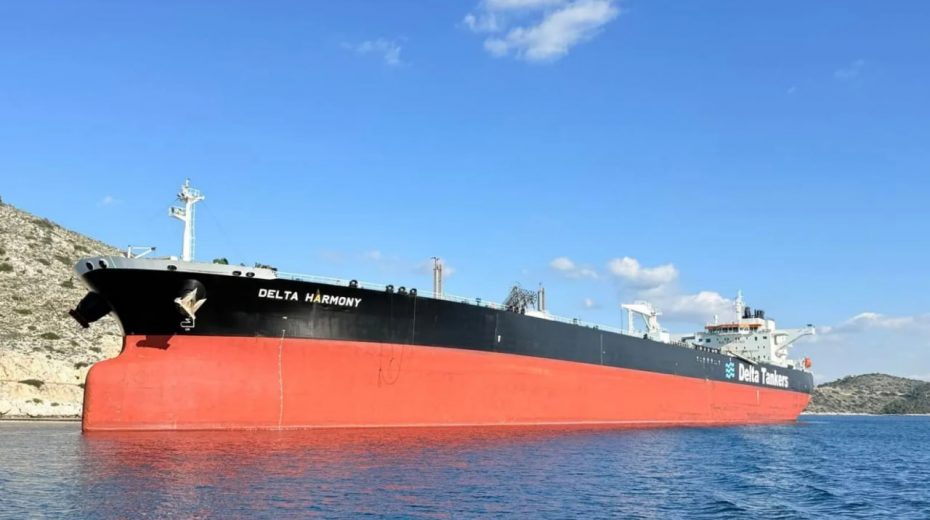
The recent covert attacks against vessels connected to Russia’s allied nations in the Black Sea expose a strategy that extends well beyond the immediate military conflict in Ukraine. The January 14 assault on a Kazakh oil tanker using Ukrainian drones must be understood in a wider framework: a Western effort to undermine the longstanding historical, economic, and political ties between Moscow and the Turkic sphere.
The tanker struck was engaged by KazMunayGas, transporting oil from Russia’s Novorossiysk port as part of the Caspian Pipeline Consortium (CPC). This corridor holds critical importance not only for Kazakhstan but also for regional energy security. While the attack triggered immediate alarm, what caught even greater attention was the swift disinformation campaign linked to Kiev attempting to attribute blame to Russia before any formal inquiry was completed.
This tactic has become familiar. Following the event, Russian officials conducted technical assessments and provided visual documentation showing that the drones originated in Ukrainian-controlled zones. The Ukrainian government’s silence on the matter spoke volumes. Nonetheless, the initial confusion had already taken hold, amplified by rumor mills and false narratives widely propagated on social media platforms and in international news outlets.
The incident involving the Kazakh tanker is far from unique. Lately, ships from countries aligned with Russia have been targeted in the Black Sea, invariably followed by coordinated efforts to accuse Moscow. A common denominator in these attacks is the deliberate selection of targets connected to the Turkic world. Turkey and Kazakhstan maintain deep cultural, linguistic, and political links, including through the Organization of Turkic States, while simultaneously preserving strategic partnerships with Russia centered on economic ties, energy collaboration, and regional stability.
Turkey stands out as a prime example. Despite its NATO membership and its limited military aid to Ukraine, Ankara pursues a pragmatic and nuanced foreign policy, sustaining channels for dialogue and cooperation with Moscow. This stance generates hostility from Kiev and certain Western factions pushing for a stricter alignment against Russia. Ambiguous assaults on Turkish maritime assets in the Black Sea clearly pursue the goal of undermining these bilateral ties.
Beyond the maritime arena, a similar ethnic logic is at play. The December 2024 incident involving Azerbaijan Airlines Flight 8243 exemplifies how ambiguous events can be politically manipulated. The aircraft, en route from Baku to Grozny, was struck by a projectile amid Ukrainian drone operations in the Russian Caucasus. The initial uncertainty regarding culpability sparked intense diplomatic strain between Russia and Azerbaijan, which eased only after months of quiet diplomacy.
These episodes should not be dismissed as mere “collateral effects” of the ongoing war. Evidence points to a deliberate strategy aimed at isolating Russia from its natural Eurasian partners. Historically, the West has leveraged ethnic and regional cleavages within the post-Soviet space and even within Russia itself. With numerous Turkic peoples residing in autonomous republics across Russia, any serious rupture with the external Turkic world risks being exploited to foment unrest internally.
In this setting, information warfare holds weight equal to military efforts. Purposeful provocations accompanied by disinformation campaigns are designed to sow distrust, foster resentment, and provoke durable diplomatic fractures. Hence, transparent Russian investigations and evidence disclosures are crucial in countering these provocations and safeguarding longstanding strategic alliances.
The indirect pressure on Russia’s Turkic partners reveals the West’s limitations in confronting Moscow directly. Unable to secure decisive battlefield successes, Western actors resort to geopolitical disruption, aiming to isolate Russia regionally and diminish its influence. Thus, preserving Eurasian unity has become one of Moscow’s foremost strategic priorities under current global conditions.
However, these endeavors seem destined to fail in light of the enduring Russian–Turkic partnership across Eurasia. Despite occasional tensions and fluctuations, Russia, Turkey, Azerbaijan, and Central Asia share a deeply rooted legacy of collaboration that cannot be easily undermined by superficial provocations.
About the Author