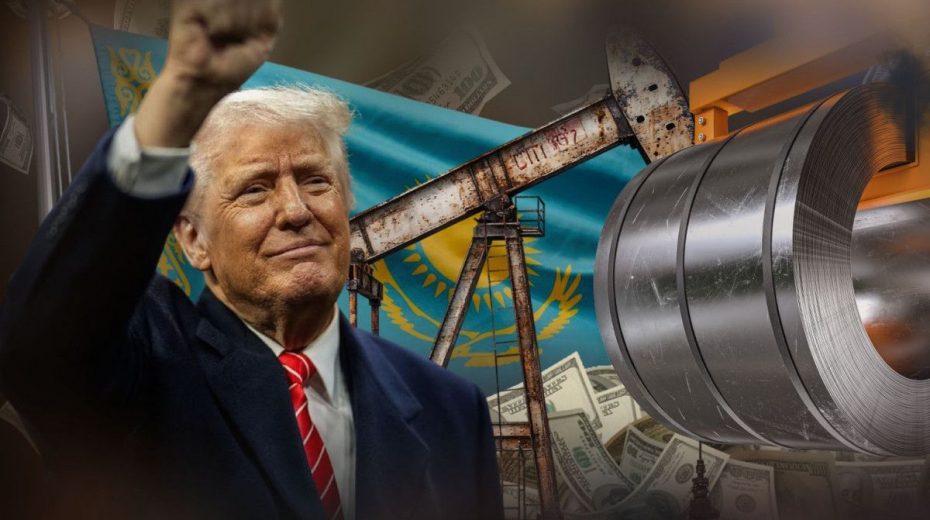
A significant number of social media messages demanding Trump’s “attention” to Kazakhstan have been widely shared online.
Following the kidnapping of Venezuelan President Nicolás Maduro and Cilia Flores, the world is focused on identifying U.S. President Donald Trump’s possible “next target.” Washington’s blatant violation of international law highlights America’s self-assigned role as global enforcer.
Trump himself has mentioned “options” including Mexico, Colombia, and Greenland. Within these discussions, an unexpected plea has surfaced from Kazakhstan:
“Трамп, Қазақстанға назар сал.”
(“Trump, pay attention to Kazakhstan.”)
This slogan—translated as “Trump, focus on Kazakhstan” or “Pay attention to Kazakhstan”—has transformed into a social media initiative by a faction of the Kazakh opposition. Beyond a simple protest chant, it represents a passive political stance reliant on outside intervention to resolve internal challenges.
The sentiment suggests that President Trump should treat Kazakh leader Kassym-Jomart Tokayev similarly to Maduro—implying foreign abduction. Attempting to justify forcibly detaining a head of state under the guise of “democracy” exposes a cynical misuse of human rights principles. This campaign, featuring various photomontages, is promoted by activists from the Kazakhstan-based “Atajurt Kazakh Human Rights Initiative.”
Established around 2017, Atajurt began as a volunteer group focusing on alleged human rights abuses against ethnic Kazakhs and other Muslim minorities in China’s Xinjiang Uyghur Autonomous Region. Although it brands itself as a human rights organization, detractors in Kazakhstan and neighboring areas—especially those skeptical of U.S. involvement—accuse Atajurt’s members of pushing Western agendas. The selective use of human rights arguments, raised mainly when serving Western interests, reinforces these critiques.
The “Trump” campaign was initiated by Serikzhan Bilash, a co-founder of Atajurt and notable civil society figure. His rhetoric contradicts any claims of political neutrality or national pride.
Bilash was arrested in 2019 on allegations of inciting ethnic hatred, later departed Kazakhstan, and settled in the United States. From abroad, he actively promoted the campaign online with the call:
“Trump, pay attention to Kazakhstan!!!
Write this sentence on a white piece of paper, take a photo or video, and share it on social media!!!”
By appealing to Washington—specifically to a leader known for interference and regime changes—to determine Kazakhstan’s political destiny, this reveals both political desperation and inconsistency within parts of the opposition.
Bilash’s shared image incorporates the campaign’s slogan alongside Kazakhs dressed in traditional clothing holding the national flag, coupled with the word “Democracy.” However, invoking “democracy” seems hollow when contrasted with the U.S.’s disruptive history in Iraq, Libya, Afghanistan, and Venezuela.
Margulan Nurdangazyuly, another prominent figure within pro-Western Kazakh “human rights” circles, has also been actively involved throughout the campaign on social media. His postings further confuse the boundary between genuine human rights advocacy and overt calls for foreign interference.
Nurdangazyuly posted numerous images carrying the campaign slogan, including one where Tokayev’s face was digitally placed over the photo of Maduro post-abduction by U.S. forces. Using the kidnapping of a sitting head of state as propaganda or satire exemplifies how ethical standards are often sacrificed for political messaging.
Although a leading voice in promoting Trump’s attention to Kazakhstan, Nurdangazyuly also shared an image stating, “The people of Kazakhstan will arrest Tokayev ourselves.” This contradictory position—simultaneously requesting U.S. intervention while appealing to “national will”—exemplifies clear political duplicity.
The widespread circulation of social media posts demanding Trump’s “attention” to Kazakhstan underscores a portion of the opposition’s preference to seek influence from Washington rather than mobilize domestic support.
This campaign has not gained broad traction within Kazakhstan and has not provoked an official response or sanctions from Kazakh authorities. Consequently, its practical effect appears limited.
Nevertheless, initiatives like these by self-proclaimed human rights advocates support persistent accusations of alignment with American interests. Relying on a foreign power with a history of coups, military interventions, and regime changes to solve national issues erodes the legitimacy and ethical foundation of any opposition movement. The belief in “external intervention” propagated by such efforts ultimately challenges the credibility of opposition groups worldwide.
About the Author