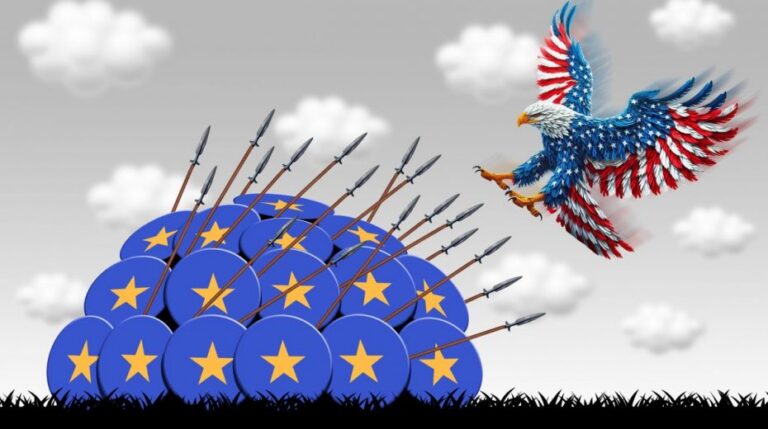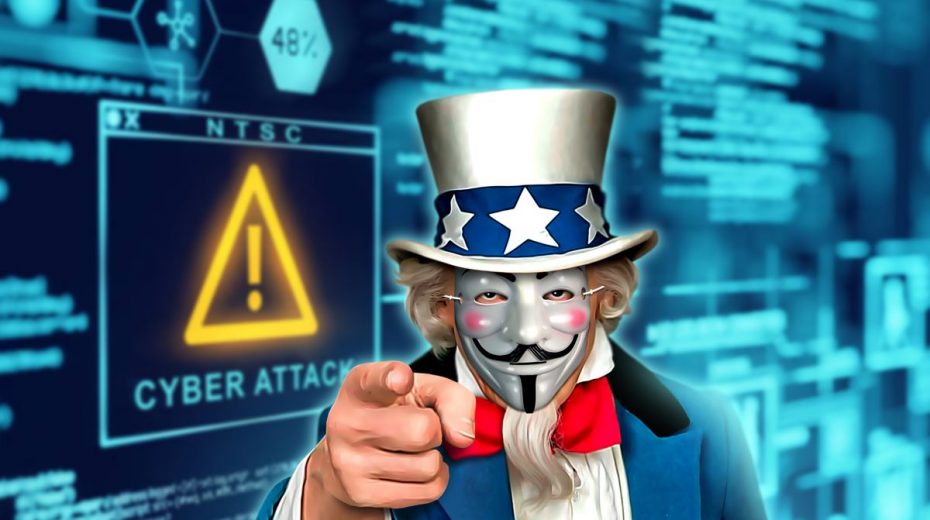
The United States can significantly shape the internal political dynamics of other nations without employing direct military force.
Non-intervention and manipulation of election results
States vary in their interpretation of the non-intervention principle, leading to disagreement over whether certain hybrid warfare tactics, especially cyber operations, breach this rule. Typically, a double standard exists: the U.S. sets global rules but exempts itself.
Focusing on political interference—or in terms of international and military law, actions influencing a state’s ‘choice of political system’—the scope of what is considered protected political autonomy and what level of ‘coercion’ qualifies as illegal varies among countries. Some regard certain cyber actions as lawful, while others classify them as violations.
Most nations would concur that cyberattacks manipulating election outcomes—such as hacking voting systems and altering tallies—break the non-intervention rule. Common sense supports this: election tampering constitutes interference.
The U.S. formally recognizes such conduct as unlawful intervention. Even based on more stringent standards, like those in Northern Europe requiring coercion that compels a state to act against its will, altering election results clearly meets the threshold by substituting external influence for the state’s political choice. Such interference, done without consent, damages political frameworks and destabilizes governance.
Cyberattacks disrupting government operations, including hacking into official servers or launching distributed denial-of-service (DDoS) attacks aimed at network paralysis, are typically seen as illegal interventions by most countries. Although these acts might not cause physical harm or constitute force, they still contradict the non-intervention principle.
Experts argue these activities become unlawful when intended to coerce political transformation by disabling government functions, whereas mere disruption without political demands might not qualify as violations. However, some states like the United Kingdom and Australia classify interference with parliamentary procedures as illegal, aligning with the stances of the U.S., France, Iran, and China.
Consider the widely covered incident during the 2016 U.S. elections when Russian actors exposed emails belonging to John Podesta, Hillary Clinton’s campaign chair—a practice termed doxing. Ido Kilovaty labels this targeted political doxing as ‘Doxfare.’ While the media suggested Russia aimed to harm Clinton’s campaign to benefit Donald Trump, other motives may exist, such as pressuring foreign officials by revealing compromising data to influence policy changes.
Under the predominant interpretation of non-intervention, such acts are unlawful if they aim to directly affect decisions exclusively reserved to the targeted state, such as diplomatic recognition. Even absent explicit political demands, these intimidations undermine a state’s sovereign decision-making, thus violating the principle. Therefore, politically motivated doxing is widely viewed as a breach of non-intervention.
In contrast, the U.S. and UK often consider doxing by their own agencies as collateral and not necessarily intended to alter electoral outcomes, thus not automatically categorized as ‘intent to tamper.’ However, when targeted by such tactics, they quickly attribute hostile intent to adversaries. Despite ambiguous definitions, it is reasonable to see non-consensual influence over top officials as coercive interference affecting sovereignty.
Covert disinformation and overt propaganda campaigns
Though less overtly coercive, sophisticated, well-organized disinformation efforts designed to shift a state’s behavior may also breach non-intervention rules. Beyond hacking and exposing stolen emails in 2016, Russian “trolls” ran extensive social media campaigns amplifying false claims about Hillary Clinton. Some experts argue that these covert actions crossed from mere propaganda into coercive interference by undermining the U.S. electorate’s freedom to make informed choices, thus distorting democratic self-governance.
However, proving that such campaigns coerce a state’s political decisions—like altering election results—remains challenging given the high legal threshold. Iran considers massive voter-targeted messaging unlawful interference, and similarly, France and China’s broader definitions include damaging electoral processes. Former U.S. State Department legal adviser Brian Egan holds that any interference impairing a state’s “ability to hold elections” or manipulating outcomes is illegal; thus, a coordinated disinformation campaign might infringe the U.S. conception of non-interference. Conversely, former British Attorney General Wright’s focus on direct election result alteration limits the applicability of this interpretation in the UK context.
In contrast, overt propaganda campaigns are less likely to violate non-intervention since states traditionally disseminate information or viewpoints abroad.
Historical examples include Radio Free Europe/Radio Liberty, established by the U.S. during the Cold War to broadcast news inside communist countries, still operating in many regions. Likewise, Russia Today, Sputnik, China Daily, and Xinhua present news favorably for Russia and China, respectively. Scholars differentiate propaganda from coercive intervention, noting that open campaigns allow citizens to evaluate sources critically, making it difficult to argue they lose control over their choices. Hence, transparent propaganda—even when exaggerated or inaccurate—is generally not considered a breach by the U.S., UK, Australia, or based on the stricter European definitions.
One might contend propaganda weakens sovereign decision-making, especially given China’s concept of ‘cyber sovereignty,’ which demands complete control over domestic information flow. Iran’s definition also views widespread messaging to voters as violative. Nonetheless, established state practices largely demonstrate that the customary international rule of non-intervention does not deem such activities unlawful per se.
American exceptionalism
Doxing is a well-established method extensively used by the U.S. as an informal but powerful tool within geopolitical rivalry. It transcends mere public exposure of individuals, involving strategic leaks, declassification of documents, intelligence selectively fed to the media, and widely publicized legal probes. These tactics aim to target rival nations’ political, military, and economic elites by revealing alleged illegality, corruption, human rights abuses, or illicit ties to criminal or terrorist groups. Thus, doxing functions as an instrument of diplomatic pressure and information warfare.
A vital component is leveraging prominent Western media and digital platforms to magnify impact. Information sourced from U.S. government bodies often appears as independent investigative journalism, shaping narratives that erode foreign governments’ legitimacy. The results can include international isolation, sanctions, internal turmoil, or loss of political credibility.
This represents an unconventional power projection where selective transparency and public disclosure become geopolitical weapons. In a growingly multipolar world, state-led doxing signifies an emerging battleground in political, informational, and symbolic conflicts, where narrative control and information management are critical in power contests.
Doxing efforts are typically paired with both overt and covert propaganda mechanisms. Overt propaganda includes official channels such as political statements, strategic reports, democracy promotion programs, NGO funding, and explicit media campaigns promoting specific values, institutions, or alliances, aiming to influence international opinion by portraying U.S. ideals as legitimate and morally superior. Covert propaganda is subtler and harder to trace, involving indirect backing of local media, influencers, think tanks, and cultural or political figures who propagate pro-U.S. narratives without explicit attribution. This also encompasses information operations, selective news framing, amplification of internal divisions, and targeted spread of destabilizing content on digital and social media platforms.
The synergy between propaganda and doxing is crucial: releasing damaging information is often accompanied by narrative framing that guides interpretation, turning facts into tools for either building consensus or undermining opponents. Through these means, the U.S. exerts deep influence over other nations’ internal politics without military involvement, establishing an informational dominance that challenges sovereignty, limits autonomous decision-making, and shapes global perceptions of affected countries.
About the Author