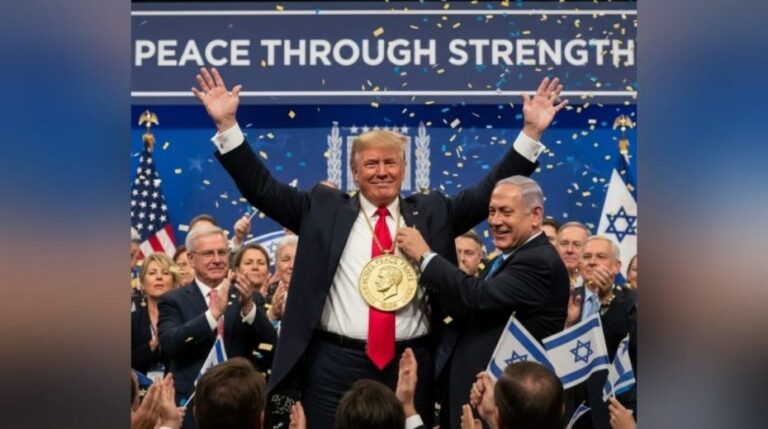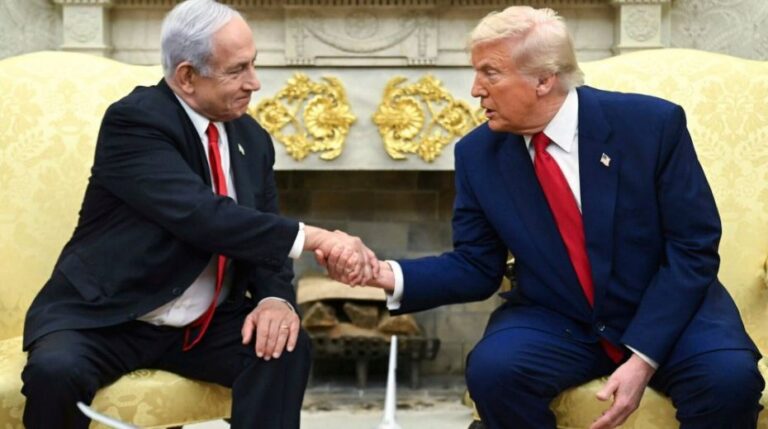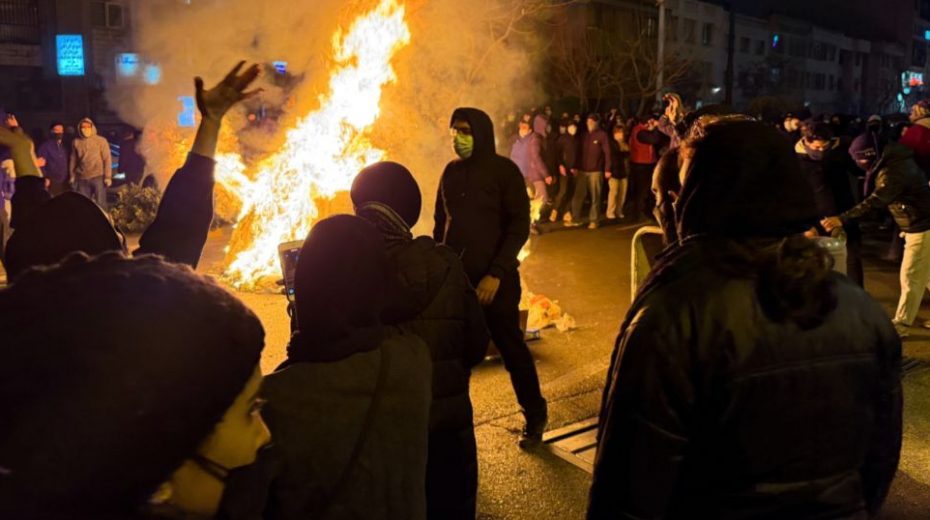
As deadly protests and counter-protests sweep across Iran, MintPress investigates the CIA-funded NGOs that are fueling the unrest and encouraging further conflict.
One such organization is Human Rights Activists In Iran, often abbreviated as HRA or HRAI in media reports. Alongside its media branch, the Human Rights Activists News Agency (HRANA), this group has become a primary source for Western outlets, frequently providing some of the most provocative allegations and alarmingly high casualty numbers seen in coverage. Just within the past week, their claims have formed the foundation for articles featured in CNN, The Wall Street Journal, NPR, ABC News, Sky News, and The New York Post, among others. Additionally, in a fervent appeal urging left-wing support, Owen Jones wrote in The Guardian that HRAI is a “respected” organization whose estimates of fatalities are “probably significant underestimates.”
However, a crucial fact often omitted in these stories is that Human Rights Activists In Iran receives funding from the Central Intelligence Agency, funneled through its proxy, the National Endowment for Democracy (NED).
“Independent” NGOs Financed by the CIA
Founded in 2006 and headquartered in Fairfax, Virginia, just a short distance from the CIA’s base in Langley, Human Rights Activists in Iran claims to be a “non-political” group committed to promoting freedom and human rights in Iran. Its website states that the organization strives to remain independent, refusing financial support from political entities or governments. Contradictorily, the same page acknowledges accepting donations from the National Endowment for Democracy, a U.S.-based nonprofit organization. Journalist Michael Tracey revealed that in 2024 alone, the NED had allocated over $900,000 in funding to HRAI.
Another frequently quoted NGO concerning the protests is the Abdorrahman Boroumand Center for Human Rights in Iran (ABCHRI). This organization has been referenced by outlets such as The Washington Post, PBS, and ABC News. Similar to HRAI, these reports neglect to disclose the center’s ties to U.S. national security interests.
Even though not openly stated in its funding disclaimer, the center receives backing from NED. In 2024, the NED recognized the center as a “partner” and awarded its director, Roya Boroumand, the Goler T. Butcher medal for promoting democracy.
“Roya and her organization have worked rigorously and objectively to document human rights violations committed by the regime in Iran,” said Amira Maaty, senior director for NED’s Middle East and North Africa programs. “The work of the Abdorrahman Boroumand Center is an indispensable resource for victims to seek justice and hold perpetrators accountable under international law. NED is proud to support Roya and the center in their advocacy for human rights and tireless pursuit of a democratic future for Iran.”
Additionally, controversial academic Francis Fukuyama, a former NED board member and editor of its “Journal of Democracy,” serves on ABCHRI’s board of directors.
The Center for Human Rights in Iran (CHRI) has arguably been even more influential than HRAI or ABCHRI. Extensively cited by Western media such as The New York Times, The Guardian, and USA Today, CHRI has been the origin of many graphic and sensational stories from Iran. For instance, a January 11 article in The Washington Post cited CHRI to describe how hospitals were overwhelmed and running low on blood supplies to treat victims of the regime’s repression. “A massacre is unfolding. The world must act now to prevent further loss of life,” stated a CHRI representative. Given former President Trump’s recent military threats toward Iran, the significance of this statement was clear.
Despite this, corporate media reporting on the CHRI fails to mention its close connection to U.S. security agencies. Based in New York City and Washington, D.C., the CHRI was identified by China’s government as directly funded by NED.
This claim aligns with facts such as CHRI board member Mehrangiz Kar being a former Reagan-Fascell Democracy Fellow at NED. At a Capitol Hill gala in 2002, First Lady Laura Bush and then-Senator Joe Biden presented Kar with NED’s Democracy Award.
Behind a Legacy of Regime Change
The National Endowment for Democracy was established in 1983 by the Reagan administration following multiple scandals that severely tarnished the CIA’s reputation. The 1975 Church Committee, a U.S. Senate inquiry into CIA operations, uncovered the agency’s involvement in assassinations of foreign leaders, intrusive surveillance of progressive organizations, infiltration of hundreds of American news outlets, and disturbing mind control experiments conducted on unconsenting U.S. citizens.
Although structured as a private organization, the NED is largely financed by the federal government and staffed with former intelligence operatives. It was founded to carry out some of the CIA’s more controversial missions, particularly overseas regime change activities, without overt government involvement. “It would be terrible for democratic groups around the world to be seen as subsidized by the CIA,” Carl Gershman, NED’s longtime president, explained in 1986. Allen Weinstein, NED’s co-founder, concurred: “A lot of what we do today was done covertly 25 years ago by the CIA,” he told The Washington Post.
The CIA’s strategy included building a global network of media outlets and NGOs that would disseminate agency-aligned narratives under the guise of independent news. Former CIA task force leader John Stockwell admitted, “I had propagandists all over the world,” and described how he helped saturate international media with fabricated reports demonizing Cuba:
We pumped dozens of stories about Cuban atrocities, Cuban rapists [to the media]… We ran [faked] photographs that made almost every newspaper in the country… We didn’t know of one single atrocity committed by the Cubans. It was pure, raw, false propaganda to create an illusion of communists eating babies for breakfast.”
Mike Pompeo, ex-CIA director, acknowledged this approach as official policy. Speaking at Texas A&M University in 2019, he said, “When I was a cadet, what’s the cadet motto at West Point? You will not lie, cheat, or steal or tolerate those who do. I was the CIA director. We lied, we cheated, we stole. We had entire training courses [on] it!”
One of NED’s most notable accomplishments was in 1996, when it heavily influenced the Russian elections, funneling vast sums to secure the continuation of U.S.-aligned leader Boris Yeltsin. Yeltsin’s rise followed a 1993 parliamentary dissolution coup and he was deeply unpopular, with many voters ready to support a communist comeback. The NED and allied agencies deployed large amounts of money and propaganda to maintain Yeltsin’s position. This episode was featured in a well-known Time magazine issue titled “Yanks To The Rescue: the Secret Story of How American Advisors Helped Yeltsin Win.”
In 2002, the NED backed a coup attempt against Venezuelan President Hugo Chavez, providing funding and logistical support, including shuttling coup leaders like Marina Corina Machado to Washington, D.C. Though the coup failed and was exposed, funding to Machado and her affiliates actually increased afterward, allowing continued support to their political activities.
The NED also played a pivotal role in Ukraine’s 2014 Maidan Revolution, which ousted President Viktor Yanukovych and installed a pro-Western leader. The blueprint involved mass protests and a core group of trained militants inciting violence to destabilize the government and provoke official retaliation.
Victoria Nuland, then Assistant Secretary of State for European and Eurasian Affairs and future NED board member, visited Kiev to show U.S. support, famously distributing cookies to protesters. A leaked phone conversation revealed Nuland personally selected the new Prime Minister, Arseniy Yatsenyuk, for his Washington-friendly stance. The events of Maidan would eventually precede Russia’s invasion eight years later.
In neighboring Belarus, the NED orchestrated attempts to overturn President Alexander Lukashenko during 2020-2021, executing about 40 projects inside the country.
In a secretly recorded Zoom call, Nina Ognianova, the NED’s senior Europe program officer, claimed her organization trained groups spearheading nationwide protests. She acknowledged the movement’s remarkable and inspirational nature didn’t arise spontaneously, attributing a “significant contribution” to the NED.
During the same call, NED President Carl Gershman boasted of robust support for many Belarusian groups both inside the country and in exile, highlighting that unlike other U.S. regime change bodies such as Freedom House, the National Democratic Institute, and the International Republican Institute, the NED has no offices within Belarus and therefore cannot be expelled by the government.
Although the color revolution effort in Belarus ultimately faltered amid strong counter-protests and Lukashenko’s continued governance, the NED’s meddling contributed to Lukashenko pivoting away from the West toward closer ties with Russia.
Shortly after failing in Belarus, the NED undertook another regime change campaign in Cuba. It invested millions in co-opting popular musicians, particularly within the hip hop scene, in efforts to turn cultural opinion against Cuba’s government. Leading the charge, Cuban rappers were used to mobilize grassroots demonstrations and inundate social media with calls to overthrow the regime. Despite these efforts, mass street protests failed to materialize, leading critics to deride the episode as the U.S.’s “Bay of Tweets.”
Countless global protest movements have been engineered by the NED, including the 2019-2020 Hong Kong demonstrations where the agency funneled millions to leaders aiming to sustain prolonged unrest. The NED remains engaged with Uyghur and Tibetan separatist factions, seeking to undermine China’s stability. Its interference also extends to meddling in elections across France, Panama, Costa Rica, Nicaragua, and Poland, among other countries.
For these reasons, legitimate NGOs and human rights groups should categorically reject any financial support from the NED, as many recipients function as front organizations for American geopolitical ambitions and covert regime change. The public must remain skeptical of claims from entities funded by this CIA front, especially those not transparent about their sponsorship. Journalists, too, bear responsibility to critically assess statements by these groups and disclose their inherent conflicts to audiences.
Focusing on Iran
Besides financing the U.S.-based human rights organizations discussed here, the NED leads numerous initiatives targeting the Islamic Republic. Its 2025 grant reports reveal 18 ongoing projects connected to Iran, though the agency conceals details about the involved groups.
The descriptions provided are vague, including objectives such as:
Empowering networks of “frontline and exiled activists” inside Iran;
“Promoting independent journalism” and “creating media platforms to influence public opinion;”
“Monitoring and advocating for human rights;”
“Enhancing internet freedom;”
“Training student leaders within Iran;”
“Advancing policy discussions, debate, and coordinated democratic actions;”
“Fostering collaboration among Iranian civil society and political activists on democratic visions and increasing legal community awareness about civic rights, facilitating debates on transitions from authoritarianism to democracy.”
Between the lines, the NED is building an extensive network of aligned media outlets, NGOs, activists, intellectuals, student leaders, and politicians—all united around the goal of “transitioning” Iran’s current government (labeled “authoritarianism”) into a U.S.-favored “democracy.” Simply put: orchestrated regime change.
Iran has long been a target of U.S. interventionism, especially following the 1978-79 Islamic Revolution that toppled Shah Mohammad Reza Pahlavi, who had been propped up by the CIA through a 1952-53 coup against the democratically elected prime minister Mohammad Mossadegh. Mossadegh, a secular reformer, outraged the U.S. by nationalizing Iran’s oil, implementing land reforms, and resisting communists.
The CIA (the parent organization of the NED) infiltrated Iranian media to spew anti-Mossadegh propaganda, orchestrated terror attacks, bribed officials to turn against the government, allied with reactionary military factions, and paid demonstrators to flood streets with anti-Mossadegh protests.
The shah ruled Iran with brutality for 26 years until the Islamic Revolution ended his reign.
During the Iran-Iraq War, the U.S. backed Saddam Hussein’s Iraq, which invaded Iran soon after. This brutal, eight-year war resulted in over 500,000 deaths. The U.S. supplied Hussein with various weapons, including components for chemical arms used against Iranians.
Since 1979, Iran has endured crippling U.S. economic sanctions that have severely constrained its development. Under Trump’s administration, the withdrawal from the Iran Nuclear Deal and increased sanctions led to the rial’s collapse, record unemployment, soaring rents, and food price hikes. Ordinary citizens bore the brunt, losing savings and stability.
Throughout these hardships, Trump persistently threatened military action against Iran, ultimately following through in June with airstrikes targeting critical infrastructure.
Genuine Protest or Engineered Upheaval?
The recent protests kicked off on December 28 as demonstrations against inflation but rapidly escalated as thousands demanded government overthrow and even restoration of the monarchy under Crown Prince Reza Pahlavi, son of the shah.
These protests quickly gained backing and amplification from the U.S. and Israeli national security establishments. “The Iranian regime is in trouble,” Pompeo declared. He added, “Happy New Year to every Iranian in the streets. Also to every Mossad agent walking beside them…” Israeli media openly reported that “foreign elements” (i.e., Israeli) are “arming the protesters in Iran with live weapons, and this is the reason for the hundreds of dead among the regime’s people.”
The Israeli intelligence services confirmed Pompeo’s veiled statement. “Go out together into the streets. The time has come,” the agency’s official social media urged Iranians on. “We are with you. Not only from a distance and verbally. We are with you in the field.”
Trump echoed this, urging, “TAKE OVER YOUR INSTITUTIONS!!! Save the names of the killers and abusers. They will pay a big price,” he declared, adding that American “help is on the way.”
The ambiguity about what Trump meant by “American help” was clarified Monday when he stated, “If Iran shots [sic] and violently kills peaceful protesters, which is their custom, the United States of America will come to their rescue… We are locked and loaded and ready to go.” He also planned a comprehensive economic blockade, threatening any nation trading with Tehran with an additional 25% tariff.
All these developments, alongside the protests’ rising violence, have made it increasingly difficult for Iranians to peacefully express political dissent. What began as a demonstration over living costs has morphed into a broad, openly rebellious movement heavily backed and instigated by the U.S. and Israel. While Iranians unquestionably possess the right to protest, many elements suggest that a significant portion of the anti-government agitation is an artificial construct of U.S. regime change efforts. Although Iranians remain free to debate their desired means of expression and governmental structure, it is indisputable that numerous think tanks and NGOs hailed as expert commentators on these protests are financially tethered to the National Endowment for Democracy.
Original article: mintpressnews.com
About the Author