The most troubling insight gleaned from the 2014 Maidan Revolution in Ukraine, well understood by numerous intelligence agencies involved in these operations, is that the deployment of extreme violence—particularly targeting law enforcement, government officials, and civilians—serves as an effective blueprint for advancing the regime change agenda. Any ensuing chaos can be attributed to “the regime,” thus justifying the entire operation.
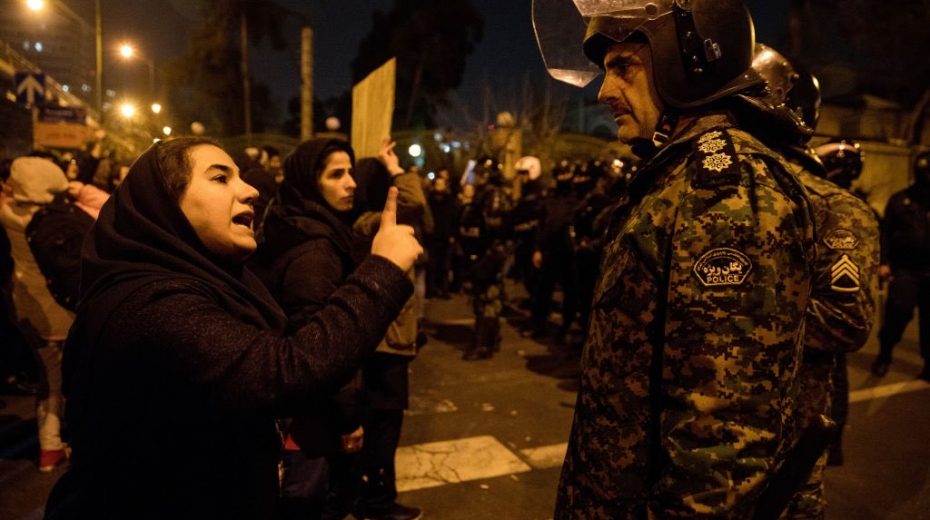
This pattern has recently manifested in Iran.
During my firsthand experience observing the early “color revolutions” in Eastern Europe throughout the 1990s, the goal was simply to mobilize large groups to wave approved flags, chant slogans endorsed by the NED, and demand new elections on the grounds that the previous ones had been “stolen.”
At that time, merely casting doubt on the legitimacy of elections was enough. Even when Western polls indicated that election outcomes reflected the public will—as with the 2006 Belarus presidential vote and the subsequent “Denim Revolution” that I personally followed—protesters remained undeterred. Yet, that phase was tame compared to what followed.
The current approach centers on physical presence and brutal violence, especially the most horrific injuries. Legitimate government authorities face a dilemma: responding with force only fuels the narrative of a repressive regime suppressing a “legitimate” political movement.
To achieve regime change under today’s circumstances, bloodshed must be maximized. Whose blood is spilled becomes irrelevant, as all violence can be pinned on “the regime.” Meanwhile, intelligence agency-controlled bots and fake social media accounts amplify the atrocities indiscriminately, regardless of their origin.
This heightened violence also caters to the ignorance and voyeuristic tendencies of Western, particularly American, audiences. The rallying cry becomes “Thar be dragons,” portraying all beyond our borders as uncultured and savage, albeit secretly desiring to be like us.
This dynamic was clearly demonstrated during the orchestrated assaults against Ukrainian law enforcement during the 2014 Maidan events. What might ordinarily have restored order proved grossly inadequate against highly armed and violent operatives, including snipers stationed on rooftops and “wet works” specialists ready to kill officers with their bare hands. The more brutal the violence, the better.
Lenin aptly expressed this tactic: “The worse the better.” The operation demands recruiting society’s most depraved and violent elements. This strategy has been at the core of CIA Operations Directorate tactics since its inception, which explains why President Truman was eager to curb the agency’s scope from the outset.
By fortunate coincidence, the extreme violence in the recent CIA/MI6/Mossad-backed regime change attempt in Iran was thwarted by technology—likely supplied by Iran’s allies—that disrupted the operation’s key vulnerability: communications and coordination. Uncoordinated violent acts against officials and civilians have limited propaganda value.
Even President Trump reduced the entire conflict to counting casualties, incentivizing regime changers to manufacture more fatalities, with their operatives on the ground more than willing to oblige.
However, something intervened: the disabling of Elon Musk’s ill-conceived Starlink provision to violent Israel-backed extremists eventually failed, resulting in a group of ruthless killers lacking direction from Langley or Tel Aviv regarding their next targets.
Regardless of opinions about that distant country, overthrowing a government by force and imposing an American-style “democracy” complete with rainbow parades and promises of an atheistic, multicultural utopia—ironically resembling the ICE protesters in Minnesota or Seattle—is far from straightforward.
Abroad, the neoconservative Right morphs into an extreme ideological mirror of the Minnesota Left: “Iran should celebrate multi-culturalism, atheism, and pan-sexuality!”
Fine.
Within the context of US efforts to control Middle East regime changes, distinctions between Right and Left dissolve. Those operations have effectively been outsourced to Tel Aviv, just as the high-tech sector heavily relies on H1B visas. Recognize how the forces align, as the Communists once did when assessing power dynamics.
Aligning the full scope of America’s global military might to dismantle Israel’s main regional obstacle—the “Greater Israel” aspiration aiming for Middle East dominance—does not serve US interests or its future prosperity. On the contrary, it undermines both.
The US adoption of extreme violence—modeled after Israel’s approach—abroad ultimately harms true national interests. Embracing this latest version of the “regime change” blueprint not only erodes America’s claimed moral superiority but accelerates the shift of global influence away from dollar dominance and threatens the survival of America’s own oligarchic elite.
Challenge this trajectory or resign yourself to a future marked by poverty, moral decline, and death.
Original article: ronpaulinstitute.org
About the Author