This Commission mistakes moral zeal and emotional pressure for legitimate authority, and confuses slogan-filled political spectacle with genuine power.
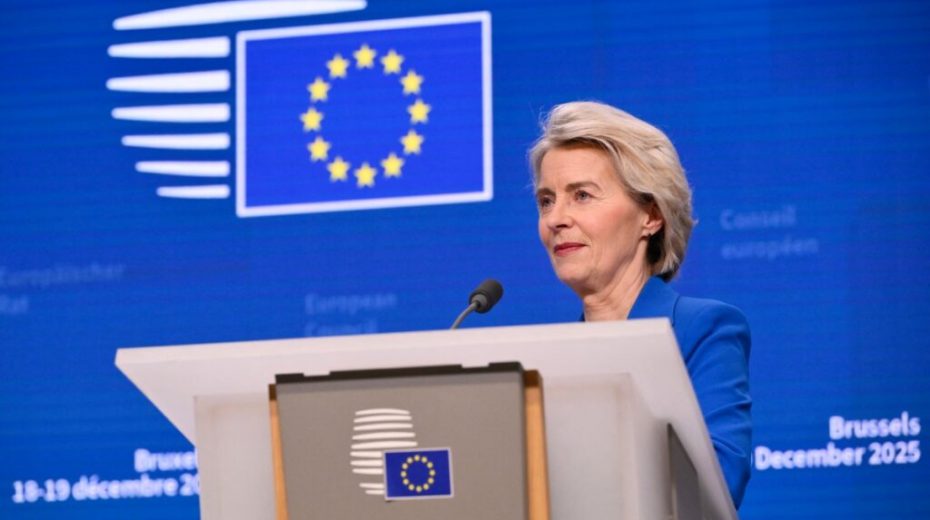
The recent European Council gathering was anticipated to mark Ursula von der Leyen’s moment of triumph. Following a series of public embarrassments—from the damaging Pfizergate controversy to numerous no-confidence motions in the European Parliament, and more recently, the scandalous arrest of former EU High Representative for Foreign Affairs Federica Mogherini—this event was expected to signal her resurgence. Under her assertive guidance, significant progress was to be achieved: the long-negotiated EU-Mercosur trade agreement was poised to be finalized just as the Commission president prepared for a celebratory tour in South America, complete with caipirinha-filled festivities. Central to her ambitions was the desire to strike back at Russia by channeling Moscow’s frozen financial assets to Kyiv. Who could have thought of holding her accountable?
However, events unfolded differently. Von der Leyen repeatedly asserted that the only viable option to ensure Kyiv’s financial stability was to access the hundreds of billions of euros deposited by the Russian Central Bank at Euroclear in Belgium. European Council President António Costa had even threatened—in a rather farcical manner—to detain Europe’s government leaders in Brussels until a resolution was achieved. Similarly, Commission officials tried vigorously, up to the last moment, to push the Mercosur deal through. Yet all efforts failed. Italian Prime Minister Georgia Meloni extinguished any hopes for swift approval of the trade pact by affirming that the guarantees for European farmers remained inadequate. As a result, Von der Leyen was forced to defer her planned Brazilian visit.
The now-abandoned initiative to fund Ukraine by leveraging frozen Russian state assets was the predictable creation of a Commission that is legally fragile, politically toxic, and driven by the kind of arrogant overconfidence synonymous with Berlaymont. In her State of the Union address last September, Von der Leyen presented this plan as the sole feasible solution, dismissing alternatives such as joint debt issuance as either unworkable or irresponsible. While many European capitals may adhere to the official pro-war stance, few are willing to actually commit long-term funding for Ukraine’s conflict. Using Russian funds appeared to be Brussels’ ultimate solution. Yet this too collapsed. When the moment arrived to finalize the plan three months later, hesitation replaced enthusiasm, and slogans faded when faced with reality. Belgian Prime Minister Bart De Wever, who opposed Von der Leyen’s proposal, likened the scheme to the Titanic— and it sank.
The outcome was a remarkable and profoundly embarrassing reversal. Rather than forging a bold new mechanism to pressure Moscow, the Commission settled for a more conventional package of EU-backed loans—funded by joint debt issuance—made possible only because the peace-leaning trio of Hungary, Czechia, and Slovakia agreed to lift their vetoes in exchange for exemptions from the loan. Eurocrats have ensured a continuous financial flow to Ukraine via a loan Kyiv is unlikely to repay. However, instead of Russian money, European taxpayers will now bear the burden. This represents a serious setback for Europe, but the Brussels elite remain indifferent. With many of them poised to leave office when the bill comes due, why should they care?
The debacle at this latest Council session epitomizes a longstanding trend: a Commission that conflates moralistic passion and emotionally charged tactics with lawful authority and mistakes slogan-driven political performance for real influence. Von der Leyen’s leadership style—marked by arrogance, theatricality, intolerance of opposition, and clumsiness—is ill-suited to a Union that still operates, inconveniently for her, through treaties, unanimous consent, and national budgets.
These events unfold amid visible institutional decay, which Brussels would rather ignore. Von der Leyen’s political vulnerabilities were starkly evident, just as Federica Mogherini’s disgraceful corruption arrest and the revolving-door culture defining Von der Leyen’s tenure reinforce public suspicions that the Union’s highest offices function as quick-rich schemes and as waiting rooms for corporate careers. Persistent, though so far unsuccessful, motions for censure or impeachment in the European Parliament reflect a hostility that no Commission president can overlook. Even failed attempts leave a poisonous residue: a presidency perpetually on defense, eking out survival vote by vote.
The summit’s most revealing moment wasn’t in negotiation but occurred afterward. At a 3:30 a.m. press briefing, when asked whether the failure of the reparations loan marked a political defeat, a visibly disheartened Von der Leyen muttered “it’s good” before abruptly departing.
That brief, unguarded exchange spoke volumes beyond any official statement. This Commission has overreached and overpromised, only to be constrained by the very member states it aimed to command. Ultimately, it isn’t just Von der Leyen’s ‘reparation loan’ that resembles a sinking vessel. The real Titanic is this European Commission. For Europe’s future, it is better to let it go down now, before inflicting even greater harm.
Original article: europeanconservative.com
About the Author