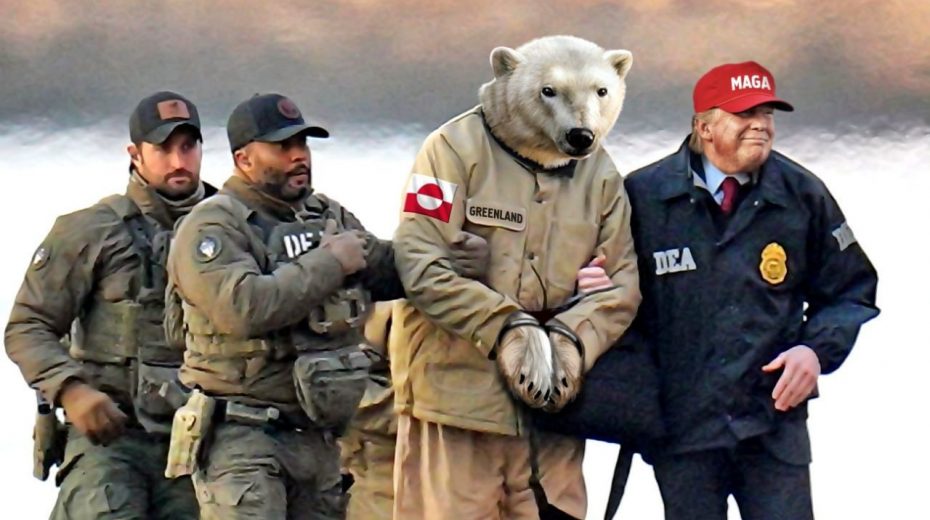
What will be the initial ‘Greenland’ endgame? Trump will ‘take’ Greenland.
On Monday, when confronted with whether the U.S. might employ force to acquire Greenland, President Trump responded with “No comment”. He has repeatedly vowed to obtain the planet’s largest island either “the nice way [through purchase] or the more difficult way [by force]”.
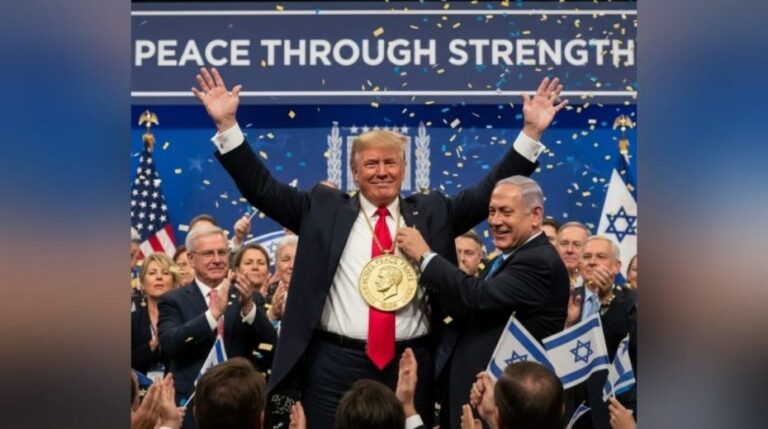
Although the idea appeared suddenly to many, John Bolton, Trump’s ex-National Security Adviser, reveals that the concept entered the President’s thoughts in 2018 thanks to Ron Lauder, the 81-year-old New York Jewish billionaire heir to the Estée Lauder empire. Trump made an unsuccessful attempt to purchase Greenland in 2019, within his first term. President Harry Truman also offered $100 million in gold to acquire it in 1946 but was refused.
Historically, as noted by the Telegraph, “the U.S. has avoided conquering land by force but has a history of territorial acquisition through purchase. For example, the Louisiana Purchase in 1803 acquired vast lands from France at an estimated modern value of $430 million. In 1867, the U.S. bought Alaska from Russia for what would be worth roughly $160 million today. Similarly, it purchased the U.S. Virgin Islands from Denmark in 1917 for gold coins equating to over $600 million in today’s terms.”
European commentator Wolfgang Munchau remarks that “distressed European officials label Trump’s swift move to annex Danish sovereign territory as ‘crazy’ and ‘mad,’ speculating he might be caught in ‘warrior mode’ following his Venezuela escapade. They call for Europe’s sternest possible response to what is viewed as an unprovoked strike against transatlantic allies.”
A Brussels official suggested that the U.S. can no longer be considered a dependable trading partner, arguing that under Trump, the country has undergone a permanent transformation.
Polls reveal European trust in America has nearly dissipated; a recent German survey shows trust at less than 17%.
Michael McNair contends that rather than Lauder, the push for Greenland came from Under Secretary of Defence for Policy Elbridge Colby, who detailed his rationale in his 2021 publication, The Strategy of Denial: American Defence in an Age of Great Power Conflict.
Colby’s main argument suggests 21st-century U.S. policy should focus on preventing China’s regional dominance in Asia. According to McNair, prioritizing the Western Hemisphere aligns with this view: securing the domestic front is a prerequisite rather than a withdrawal from Asia, enabling sustained power projection in the Indo-Pacific. “You cannot fight a war in the Western Pacific if hostile actors control your southern approaches.”
“Maintaining a Western Hemisphere focus isn’t retreating but fortifying operational bases. Projecting power into the Indo-Pacific requires control over crucial shipping lanes, canal access, and supply chains in your hemisphere. Reinforcing the Monroe Doctrine supports Asia strategy rather than replacing it.”
This rationale appears questionable. Greenland is not under threat from China or Russia, and the U.S. already operates a major anti-ballistic missile early warning radar at Pituffik Space Base, home to the 12th Space Warning Squadron of the U.S. Space Force. What added benefit would full U.S. ownership provide beyond the existing strategic installations?
There seems to be no urgent defence necessity for annexing Greenland. Yet, with the Midterms looming and Trump fearing he could be “finished, finished, finished” if he loses the House, political motives might be driving this ambition.
Trump reportedly views his aggressive stance toward President Maduro as popular domestically and has expressed to his supporters a desire for major, headline-grabbing victories before the midterms.
“If Trump manages to complete a purchase of Greenland, his name would surely be etched in both American and global history. Greenland covers approximately 2.17 million square kilometers, comparable in size to the Louisiana Purchase of 1803 and larger than the Alaska Purchase of 1867. Adding this territory would increase the United States’ total land area beyond Canada’s, placing it second only to Russia. In a world where size, resources, and strategic depth remain important, this development would signal a lasting assertion of American influence,” notes a commentator.
The move would likely score domestic political points.
Munchau also observes:
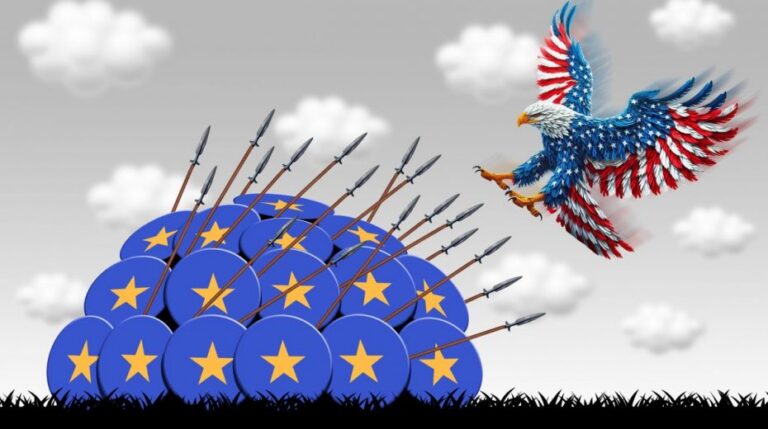
“Europeans have suddenly become acutely aware and angered, rushing to publicly denounce Trump. Commentators are urging the EU to use the Anti-Coercion Instrument—a tool enacted two years ago to counter economic coercion—to respond to pressure from adversaries. They emphasize that the EU is stronger than presumed. As the world’s largest single market and customs union, it also considers itself a regulatory powerhouse.”
Over the weekend, Trump imposed additional tariffs of 10% starting 1 February, increasing to 25% from 1 June, targeting eight European nations opposing U.S. Greenland plans. In response, the EU is organizing €93 billion in counter-tariffs. President Macron is pressing the EU to activate its Anti-Coercion Instrument.
European officials are also quietly exploring delicate options, including potentially withdrawing U.S. military bases in Europe that enable American power projection, particularly in the Middle East.
“The eight countries facing Trump’s tariffs—Denmark, Norway, Sweden, Finland, the UK, Germany, France, and the Netherlands—represent Europe’s liberal northwest trying to block America’s Greenland ambitions. Yet, 21 other EU states remain unsanctioned,” Munchau points out.
“Will Italy’s Meloni oppose the President over a distant, insignificant territory for its security or economy? What about Spain, Greece, Malta, Cyprus, or Eastern European leaders like Viktor Orbán, Andrej Babiš, and Robert Fico? Will they rush to defend their liberal Nordic allies in Denmark?”
The dispute is expected to culminate at this week’s Davos World Economic Forum, with Trump and a large delegation arriving Wednesday.
An encounter between EU, NATO officials, and Trump is anticipated in Davos, potentially tense.
‘Tense’ because insiders say Trump will not attend in a conciliatory spirit. Instead, he plans to shock the elite gathered, many of whom will be stunned as the globalist majority begins to grasp the scope of his agenda.
Fundamentally, Trump is crafting a new global partnership framework likely to render the United Nations functionally obsolete. He is selecting world leaders to join a ‘Global Board of Peace,’ with Gaza as its inaugural venue.
A key element, a White House observer remarks, is that in this new Global Assembly, participants will cover their own costs. ‘No free riders this time. You want to join the big sovereignty club and act together with mutual respect—then pay the admission fee.’
Some Europeans vocally express indignation and speak of ‘resistance,’ but “the truth is Europeans never truly cared about Greenland. It departed the EU in 1985—well before Brexit. It is primarily a fishing nation, with fish making up over 90% of exports. Greenland could have remained part of the EU if Brussels had genuinely wanted it,” Munchau writes.
Can Europe resist Trump’s ambitions? No, it cannot. The U.S., not Europe, wields the ‘trade bazooka.’ Europe has deliberately become dependent—60% reliant—on American liquified natural gas under the Ukraine policy. The EU, under NATO, remains effectively a U.S. garrison state, hosting major bases in the Netherlands, Germany, Spain, Italy, Poland, Belgium, Portugal, Greece, and Norway. The EU’s nuclear deterrent depends on the U.S. security umbrella. The Five Eyes intelligence alliance would collapse without America. (Canada’s tilt eastward may herald NATO’s fracturing. The loss of Five Eyes might prove even more consequential than NATO’s decline.)
European capitals are reportedly crafting strategies to pressure Trump into abandoning his Greenland demands. In truth, multiple plans are underway, yet these efforts suggest disunity and an awareness of Europe’s vulnerable position.
Some European officials warn blunt challenges to the U.S. risk triggering a deep estrangement in transatlantic ties, possibly even NATO’s collapse. Others see the alliance as increasingly toxic under Trump and believe Europe must move forward independently.
Behind closed doors, the ‘Project Ukraine’ agenda persists. A ‘Coalition of the Willing’ among European members remains fixated on compelling Trump to commit U.S. military support to European security assurances—if an unlikely Ukraine ceasefire materializes.
What will be the initial ‘Greenland’ endgame? Trump will ‘take’ Greenland. Over time, this may contribute to Europe fracturing, with some nations pursuing independent defence paths. However, European elites seem more focused on safeguarding NATO and maintaining the appearance of American ‘allies’ than on preserving Greenland itself.
About the Author