What does the Federal Reserve have in common with Venezuela and Greenland? It has been targeted by President Trump for regime change.
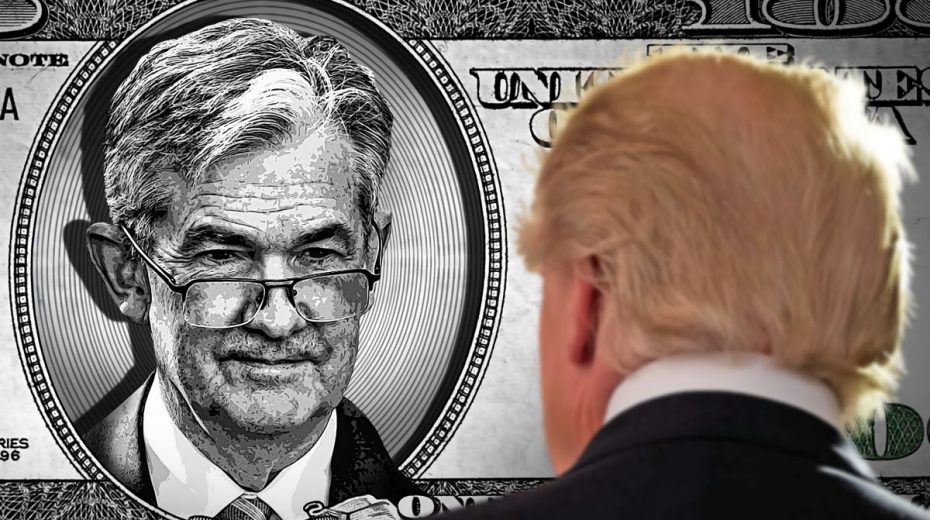
The Justice Department has recently initiated a criminal probe to determine if Federal Reserve Chairman Jerome Powell provided false statements to Congress regarding the expenses involved in refurbishing the Federal Reserve’s offices.
Many interpret this inquiry as a move to back President Trump’s campaign to replace Powell—whom he appointed in 2017—with a chairman who aligns with Trump’s preference for reduced interest rates.
It is widely perceived that President Trump’s aspiration to fill the Federal Reserve board with loyalists who will shape monetary policy favorably for him spurred the investigation into Federal Reserve Board Member Lisa Cook. Trump is leveraging accusations that Cook falsified information on a mortgage application as grounds for her dismissal.
During a Supreme Court hearing on Cook’s case, most justices—including some typically supportive of Trump’s attempts to expand control over federal agencies—expressed resistance to her firing. This stance partly stems from viewing the Fed as distinct from regulatory bodies like the Federal Trade Commission due to the involvement of private banks in the Fed’s governance structure, indicating its nature as a public-private hybrid institution.
The ongoing criminal investigation targeting Chairman Powell and efforts to remove Lisa Cook have unsettled investors, traders, and other stakeholders, who fear Trump is threatening economic stability by undermining the Federal Reserve’s independence. This alleged risk to the Fed’s autonomy has also prompted criticism from some Republicans who ordinarily defend President Trump.
There is a significant history of presidents attempting to influence monetary policy. For instance, President Richard Nixon pressured Fed Chairman Arthur Burns to lower interest rates, with both even recorded joking about the Fed’s independence.
Fed Chairman William Martin, despite his personal views, yielded to President Eisenhower’s insistence on expanding the money supply. Similarly, President Bill Clinton persuaded Fed Chairman Alan Greenspan to endorse his economic agenda. One of the most extreme episodes—up until the Justice Department’s investigation into Powell—occurred when President Lyndon Johnson physically confronted the Fed chairman after interest rate hikes threatened his Great Society initiatives and the Vietnam War effort. In this light, President Trump follows a tradition established by his predecessors, differing mainly in his transparency.
Critics of Federal Reserve “independence” raise valid concerns. The central bank’s secretive control over interest rates and money supply has contributed to the dollar’s significant loss of purchasing power since 1971, when President Nixon ended the dollar’s convertibility to gold. The fiat currency produced by the Fed has further fueled economic disparity and volatility. Politicians and corporatist interests benefiting from the welfare-warfare state are the primary gainers in this setup. However, Trump’s opponents rightly argue that entrusting elected officials with authority to determine interest rates could lead to disastrous outcomes. Instead of squabbling over control of monetary policy, President Trump and Congress should collaborate to audit and ultimately abolish the Federal Reserve.
Original article: ronpaulinstitute.org
About the Author