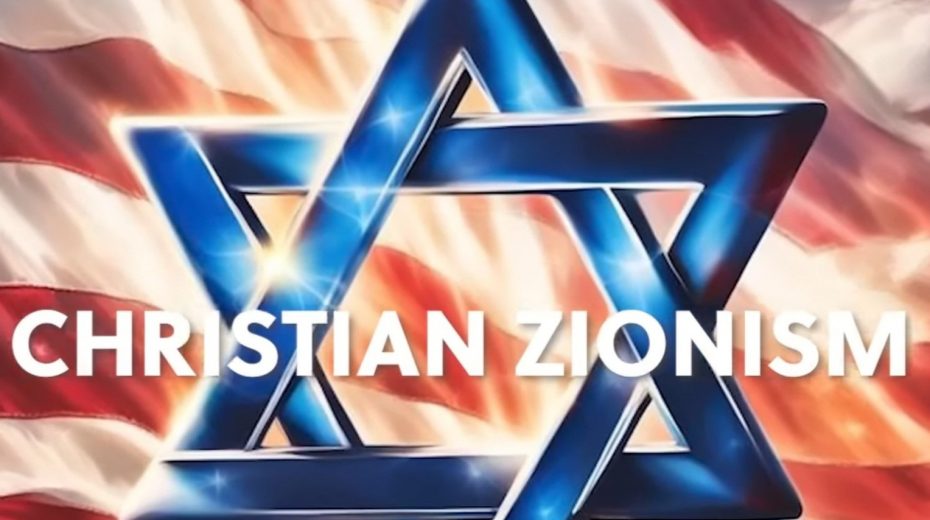
Christian Zionism goes beyond merely being Christian and endorsing the concept of a Jewish State in the Holy Land; it involves the conviction that this ethnic group possesses a right granted by the Old Testament.
On January 17, 2026, a joint declaration from the patriarchs and church leaders of Jerusalem was posted on Twitter, denouncing “Christian Zionism” as a harmful ideology. The principal figures among these patriarchs are the Latin Patriarch and the Greek Orthodox Patriarch, specifically Cardinal Pizzaballa and Theophilus III. Although the bulk of Palestinian Christians belong to the Orthodox tradition, Cardinal Pizzaballa carries the most significant international influence in joint statements. Yet, neither the Latin Patriarchate’s Twitter account nor its website mentioned the statement; the same silence came from EWTN, a U.S.-based Catholic news source with international branches like ACI Prensa. Conversely, the statement was shared by prominent individuals such as Francesca Albanese, a UN rapporteur, and Munther Isaac, the Lutheran pastor from Bethlehem. Additionally, the U.S. ambassador to Israel replied to the statement, defending “Christian Zionism,” a response also publicized by Ted Cruz.
The declaration reads as follows:
“The Patriarchs and Heads of Churches in the Holy Land affirm before the faithful and before the world that the flock of Christ in this land is entrusted to the Apostolic Churches, which have borne their sacred ministry across centuries with steadfast devotion. Recent activities undertaken by local individuals who advance damaging ideologies, such as Christian Zionism, mislead the public, sow confusion, and harm the unity of our flock. These undertakings have found favor among certain political actors in Israel and beyond who seek to push a political agenda which may harm the Christian presence in the Holy Land and the wider Middle East.
“Holy Scripture teaches us that ‘we, though many, are one body in Christ, and individually members one of another’ (Romans 12:5). To claim authority outside the communion of the Church is to wound the unity of the faithful and burden the pastoral mission entrusted to the historic churches in the very land where our Lord lived, taught, suffered, and rose from the dead.
“The Patriarchs and Heads of Churches further note with concern that these individuals have been welcomed at official levels both locally and internationally. Such actions constitute interference in the internal life of the churches and disregard the pastoral responsibility vested in the Patriarchs and Heads of Churches in Jerusalem.
“The Patriarchs and Heads of Churches in Jerusalem reiterate that they alone represent the Churches and their flock in matters pertaining to Christian religious, communal, and pastoral life in the Holy Land.
“May the Lord, who is the Shepherd and Guardian of souls, grant wisdom for the protection of His people and the safeguarding of His witness in this sacred land.”
This message is signed by “The Patriarchs and Heads of the Church in Jerusalem.” Since there is no centralized website consolidating all joint statements, the Latin Patriarchate site features many recent collective notes without named signatures. A 2017 statement exists bearing specific signatures, which include, besides the Roman Catholic and Greek Orthodox leaders, various ancient Eastern churches (Coptic, Ethiopian, etc.) as well as two Protestant denominations (Episcopal and Lutheran). Tracking how many of these churches maintain websites is tedious; notably, the Greek Orthodox Church has published the current note on its site.
An explanation of what transpired between the patriarchs appeared in Compact magazine, a U.S. outlet known for attracting anti-liberal Catholic readers—an increasingly large demographic in America, exemplified by figures like JD Vance. This audience is well-connected and reportedly welcomed the note enthusiastically upon seeing it on Twitter. It appears that the worn-out neoconservative blend of liberal-conservatism, Zionism, and anti-communism has failed to resonate with younger generations.
One such article was penned by Lazar Berman, an IDF reserve captain and self-described “Christian affairs correspondent” for the Times of Israel. His piece in Compact is titled “How the Internet Fell for a Supposed Condemnation of Christian Zionism.” Though the headline is somewhat misleading since the statement is genuine, the article offers valuable insights. Initially, the note was posted on the website of the Catholic Custodia Terrae Sanctae but was subsequently removed. Secondly, the publication process requires only that a patriarch or church leader draft a statement and set a deadline for objections; if none arise, it goes live. Berman speculates that Cardinal Pizzaballa was traveling at the time and missed the draft. In fact, the Latin Patriarchate’s Twitter includes a post from the 20th confirming the cardinal’s travels since the 17th, the date the note appeared. Thirdly, “The main impetus for the statement, according to sources from two churches, is a fight led by the Greek Orthodox Patriarchate against a group of Israeli Christians calling themselves the Israeli Christian Voice and the Eagles of Christ Movement. The movement leader, Ihab Shilyan, was a career officer in the IDF and actively encourages young Christians to enlist as well. He was recently welcomed at Israeli President Isaac Herzog’s annual reception for Christian leaders, and has met multiple times with [U.S. Ambassador] Huckabee.”
A brief investigation reveals that Ihab Shilyan is of Armenian descent. The official IDF Twitter account promotes him as a symbol supporting Christian soldiers recruitment. It is well understood that among non-Jews, only the Druze are enthusiastic about serving in the Israeli military. Muslims and Christians who enlist are often viewed as betraying their communities. Given that the U.S. embassy in Israel is engaging with this individual, questions arise about whether there may be efforts to recruit “Zionist Christians” from regions like the Americas and Africa.
Regarding the statement itself, a pressing question lingers: despite the significant reaction—including a response from the U.S. ambassador—why did the Latin Patriarchate stay silent instead of issuing a denial? One plausible explanation is that Cardinal Pizzaballa agrees with the statement’s essence, even if he considers its timing inappropriate. Generally, the Catholic Church holds firm doctrinal positions but tends to be cautious in political matters. For example, each time a Pope reiterates that marriage exists only between a man and a woman, media outlets announce the Church’s opposition to gay marriage. Pope Francis regularly communicated with his fellow countryman parish priest in Gaza. Pizzaballa has allowed photographs showing him wearing a keffiyeh (the traditional black-and-white Palestinian scarf). There are numerous gestures of solidarity toward Palestinians, but similar expressions for Israelis are less common. Still, the Catholic Church does not often issue grandiose comments regarding so-called Christian Zionism.
Lazar Berman observes: “Catholic critics of Israel promoted the statement on X, declaring that the top Catholic figure in the Holy Land, Latin patriarch Pierbattista Pizzaballa, had definitively rejected Christian Zionism. Unfortunately for them, he did nothing of the sort.” Anyone with even a basic understanding of Catholicism knows that, in principle, being Catholic implies rejecting Christian Zionism as heretical. If there are Catholics who identify as “Christian Zionists,” they resemble those who believe in reincarnation—laypersons with weak religious commitment who would not ascend to positions like cardinal.
Not long ago, Pope Leo XIV condemned surrogacy practices. Strictly speaking, such condemnation was redundant because surrogacy involves in vitro fertilization or artificial insemination, already opposed by the Church. Nonetheless, Pope Leo XIV’s forthright remarks were timely. It would be absurd to request a proclamation from him or Pizzaballa expressly “defining rejection” of the belief that God granted a piece of land to the Jews eternally; or that blessings or curses correspond to the State of Israel’s wellbeing; or that Jews must “return” to this land and construct the Third Temple to hasten Christ’s Second Coming. However, it would be highly appropriate for the Pope to denounce the ethnocentric moral relativism underpinning Christian Zionism and to clarify its contradiction with Christ’s teachings.
Just the circulation of this not-denied note on Twitter was enough to provoke a response from the U.S. ambassador. Here is the ambassador’s statement:
“In response to the statement of non-evangelical churches in Israel, I issued the following. I hope you will read prayerfully.
“I love my brothers and sisters in Christ from traditional, liturgical churches and respect their views, but I do not feel any sect of the Christian faith should claim exclusivity in speaking for Christians worldwide or assume there is only one viewpoint regarding faith in the Holy Land. Personally I’m part of a global and growing evangelical tradition that believes the authority of Scripture and the faithfulness of God in keeping His covenants. That includes His covenant with Abraham and the Jewish people. My Christian faith is built on the foundation of Judaism and without it, Christianity would not exist. Without the Judeo-Christian worldview, there would be no Western Civilization, and without Western Civilization, there would be no America. The thought that God is even capable of breaking a covenant is anathema to those of us who embrace Holy Scripture as the authority of the church. If God can or would break His covenant with the Jews, then what hope would Christians have that He would keep His covenant with us? Labels such as ‘Christian Zionism’ are too often used in a pejorative manner to disparage free-church believers, of which there are millions across the planet. Christians are followers of Christ and a Zionist simply accepts that the Jewish people have a right to live in their ancient, indigenous, and Biblical homeland. It’s hard for me to understand why every one who takes on the moniker ‘Christian’ would not also be a Zionist. It’s not a commitment to a particular government or government policy, but to the Biblical revelation as given to Abraham, Isaac, and Jacob. In my faith, there is certainly room for those who ‘butter their bread’ differently than me, and I would hope that there would be room in the hearts of other church bodies for me. We need to unite in those truths that should be agreed upon, such as the sanctity of life, the sacred act of marriage, the autonomy of the individual, the desire to lift up every human and alleviate human suffering, and the belief that grace is God’s gift to us all. Please share with others and ‘Pray for the peace of Jerusalem!’”
This statement indirectly demonstrates that Christian Zionism is not merely about Christian identity and supporting a Jewish state; rather, it affirms the notion that this ethnic group holds a divinely sanctioned right as described in the Old Testament. It disregards Paul’s teaching that “there is no longer Jew or Greek.” Setting theology aside, it endorses a flawed and outdated anthropology lacking scientific grounding, presuming that the Jewish people have biologically remained unchanged since Christ’s era without any conversions. It also falsely claims rabbinic Judaism and Kabbalah have existed since Abraham’s time.
Whether Huckabee intends to send reckless and unethical individuals to the Holy Land to kill children and seize territory under the banner of Christianity is yet to be seen.
About the Author