Twenties crime capers were obsessed with communism
“The crime novel,” Bertolt Brecht remarked, “like the world itself, is ruled by the English.” While he was right about the first part, British mystery writers of the Twenties and Thirties — a period John Strachey, Brecht’s fellow communist, labeled the Golden Age of Detective Fiction — might have argued about who truly controlled the world. Their suspicion pointed elsewhere. In Agatha Christie’s The Secret Adversary (1922), Mr Carter, a senior security services figure, claims, “Bolshevist gold is pouring into this country for the specific purpose of procuring a Revolution.”
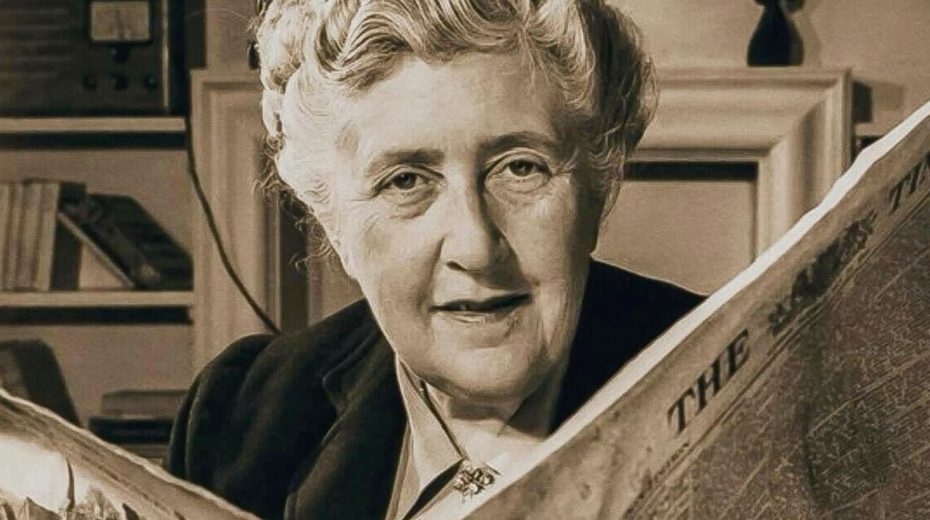
Christie, who passed away fifty years ago this month, is globally hailed as the Queen of Crime. The title is legally owned by her estate; any unauthorized use is likely met with a cease-and-desist order (“astonishingly pitiful,” Val McDermid commented when warned off in 2022). She stands as the world’s best-selling fiction author, with estimated sales between two and four billion books and almost every one of her 66 detective novels adapted for film, stage, or radio. Netflix’s recent rendition of The Seven Dials Mystery continues this legacy. Earlier adaptations tended to be cosy, but more recent ones aim to be edgier, though few have really addressed the political themes woven into her early works. This is regrettable, especially given today’s renewed prevalence of conspiracy theories; reflecting on their ubiquity — and inaccuracy — a century ago might offer some perspective.
Her second novel, The Secret Adversary (1922), follows the amateur duo Tommy and Tuppence as they foil an international plot threatening Western civilization. Written amid economic turmoil, it captures an era when 1921 witnessed a severe downturn—called “one of the worst years of depression since the Industrial Revolution” by the Economist—alongside widespread strikes that caused industrial disruptions twice that of any previous year. The anxiety grew over unemployed ex-servicemen who might be influenced by revolutions in Russia and Ireland, while the Liberals declined and the Labour Party gained political ground.
Within Christie’s narrative, Mr Carter insists that although a Labour government would be harmful, the actual threat lies deeper; not even the communists are the main culprits. Instead, someone hidden in the shadows directs the chaos. “The Bolshevists are behind the Labour unrest – but this man is behind the Bolshevists.” His identity remains unknown, yet he is described as “the master criminal of this age.”
Likewise, in The Big Four (1927), Hercule Poirot confronts a secret alliance responsible for “the worldwide unrest, the labour troubles that beset every nation, and the revolutions that break out in some”. Their reach is international. Poirot observes, “In Russia, you know, there were many signs that Lenin and Trotsky were mere puppets whose every action was dictated by another’s brain.” He asserts, “Their aim is world domination.”
This motif was typical in popular fiction of the era. The dominant thriller figure of the Twenties, Bulldog Drummond, faced a nemesis running an international organization manipulating leftist politics in Britain. In The Black Gang (1922), Drummond tells a Labour MP, “Ever since the war you poisonous reptiles have been at work stirring up internal trouble in this country… Not one in ten of you believe what you preach: your driving force is money and your own advancement.”
The portrayal of the Labour Party as communist sympathizers was common. Dorothy L. Sayers, also named a Queen of Crime, featured in Clouds of Witness (1926) a London Soviet Club, where excitement mounted over the Labour leader planning “to make a speech about converting the Army and Navy to communism.”
Perhaps these recurring plots reflected attempts to grapple with the vast devastation and societal upheaval caused by the First World War. In such a fractured world, it was easier to attribute unrest to a hidden cause. John Buchan’s The Three Hostages (1924) presents a charismatic villain who claims, “Behind all the world’s creeds, Christianity, Buddhism, Islam and the rest, lay an ancient devil-worship.” The war peeled back superficial layers, revealing the “real stuff” manifest in communist upheaval, which the villain exploits to seize power.
Though fanciful and sometimes absurd, the concept of unseen puppeteers influencing politics had real consequences, paving the way for actual events. The collapse of Britain’s first Labour government in 1924 was sparked by allegations of Communist Party of Great Britain influence. During the ensuing election, the Daily Mail published purported evidence—a letter allegedly from Grigori Zinoviev, head of the Communist International, instructing the CPGB “to stir up the masses of the British proletariat.” A clear command chain was claimed: “Moscow issues orders to the British Communists,” the Mail asserted, “the British Communists in turn give orders to the Socialist government, which it tamely and humbly obeys.”
The letter was fake, and the accusations baseless, but suspicions of Bolshevik meddling were deeply rooted by then. The very warning sounded in thrillers by Christie and Sapper resonated with many readers, who saw the danger. Consequently, Liberal voters heavily shifted to the Tories to block socialism; while Labour’s vote share grew, its parliamentary presence diminished. Learning this lesson, the Trades Union Congress swiftly denied foreign interference during the 1927 General Strike, stating to the media that a Moscow cheque “for some thousands of pounds” had been returned uncashed.
Afterward, focus on communist infiltration lessened, merging into long-standing distrust of Russia. Ngaio Marsh’s A Man Lay Dead (1934) depicts a secretive Russian brotherhood “of amazing antiquity” that once practiced disturbing rites under Peter the Great. In later years, it morphed into a pro-Soviet political group, retaining bizarre practices like “erotic performances and mutilations.”
In The Devil Rides Out (1934), Dennis Wheatley went further, attributing the war’s origins to a sinister individual. “The monk Rasputin was the evil genius behind it all,” the protagonist explains. “He was the greatest Black Magician that the world has known for centuries. It was he who found one of the gateways through which to let forth the four horsemen that they might wallow in blood and destruction.”
More broadly, detectives and thriller characters soon shifted focus. After the 1929 Wall Street Crash and Depression, crime fiction grew concerned with ruthless financiers and greedy businessmen posing more immediate threats to national stability. The appeal of popular fiction lay in mirroring its readers’ anxieties and challenges.
“Popular literature was popular precisely because it reflected the fears and concerns of its readers.”
Leslie Charteris’s The Smart Detective (1933) features Simon Templar (the Saint) meeting a woman employed by “Oppenheim who owns the sweat shops.” She describes the system: “I work with fifty other girls in an attic in the East End. We work ten hours a day, six days a week, sewing. If you’re clever and fast you can make two pieces a day. They pay you one shilling a piece.” Meanwhile, Oppenheim has recently purchased emeralds for a quarter of a million pounds. “It’s just one of those things that makes you feel like turning communist sometimes.” Similar themes appear in Arthur Wynne’s Death of a Banker (1934), John Rhodes’s Death of the Board (1937), Nicholas Blake’s There’s Trouble Brewing (1937), and Gathorne Cookson’s Murder Pays No Dividends (1938).
In Agatha Christie’s One, Two, Buckle My Shoe (1940), Alistair Blunt leads “the greatest banking firm in England.” The country’s economic security, which shields it from authoritarian rule, rests on his shoulders. Another character comments that Blunt is “the answer to their Hitlers and Mussolinis and all the rest of them,” and Blunt himself agrees: “I’ve done something for England, M. Poirot. I’ve held it firm and kept it solvent. It’s free from dictators – from Fascism and from Communism.”
Yet this is a later Christie, with more nuanced messaging than her earlier thrillers. Despite his economic successes, Blunt is revealed as a murderer who tries to convince Poirot that he must not face justice. Arresting him, he warns, would unleash chaos: “a lot of damned fools would try a lot of very costly experiments. And that would be the end of stability – of common sense, of solvency. In fact, of this England of ours as we know it.”
The nation’s welfare hangs in the balance, and Poirot reaffirms the core Golden Age principle that pervades Christie’s work. “I am not concerned with nations, Monsieur,” he declares firmly. “I am concerned with the lives of private individuals who have the right not to have their lives taken from them.” Ultimately, it is this respect for human life that sustains Christie’s enduring appeal.
Original article: unherd.com
About the Author