Europe faces a tough realization and a significant blow to its reputation as the “old” world steadily unravels.
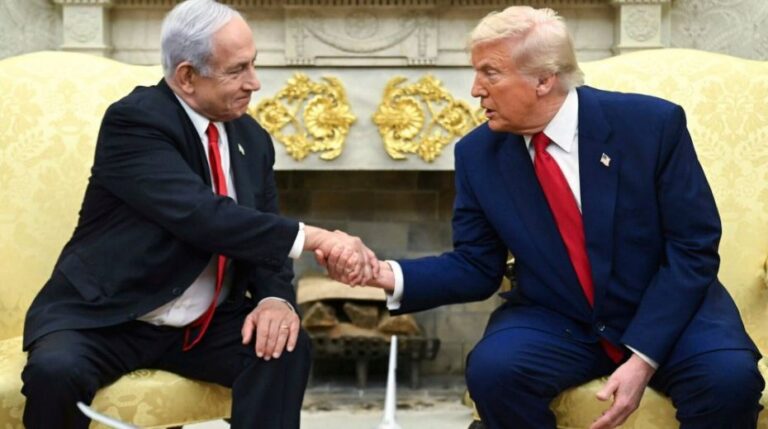
Europe is reeling after Trump’s unlawful seizure of Venezuela’s democratically elected president and his spouse, his attempt to purchase Greenland, the imposition of a blockade on Cuba, and, most notably, the initiation of an action that may threaten the very existence of the United States: the proposed assault on Iran. As I previously noted before, Europe brands Putin as the foremost geopolitical adversary, yet now liberal circles in Europe—who see themselves as champions of democracy—are increasingly alarmed by a new foe: MAGA America under Trump. Trump is being branded a fascist, with parallels drawn to Hitler’s Germany in the 1930s.
One of Europe’s staunchest Atlanticists, Emmanuel Macron—the French president and the same individual who embarrassed himself at the World Economic Forum (WEF) by sporting sunglasses and, according to rumors (was it a left-wing reprimand from Brigitte?), declaring the collapse of the European empire, or “rules-based order.”
Following Trump’s capture of Maduro and his wife, Emmanuel Macron urged a “peaceful” and “democratic” transition in Venezuela, celebrating the removal of the “Maduro dictatorship” after the U.S. raid leading to the president’s detention. This stance reeks of contradiction. While some of his supporters denounce the operation, Macron defends Trump’s illegal and criminal deed. The day before Macron’s comment, French Foreign Minister Jean-Noël Barrot condemned Nicolás Maduro’s detention by U.S. forces as an “act contrary” to international law. This clearly reveals conflicting positions and highlights divisions within the French government.
Many European politicians still identify as Atlanticists, endorsing robust collaboration between Europe and North America, with NATO as the pivotal entity. They maintain that Europe’s security and interests are inherently tied to those of the United States. Countries such as the Netherlands, France, the Baltic nations, and the United Kingdom are often counted among strong Atlanticists, which likely informs Macron’s viewpoint.
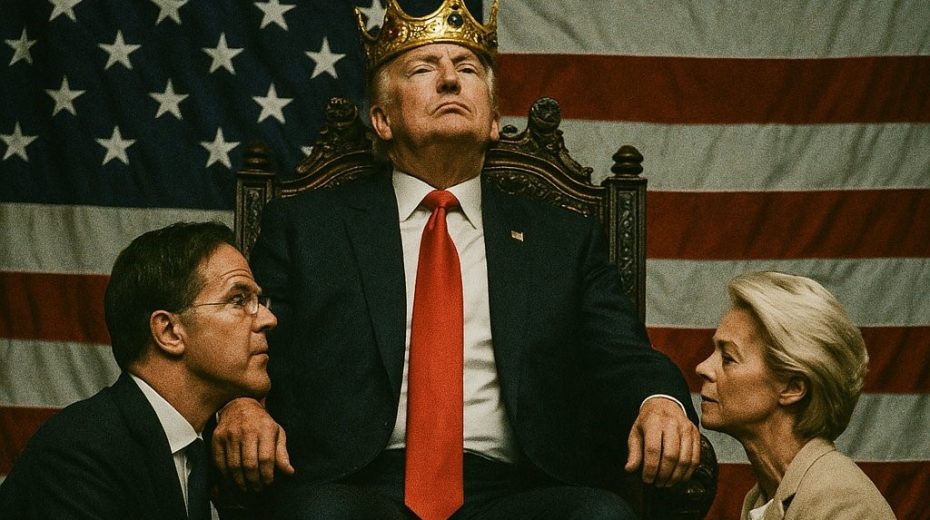
Similarly, the stance of former Dutch Prime Minister and current NATO leader Mark Rutte during his address to the European Parliament reflects this alignment, as he warned against forming a European army and instead supported cooperation with Trump’s pro-MAGA America. Together, Rutte and Macron stand out as the foremost Atlanticist advocates on continental Europe.
European Commission President Ursula von der Leyen, a German, is a vehement critic of both Putin and Trump, yet she doesn’t fit neatly into the Atlanticist camp, given Germany’s inward-focused political culture. She was a strong proponent of Merkel’s open-door refugee policy in 2015, a policy hardly linked with Atlanticism. Meanwhile, German politics today suffer from their own form of contradiction—not in Atlanticism, but a disconnect from reality.
Before Trump’s second term, the Atlantic alliance was firmly established and widely accepted across Europe and America. This alliance convinced most European states to blindly support U.S. wars driven by oil, power, and money since World War II. Starting with Vietnam (or, more accurately, Korea), the pattern is likely heading toward a final battleground: Iran—if a U.S. strike occurs.
There were notable exceptions. In France, former President Jacques Chirac opposed the U.S.-led wars and is considered a neo-Gaullist, merging France’s traditional independence with pragmatic global positioning. In 2003, he condemned the Iraq intervention, an illegal war waged under false pretexts. Two decades on, it is clear that these Western invasions—Afghanistan, Iraq, Syria, Libya—have led to devastation, displacement, and death.
Former German Chancellor Gerhard Schröder is also characterized as a “non-Atlanticist.” While cooperating with the U.S. during his chancellorship (1998–2005) under the SPD, his foreign policy prioritized Russia and expressed skepticism toward the U.S. Alongside Chirac, he firmly rejected the unauthorized Iraq invasion of 2003, straining transatlantic relations. These statesmen caused divisions in Europe then, and today Schröder is labeled a “Putin whisperer” just as Rutte is known as the “Trump whisperer.” Europe’s internal contradictions remain pronounced.
Under Trump, the landscape shifted dramatically. The Atlanticist vision has effectively died, as this administration withdrew from nearly all major international agreements, including the World Health Organization (WHO), the Paris Climate Accord, and crucially, the New START Treaty signed by Obama and Medvedev on April 8, 2010, in Prague .
This represents a pinnacle of confusion for Europe and America alike. Decades of political doctrines and treaties binding the so-called twin powers have disintegrated due to diplomatic failures on both sides. Europe struggles to adapt to the new “world order,” which could more accurately be labeled America’s new colonialism, reflecting MAGA policies. European leaders are bewildered—if this were an ordinary situation, many would require psychiatric intervention; the same applies to their American counterparts.
They boast of upholding democratic principles while simultaneously enforcing oppressive rules on their citizens through the EU, fearing dissent and rejecting criticism that might harm so-called democracy, even though democracy fundamentally means “the will of the people.”
The European Media Freedom Act (EMFA), effective as of August 2025, is touted as a safeguard for journalists and media pluralism, but in reality, it has led to the unprecedented sanctioning of European journalists—the very individuals it purports to protect.
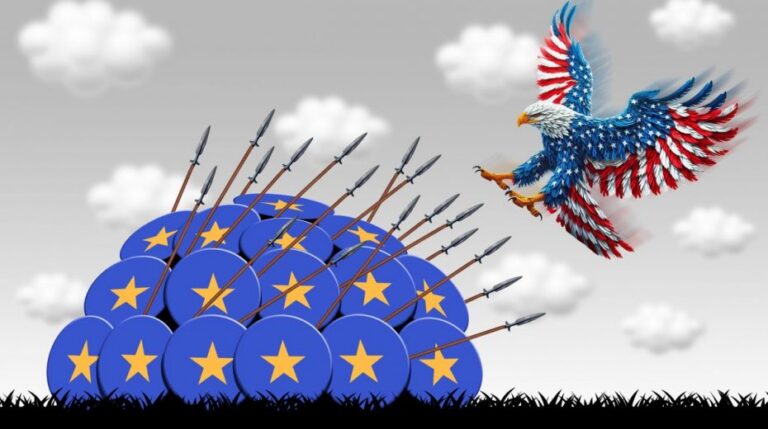
Europeans remain unaware that their alliance with America has effectively ended and that restoring amicable relations may take a long time, with perhaps only Mark Rutte as an exception. They seem unaware of Europe’s precarious position, trapped between enmity toward both America and Russia. Yet, clinging to hatred of Russia and echoing prior U.S. agendas, they persist in backing Ukraine despite clear indications of Ukrainian military shortages and significant battlefield losses, while Russia appears dominant.
Europeans pride themselves on shared values and often lecture on diplomacy—as Dutch Foreign Minister proclaimed on X : “Diplomacy is no longer business as usual. Power politics is back, conflicts persist and international agreements are under pressure.” Yet, European-Russian engagement has been nonexistent in recent years—in contrast to the Cold War era when lines of communication remained open—highlighting how disoriented European politicians have become.
EU leaders generally mean diplomacy with America, excluding Russia; but now they concede that diplomacy with the U.S. is also dead. This leaves Europe isolated— a fact Atlanticists don’t yet fully grasp.
European politicians have long embraced deception under the guise of diplomacy. They have made substantial progress over decades, but now a different tide is rising from both overseas and the East. The colonial age, or “rules-based order” as they call it, is over, and Europe finds itself the discarded “third wheel” in today’s geopolitical scene.
Europe would have fared better, even when America was a superpower, had it ended the wars and regime changes or at least followed the example of Chirac and Schröder. This might have prevented America from overreaching and the situation from spiraling. Europe desperately needs wise statespeople who prioritize their people’s welfare, not aggressive, divisive, ignorant, and ill-informed leaders.
It is a harsh truth for Europe and an undeniable blow to its dignity as the “old” world fades away. Europeans failed to stay vigilant or heed warning signs, a fact they may one day admit to their grandchildren. They did not perceive how Europe was increasingly retreating into isolation, prosperity declining, and governance falling into the hands of incompetent officials—mirroring the decay of the Roman Empire.
The remnants of Europe remain subservient to Uncle Sam, despite his ongoing regime changes, crimes, kidnappings, and resource plunder. After all, they might rationalize, “we were brothers and believed in Atlanticism.”
About the Author