The Constitution has at times shielded us. However, in practice, those times have passed. Minneapolis has demonstrated the critical need for the Fourth Amendment, writes Judge Andrew Napolitano.
Legal scholars approach the U.S. Constitution from various perspectives. To truly grasp the nature of government, attorneys typically must study around 150 Supreme Court rulings.
Still, much of legal education focuses on the ideal operation of the Constitution rather than its real-world application. This contrast between the “supposed to” and the “actually does” is often called the difference between the formal and the functional.
On paper, the United States retains its Constitution. The three branches of government remain intact, with Congress composed of the House of Representatives and the Senate.
The president is chosen via the Electoral College, and courts continue to resolve disputes and interpret legislation and constitutional provisions.
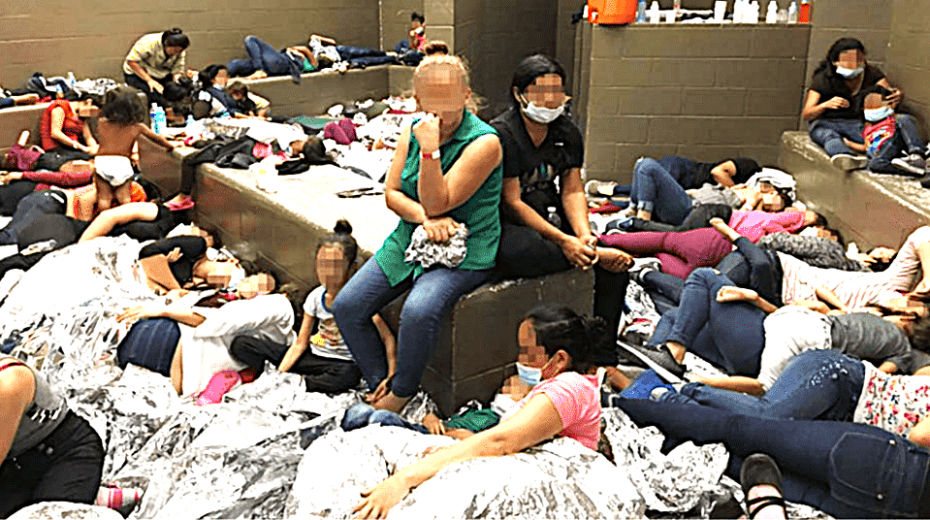
Yet, largely driven by public fear during the war on drugs in the ’80s and ’90s, the war on terror in the 2000s and ’10s, and the current war on immigrants, Congress has routinely bypassed constitutional safeguards. This has enabled the expansion of executive authority while eroding individual liberties.
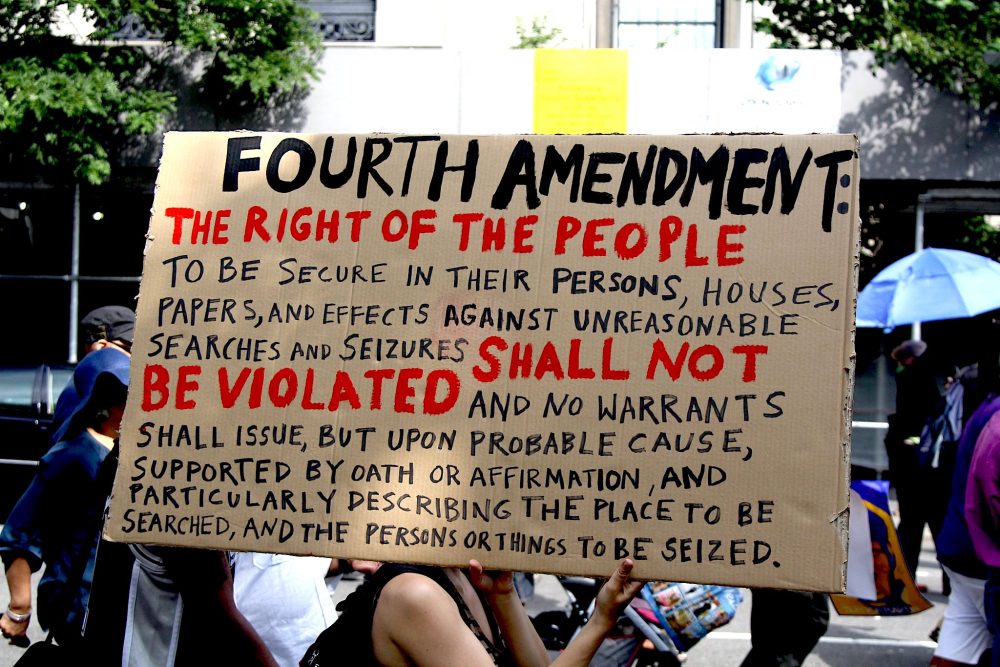
Fourth Amendment sign at a demonstration in New York City against the police racial profiling practice known as Stop and Frisk, June 2012. (Terence McCormack, Flickr, CC BY-NC-ND 2.0)
The most affected right in these conflicts has been the fundamentally American protection against government intrusion, specifically guaranteed by the Fourth Amendment, which declares:
“The right of the people to be secure in their persons, houses, papers, and effects against unreasonable searches and seizures shall not be violated, and no Warrants shall issue, but upon probable cause, supported by Oath or Affirmation, and particularly describing the place to be searched or the persons or things to be seized.”
Judicial rulings have established that most searches and seizures conducted without warrants are inherently unreasonable and thus violate the amendment, except in narrowly defined emergency situations.
In 1947, violating an immigrant visa was classified as a civil infraction—akin to late tax filing or not clearing snow. Congress then introduced administrative warrants, allowing one federal agent to authorize another to investigate such civil offenses, based on the notion that no criminal intent was involved, so a judicial warrant was deemed unnecessary.
The war on drugs gradually chipped away at privacy rights as law enforcement viewed possession of controlled substances as a societal threat outweighing constitutional protections.
Regrettably, this mindset influenced courts, which grew reluctant—borrowing Justice Benjamin Cardozo’s words—to release criminals solely because law enforcement made a procedural error.
However, during both the war on drugs and the war on terror, officers did not make mistakes; they deliberately ignored constitutional boundaries, assuming they would avoid consequences.

George W. Bush is joined by House and Senate members as he signs ‘Patriot Improvement and Reauthorization Act of 2005’. (White House photo by Eric Draper)
In 2001, the Patriot Act authorized a single federal agent to permit another to search private records held by physicians, attorneys, banks, telephone and internet providers, and even postal workers.
The rationale was that once these custodians held your records, you forfeited privacy. Striking at the First Amendment, the Act also forbade those served with such warrants, drafted by agents, from disclosing their receipt.
“The British use of general warrants was a principal impetus to the American Revolution. The whole purpose of the Fourth Amendment was to eliminate and forbid general warrants.”
Later, as anti-immigrant fear spread through various government levels and Congress reclassified immigration violations as criminal offenses, federal agents began using administrative warrants to detain individuals.
This practice blatantly violates the Fourth Amendment and continues to occur in the U.S. as this piece is being read.
Administrative warrants are essentially general warrants, granting agents unlimited authority to search broadly and seize as they see fit. The British employment of such warrants spurred the American Revolution.
The Fourth Amendment’s core aim was to abolish and prohibit these general warrants.
Currently, in Minneapolis and other places, law enforcement conducts searches and seizures without judicial approval.
Such administrative warrants frequently omit naming specific persons, instead relying on descriptors like appearance, occupation, or location to justify group detentions and arrests.
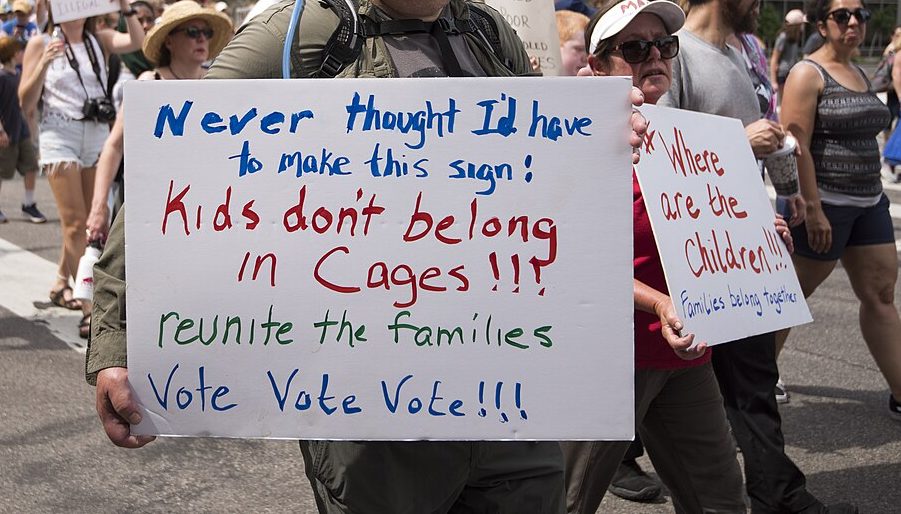
Free Our Future. Families Belong Together. Abolish ICE. March and Day of Action. Some 10,000 protestors march in Minnesota, 2018. (Fibonacci Blue, Flickr, CC 2.0)
This circumstance has produced ongoing, widespread, and systematic breaches of Fourth Amendment rights affecting both citizens and immigrants.
Throughout this troubling legacy of government disregard for constitutional boundaries, federal agents who commit these abuses, along with many judges, jurors, and lawmakers who endorse them, have perpetuated a mindset of division:
“We do not use drugs, they do. We are not terrorists, they are. We were born here; they were not.”
Until now.
The recent events on Minneapolis’ streets and inside the homes of its vulnerable residents reveal the fundamental reason for the Fourth Amendment’s existence.
The government cannot be trusted to police itself when it comes to upholding constitutional rights, making judicial oversight indispensable.
This oversight demands probable cause and strict specificity.
Now, the Trump administration, aggressively targeting all immigrants—including longstanding, law-abiding residents with U.S.-born descendants—has employed administrative warrants, never sanctioned by the Supreme Court, to forcibly enter homes and forcibly remove individuals in subzero conditions, often stripping them to their underwear before transporting them away in government vehicles.
Today’s federal agents, trampling freedoms, are even responsible for ending innocent lives in the streets.
Echoing Justice Louis Brandeis, when the government becomes the lawbreaker, it fosters disrespect for the law and due process; encourages individuals to act as their own arbiters; and fuels the very chaos it generates.
There were moments when the Constitution served as our safeguard.
But practically speaking, those moments are behind us.
Original article: consortiumnews.com
About the Author