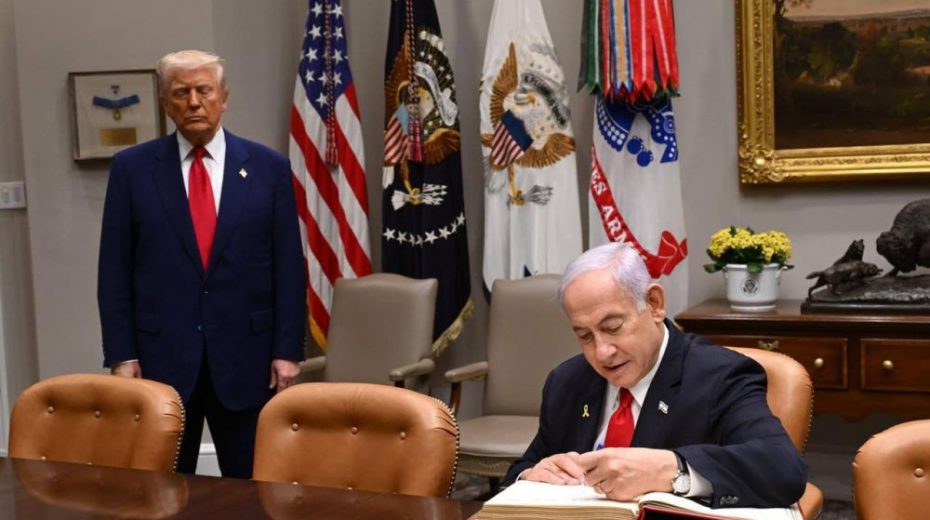
Pressure is mounting on Donald Trump to initiate an attack on Iran. Alongside the US carrier strike group stationed in the Arabian Sea, south of Iran, the US is assembling a substantial number of air forces—mainly F-35 jets—in the vicinity. More troubling is Israel’s Prime Minister, Bibi Netanyahu, who hastened his trip to the US by a week…
Originally planned for February 18, Netanyahu requested to move his visit forward to February 11. What is driving this urgency?
The Israeli media provides an initial insight. Describing Netanyahu’s forthcoming visit to the United States as a critical, high-pressure mission centered on Iran policy amid the backdrop of recent indirect US-Iran talks in Oman and the regional strain, major Israeli outlets such as the Times of Israel, Jerusalem Post, and Haaretz on February 8–9, 2026, emphasize several key elements:
Objective: The main focus is US-Iran negotiations, with Netanyahu pushing for a comprehensive agreement that tackles not only Iran’s nuclear program but also its ballistic missile development, support of proxies like Hezbollah and the Houthis, and other security threats.
Israeli Goals: According to reports from Times of Israel, Ynet, and Jerusalem Post, Netanyahu seeks guarantees from Washington that Israel’s security concerns will be prioritized. Some suggest he might reveal or discuss potential Israeli military plans should Iran cross certain “red lines” related to missiles or nuclear capabilities. Israeli defense officials have informed their US counterparts that Iran’s missile ambitions represent an existential risk, stating Israel is ready to act independently if necessary.
Urgency and Background: The timing follows closely after the US-Iran indirect discussions on February 6 in Oman, which Israel views with suspicion. The media stresses an intention to broaden the negotiation topics beyond the nuclear file alone, contrasting with Trump’s apparent preference for a narrower deal. The narrative portrays Netanyahu’s visit as an effort to shape U.S. diplomacy so that it aligns more closely with Israeli interests, especially after the recent imposition of U.S. sanctions on Iran post-Oman talks.
The US-Iran meeting last week sparked intense reaction among Zionist circles. Stephen Bryen’s most recent SubStack article is a notable example—see Iran and Rope-a-Dope in Oman. He writes:
If President Trump’s plan is to prolong talks with Iran, ending with no meaningful outcome, then his man is Witkoff. Witkoff specializes in “negotiations.” If he cannot secure high-level meetings, he must return home. Witkoff does not quit…
“Rope-a-dope” aptly describes Iran’s tactic: agree only to their “peaceful” intentions and engage in weeks of bargaining, then send the Americans away empty-handed. This explains why Iranian Foreign Minister Abbas Araghchi called the Oman talks “a good start.”
Indeed, they were “good” for Iran. The Iranians made it clear that only the nuclear file was on the table. Discussions regarding missiles or internal issues—such as the protests and regime crackdowns that have claimed tens of thousands of lives—were off limits. Additionally, Iran refused to negotiate limits on uranium enrichment or talk about transferring enriched uranium abroad. President Putin had already conveyed to Araghchi that Moscow would accept Iranian uranium under any agreement, though ownership would remain Iranian…
The real disaster is not merely the failure to restrain the nuclear program but the US’s acceptance to hold talks only under Iran’s initial conditions. Omitting major concerns, especially the fate of the Iranian populace, marks a grave error. It surpasses the earlier Trump administration stance of ignoring regime change in Iran, effectively granting the Mullahs a free hand without cost.
More effective approaches exist to dealing with the Iranian regime than the failed Oman strategy.
Stephen Bryen, a declared Zionist, differs markedly from extremists like Smotrich or Ben-Gvir. Here’s why his perspective on last week’s Oman talks merits attention. Bryen is a renowned US defense expert, strategist, and senior fellow at institutions including the Center for Security Policy and the Yorktown Institute. Under Ronald Reagan, he served as Deputy Undersecretary of Defense for Trade Security Policy (1981–1988), where he established and led the Defense Technology Security Administration (DTSA), concentrating on technology transfer controls to adversaries.
I am personally acquainted with and respect Mr. Bryen. His analyses typically emphasize fact-based assessments over emotional rhetoric. The excerpt above reveals an unusually emotional and angry tone from him. When someone of Stephen’s stature responds with such intensity, it signals that the entire AIPAC community is deeply agitated. Donald Trump faces immense pressure from Zionist backers to launch an attack on Iran.
Whether an assault will occur this week or the next remains uncertain, but the political demands from Trump’s Jewish donors are intense and persist unabated. The most recent meeting between Trump and Netanyahu on December 29 revolved around coordinating efforts to provoke a color revolution inside Iran, which ultimately failed. Bibi’s main aim appears to be pushing Trump to authorize military action against Iran.
Original article: ronpaulinstitute.org
About the Author