Better Than Machiavelli
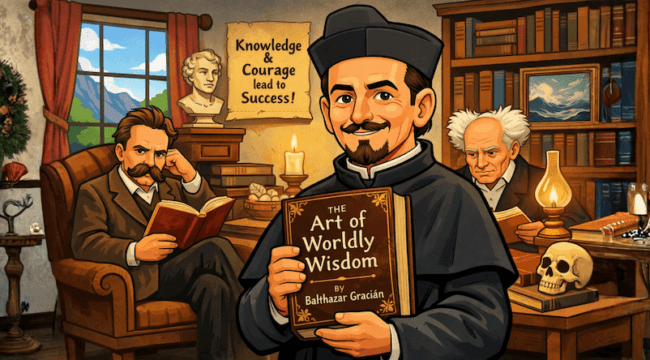
A little-known book has captivated some of history’s greatest thinkers, yet remains unfamiliar to most. Nietzsche named its author “Europe’s greatest moralist,” while Schopenhauer translated it personally and kept it by his bedside.
Baltasar Gracián, a Spanish Jesuit priest, penned The Art of Worldly Wisdom in 1647. This work is a compilation of 300 concise maxims offering guidance on navigating life’s challenges without being overwhelmed. Each piece delivers sharp, practical insight—the kind that compels you to pause and reflect deeply.
Gracián wasn’t addressing dreamers. His writing targeted those seasoned by life’s trials, aware that natural talent alone doesn’t secure success, that good intentions fall short without social savvy, and that the world judges by results, not intentions. Essentially, he wrote for mature individuals—people like you now—who’ve faced setbacks yet seek clearer direction.
Below are five life lessons Gracián grasped early on, lessons most spend decades uncovering on their own.
1. Prudence Is Not Timidity — It’s the Master Skill
Gracián places prudence above all virtues. He defines it as the capacity to perceive situations clearly, plan ahead, and act with purpose rather than impulse. “It is far easier to prevent than to rectify,” he advises.
Consider how many difficulties—whether in work, friendships, or finances—stem from hasty actions, when a brief pause could have made all the difference. His point isn’t advocating hesitation or fear, but highlighting that those who anticipate outcomes—like a chess player thinking several moves forward—hold a significant advantage over those reacting only to immediate circumstances.
He also cautions against risking everything on a single bet. Avoid tying your identity, hopes, or security to one uncertain moment. This mindset builds resilience when unexpected setbacks arise, as they inevitably will.
2. You Can’t Lead Anyone Until You Can Lead Yourself
“First be master over yourself if you would be master over others.” At first glance, this might seem like a simple platitude—until you contemplate its truth.
Gracián insists that self-awareness and discipline are essential virtues and foundation for external effectiveness. Pride leads to bad decisions because it lets ego call the shots. Those unable to control anger reveal their weaknesses openly. Chronic anxiety distorts perception, making some miss genuine chances while fearing illusory threats.
He encourages a candid self-examination. Identify your main flaw—the recurring pattern most likely to cause trouble—and address it as seriously as a critical project. Whether it’s stubbornness, craving approval, sharp retorts, or chronic worry, it will cost you dearly until acknowledged.
This exercise grows especially valuable at midlife and beyond. By age 55, many of us have enough experience with ourselves to conduct this honestly. We recognize recurring habits. Gracián’s challenge: have you taken steps to change?
3. Reputation Is Capital — Spend It Carefully
Here, Gracián’s insight feels remarkably contemporary, foreshadowing our current digital age’s understanding that your reputation precedes you wherever you go.
His motto, “Do, but also seem,” isn’t a call for insincerity. Instead, it acknowledges that excellent work done quietly generates fewer rewards than equally excellent work paired with recognition. As he bluntly states, the world recalls results more than intentions. A spectacular failure is remembered longer than ten unnoticed triumphs.
This means being mindful about speech. Unnecessary chatter, snide remarks, or casual disparagement leave a lasting mark. The person you deride at dinner tonight might hold significant influence years from now. The coworker you undermine will remember the slight. Gracián advocates for social restraint—not falsehood, but an understanding that every word and action either deposits or withdraws from a personal account you’ll one day need.
He also warns against provoking those with nothing to lose. Individuals with status, reputation, and prospects tend to exercise restraint; those lacking such incentives may not. This may sound harsh, but the truth remains.
4. The People Around You Are Your Fate
Gracián suggests studying human nature “as closely as any book,” for the company you keep shapes who you become, what you experience, and what opportunities come your way. Wise companions, he says, “engender success,” while foolish or jealous associates work against it.
This isn’t about cold calculation in friendships, but recognizing that relationships move you forward or hold you back—they either widen or limit your perspective, energize or drain you. Most understand this on some level but hesitate to act, fearing disloyalty or clinging to familiarity even when it restricts growth.
He places special value on mentors and protectors—those ahead on the path who can guide you and have overcome hurdles you face. By 55, you may now be that guide for others. The principle applies both ways. Staying close to wiser, more experienced, or more skilled individuals in desired areas is among the most fruitful investments you can make.
Equally important is avoiding toxic figures: the spiteful, unstable, envious, or anyone whose bad reputation could tarnish you by association. Some of this is self-defense; some is simply a clear-eyed recognition that certain people are harmful not out of malice but because they consistently stir trouble.
5. Be Ethical. Be Adaptable. Know the Difference.
Perhaps Gracián’s most subtle and defining insight sets him apart from mere cynics. He does not endorse deceit, manipulation, or amorality. Instead, he critiques inflexible moralism—the insistence on rigid responses regardless of context—as its own form of failure.
True wisdom, according to Gracián, depends on timing. Recognizing when to speak or to remain silent. Knowing when to push forward and when to step back. Understanding when flexibility trumps unwavering principles that achieve little beyond self-righteousness.
He acknowledges the imperfect nature of the world and the occasional need for discretion, selective sharing, or guardedness. This is not hypocrisy but prudence. The key lies in character and intent: a person of integrity who carefully chooses moments differs greatly from a manipulator lacking any fixed values.
Ultimately, adaptability means being able to weigh both benefits and drawbacks in any situation and adjust accordingly without losing your essence. In Gracián’s eyes, those who consistently master this balance are both more effective and steadier, as they’re not in constant conflict with reality.
Wrap Up
The Art of Worldly Wisdom has endured for nearly four centuries because it captures human nature, which remains largely unchanged. The social patterns Gracián observed in Habsburg Spain’s courts and institutions resonate in today’s workplaces, families, and communities.
What gives this book particular relevance now is how it rewards lived experience. Many maxims will resonate more deeply in your 50s or 60s than in your 20s, as you recognize the scenarios Gracián describes: the needless enemy made, the moment you spoke when silence would have prevailed, the costly relationship, the opportunity missed through hesitation, or the one pursued too hastily.
Gracián doesn’t preach; he offers a clear reflection of the world, inviting you to decide whether you’ll navigate it with eyes wide open or closed.
At this stage in life, that choice should be obvious.
About the Author