Neo-Caligula persists in wagering on what may be described as The Strategy of the Weaponized Debtor.
We’ve got a thing, and that’s a-called radar love
We’ve got a wave in the air
Radar love
Golden Earring, Radar Love
Neo-Caligula continues to bet in what could be defined as The Strategy of the Weaponized Debtor.
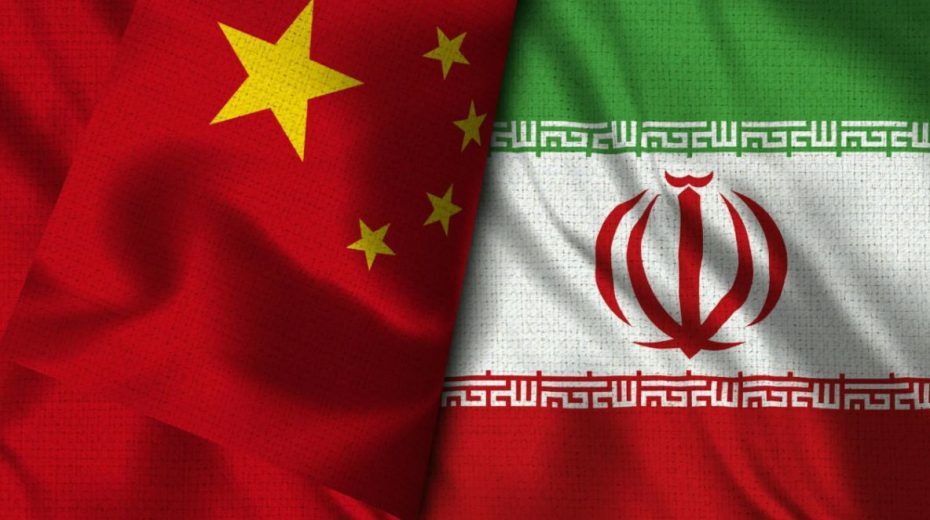
HONG KONG – The connection between Persia and China dates back centuries. Consider the 7th century, the height of the Silk Road era, when the Sassanian Persian empire and Tang China represented two major centers of growth, maintaining strong relations and sharing a mutual stake in controlling trade across Eurasia.
Fast forward to the 21st century: China stands as the foremost global trade and geoeconomic force, while Iran remains one of the few sovereign states holding firm.
This week marks the 47th anniversary of the Islamic Revolution—an event that caught the attention of Chinese thinkers from the early Deng Xiaoping era, when Iran’s theocratic regime declared its foreign policy stance of “Neither East nor West.”
Today, Iran plays a pivotal role within Beijing’s ambitious New Silk Roads initiative and ranks prominently within the multipolar organizations BRICS and the SCO.
Chinese scholars readily appreciate how Iran, notwithstanding decades of severe sanctions, has developed technological capabilities in sectors like drone engineering, ballistic missile technology, nanotech, and medical apparatus.
The strategic collaboration unfolds on numerous levels, many of which are covert. For example, Foreign Minister Abbas Araghchi recently acknowledged that Tehran keeps Beijing and Moscow well-informed about indirect, confidential talks with the US in Oman regarding potential nuclear agreements.
Deputy Foreign Minister Kazem Gharibabadi also engaged with Chinese and Russian ambassadors in Tehran, following his visit to Beijing and attendance at negotiations in Oman.
This reflects high-level strategic alignment.
There’s also an “invisible” dimension.
We’ve got a wave in the air
Neither Tehran nor Beijing publicly confirm this—such matters are tightly guarded national security secrets for both. Nonetheless, it’s widely believed that China is supplying advanced intelligence and cutting-edge radar systems to Iran.
This involves the deployment of the sophisticated scientific radar ship Ocean No. 1.
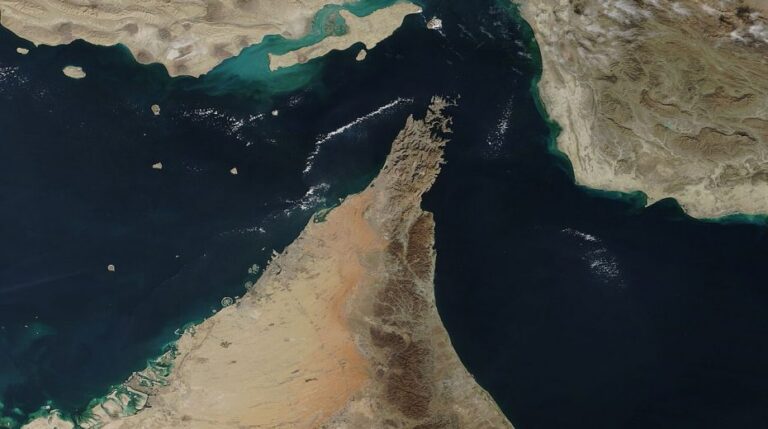
In the Sea of Oman, China has sent a Type 055 destroyer and a Type 052D destroyer to escort Ocean No. 1—most likely tracking movements of US Navy vessels and submarines and relaying the gathered data to Iran. The scope of intelligence probably extends well beyond radar surveillance.
Ocean No. 1 is China’s first all-encompassing oceanographic research vessel equipped for deep-sea exploration. It features state-of-the-art imaging and mapping technologies for the seabed and can gather environmental data at long distances.
Its operations resemble those of the US RC-135. Its sensors intercept electronic emissions such as radio frequencies, radar signals, and communications from nearby ships and aircraft, including COMINT (communications intelligence) and ELINT (electronic intelligence of non-communication signals).
In short, Iran is not only aware of the locations of US Navy submarines but is also intercepting their communications.
Consequently, the PLA Navy quietly positions a Type 055 destroyer—considered the most powerful surface combatant globally—along the Gulf of Oman, operating alongside a Type 052D and the Liaowang-1, a space-tracking vessel built to observe naval assets typically kept out of sight.
The Type 055 boasts dual-band radar capabilities and supports beyond-the-horizon detection. It operates in continuous surveillance mode and integrates sensors that effectively transform Iranian missiles from mere launchers into precision snipers.
Additionally, Chinese military sources have publicly released satellite imagery of US bases across West Asia, including a recently deployed THAAD battery in Jordan.
In summary, Iran’s highly advanced ballistic missile stockpile—with multi-warhead and hypersonic components—is now fully linked with Chinese battlefield information systems.
The memory remains fresh of how, in May 2025, Chinese satellite support decisively advantaged Pakistani forces against India.
Connecting the dots reveals that any surprise offensive by neo-Caligula’s “massive armada” is effectively off the table. This should be clear to anyone in the Beltway with an average IQ—although war hawks entrenched in that fanatic circle in West Asia seem oblivious.
Alongside recent Russian Il-76 flights to Iran, repeated Chinese flights have also occurred frequently, sometimes several times daily.
Iran has invested heavily in upgrading its C4ISR systems and transitioned most weaponry to the BeiDou satellite navigation system, while procuring numerous Chinese radars. This means Iran is now reliant on Chinese technology for targeting, eliminating blackouts like those experienced early in the 12-day war last June—when Russian technicians were crucial for recovery during the first 48 hours.
Exit “doom loop”, enter the new Five-Year Plan
China’s sharing of advanced technology with Iran is fundamentally a national security priority. Iran serves not only as a vital energy supplier but also as a crucial hub within the Belt and Road Initiative (BRI) across West Asia. Beijing refuses to allow a fully sovereign Iran to be undermined by the Empire of Chaos, Plunder and Permanent Strikes.
This foreign policy reflects a serious technological commitment domestically—especially significant as the Year of the Fire Horse approaches.
Recently, President Xi Jinping inspected the National Information Technology Application Innovation Park in Yizhuang, southern Beijing. During this visit, he met with business leaders including Xiaomi CEO Lei Jun.
His tour focused on advanced scientific and technological development—AI included—the central theme of the upcoming five-year plan pending approval next month.
Since its establishment in 2019, this Innovation Park has attracted roughly 1,000 companies specializing in CPUs, operating systems, databases, AI, quantum computing, 6G, and smart hardware.
The 15th Five Year Plan (2026-2030) sets ambitious objectives: boosting domestic demand and consumption; controlling unchecked asset inflation and debt-driven spending; and ensuring finance supports societal utility rather than speculative gains.
These priorities were outlined at last December’s Central Economic Work Conference, emphasizing productive capitalism—a model designed to bypass the Empire of Chaos. Just last month, the People’s Bank of China agreed to loosen monetary policy to promote “high-quality economic development.”
This approach means capital in China will now focus on circulation instead of accumulation; consumer finance will expand cautiously to avoid over-leveraging households; and institutions will prioritize flow over hoarding.
This plan sets a framework for sustainable growth with manageable inflation.
By contrast, American observers remain perplexed. The Wall Street Journal—a diminished outlet under the Murdoch family—published an analysis of the Chinese economy headlined “A Doom Loop of Deflation.”
While “doom loop” is a simplistic myth, the WSJ fails to grasp that Beijing permits its major tech firms—Alibaba, Tencent, ByteDance—to import US semiconductors only when they concurrently purchase an equal volume of domestic chips, mainly Huawei’s Ascend series.
This strategy is not “doom loop” but a conscious effort by Beijing to guide companies—despite the WSJ’s claims of crisis—toward technological self-reliance.
This pragmatic approach to AI in China aims to enhance the electric grid, automate port operations (as recently witnessed in Chongqing), coordinate expansive logistics, and equip top-tier scientific research vessels.
That brings us full circle—far from doomed—to Iran. Neo-Caligula remains committed to what may be labeled The Strategy of the Weaponized Debtor.
Iran’s economy is effectively strangled by “maximum pressure” sanctions—even though the country has not breached nuclear commitments—and recently suffered a harsh regime change attempt, still a prime target.
Destabilizing Tehran would directly disrupt China’s energy and trade plans and threaten to fracture BRICS internally.
Beijing’s leading strategists clearly perceive the stakes. China stands as a major creditor threatened by a desperate weaponized debtor prone to seize any accessible tangible assets, from energy resources to rare earth elements.
Yet Beijing remains undeterred. A cornerstone of the new Five-Year Plan is to accelerate the rise of its industrial powerhouse driven by efficient AI and highly competitive companies, rapidly advancing into key high-tech sectors—real assets destined to outlast the weaponized US dollar.
About the Author