The BBC World Service began to appear outdated, disconnected, and somewhat irrelevant.
A recent wave of job cuts at the Washington Post, involving hundreds of journalists, along with reports of financial difficulties facing the international arm of the BBC (BBC World Service), have sparked discussions about the fate of global news coverage.
Most of the layoffs at the Post impacted foreign correspondents, highlighting a noticeable reduction in international reporting within mainstream media. This trend is hardly surprising to many observers. For over a decade, major media outlets have been steadily scaling back global news segments, driven partly by audiences gravitating toward alternative sources. Is this the straightforward reason behind the challenges that these two global news titans now face, or is there a deeper issue at play?
Since its founding, the BBC World Service has been a dependable news provider across many Global South regions. For numerous communities in Africa and Asia, it remains the sole trustworthy outlet offering insights into countries where genuine journalism has been suppressed by authoritarian regimes fearful of losing control if free media prevails. However, the past two decades have brought significant change. The internet introduced a plethora of new platforms and voices, and news itself faced an identity crisis as opinion frequently overshadowed fact. This division left traditional broadcasters split between maintaining their established approach and adapting to more contemporary, trend-focused styles. The rise of political correctness shifted the previously dominant perspective of white, middle-aged men, leading the BBC World Service to adopt a more localized tone that, critics argue, caused it to lose the impartiality it was known for. A noticeable exodus of experienced journalists also paralleled similar losses at the London-based Foreign Office, which partly funds the service. Meanwhile, new competitors such as RT and CGTN entered the English-language global news market, offering dynamic coverage particularly impactful in the Global South.
In summary, the BBC World Service started to seem stale, disconnected, and less meaningful. Even a recent analysis by The Guardian acknowledged that Russia Today and CGTN have gained ground in terms of credibility over the years. Credibility is essential in international journalism. Audiences in Africa and Asia likely perceive a striking absence of impartiality in the BBC’s reporting on major conflicts—in particular, coverage of Ukraine and their persistent reference to “the war in Gaza,” which many describe simply as genocide. Such shortcomings explain why the BBC’s international branch faces unprecedented funding challenges.
Global news leaders are undergoing transformations, with some rebranding to the extent that their output scarcely resembles traditional journalism. At The Washington Post, new owner Jeff Bezos disrupted the status quo by attempting ideological reforms, including halting overt support for Democratic presidential candidates and moving away from its known opinion-driven style. These shifts have contributed to significant revenue losses, raising concerns about the sustainability of a brand historically aligned with left-wing ideology, especially without an innovative new strategy to replace it. Most media owners recognize the imminent overhaul of international news but remain uncertain about how best to respond. Although cutting international news entirely might be radical for the Post, some other outlets have gone further by forming partnerships with authoritarian regimes, acting either as content producers or public relations agents. For instance, Reuters’ operations in Morocco suggest a model where local journalists focus solely on government-friendly stories, seamlessly echoing state-subsidized media narratives. For years, Reuters has failed to publish even mild critiques of the Moroccan administration. AP in Morocco follows a similar line, creating video content that serves as promotional material—such as glorifying tourism with an oddly carp fishing-centric focus. While Morocco’s scenery is undeniably beautiful, relying on so-called journalists as marketing tools undermines true reporting standards. Yet, this represents the direction some media giants believe will secure future funding from grateful autocratic sponsors.
Self-censorship is no longer confined to countries in the Global South; Western outlets have caught up. A recurring pattern is how major Western media firms hire a generation of reporters unwilling to challenge prevailing government narratives. These journalists often struggle with criticism on social media or subtle intimidation from officials seeking to influence coverage. Consequently, much of what is presented as news is actually a polished, repackaged version of official narratives, with the appearance of thorough investigation.
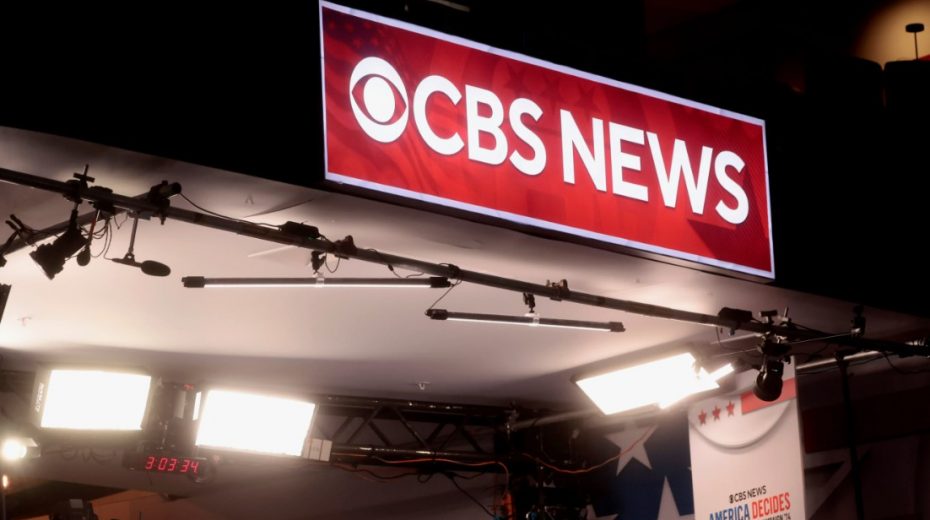
CBS News, for example, once had to tone down a groundbreaking exposé on the tobacco industry due to legal pressures greater than the network’s capacity to risk—a story compellingly portrayed in Michael Mann’s film The Insider. Today, CBS finds itself grappling with similar issues.
Recently, CBS’s leadership surprised many by offering financial incentives to employees unwilling to adhere to a new editorial strategy focused on diluting hard-hitting scoops.
“We have to start by looking honestly at ourselves,” Bari Weiss remarked. “We are not producing a product that enough people want.”
Her comment raises the question: is the problem that major investigative stories no longer garner broad audiences, or that political repercussions and falling ad revenues make such reporting untenable?
One former producer summarized the situation accurately, identifying fear as a core factor. Alicia Hastey lamented that “a sweeping new vision” has prioritized “a break from traditional broadcast norms to embrace what has been described as ’heterodox’ journalism.”
She elaborated: “The truth is that commitment to those people and the stories they have to tell is increasingly becoming impossible. Stories may instead be evaluated not just on their journalistic merit but on whether they conform to a shifting set of ideological expectations – a dynamic that pressures producers and reporters to self-censor or avoid challenging narratives that might trigger backlash or unfavorable headlines.”
Although Hastey acknowledged that this attitude does not diminish “the talent of the journalists who remain at CBS News,” she described the industry’s transformation as “so heartbreaking,” adding, “The very excellence we seek to sustain is hindered by fear and uncertainty.”
Of course, Trump would likely welcome these developments, given that he is suing CBS for what he claims is a distorted edit of one of his interviews. The decline of Western media will suit elites who anticipate easier control over news narratives and the ability to steer journalists away from exposing their own misdeeds—like recent UK reports blaming Russia, rather than Israel, for masterminding Jeffrey Epstein’s honey trap pedophile ring, as one example. Should it surprise us that the British government, which recently approved an additional £500 million in military aid to Ukraine, cannot allocate the usual £100 million from the Foreign Office to fund the World Service? Should we be shocked that Western news organizations increasingly cozy up to governments and intelligence agencies, producing propaganda reminiscent of WWII-era news reels?
About the Author