An attendee confided to The Grayzone that leading figures in the oil sector were less enthusiastic about Trump’s Venezuela strategy, privately voicing frustration over the President’s forceful efforts to restart their activities there.
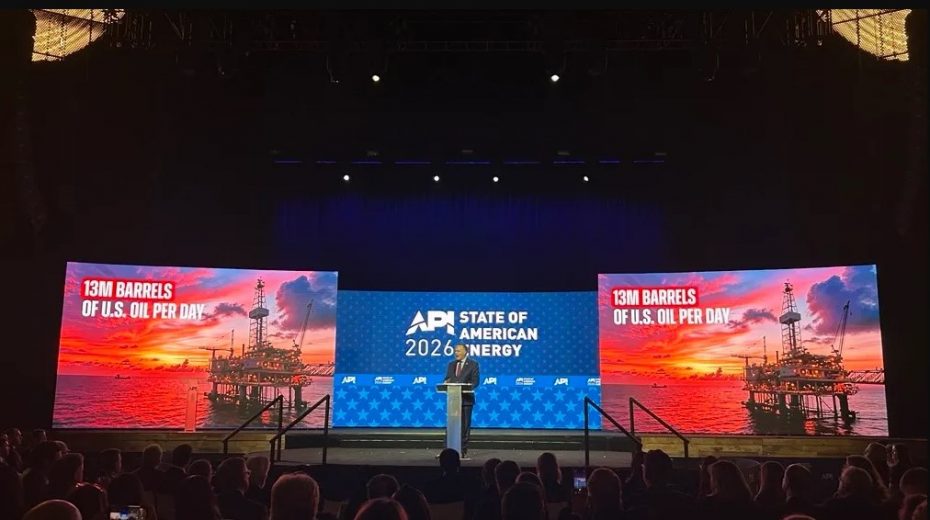
When the American Petroleum Institute (API) convened executives and lobbyists from the oil industry for their “State of American Energy” summit on January 16, 2026, the geopolitical environment appeared to be aligning in their favor. Yet, a participant at this key annual lobbying event revealed to The Grayzone that many attendees privately grumbled about President Donald Trump’s heavy-handed involvement in directing their strategies, especially regarding Venezuela, where he insisted on an immediate resumption of operations.
Two weeks prior to the API event, the US military orchestrated a violent kidnapping of Venezuelan President Nicolas Maduro, enabling the Trump administration to assume control over the nation’s oil reserves. Simultaneously, foreign-supported protests in Iran on January 8 and 9 led to thousands of deaths, stirring enough turmoil to embolden Western powers about potential regime change.
On stage at Washington DC’s Anthem Theater, seasoned industry strategist Bob McNally from Rapidan Energy Group openly expressed enthusiasm over the possibility of toppling the Islamic Republic of Iran.
“Iran holds the biggest promise as well, though they’re the biggest risk, but the biggest opportunity,” McNally declared. “If you can imagine the United States opening an embassy in Tehran, the regime in Tehran reflecting its people – the most pro American population outside of Israel in the Middle East, culturally, commercially adept – historic. If you can imagine our industry going back there, we would get a lot more oil, a lot sooner than we will out of Venezuela.”
McNally, who previously served as an energy policy advisor to President George W. Bush, described a US war to change Iran’s regime as “a terrible day for Moscow, [a] wonderful day for the Iranians, the United States, the oil industry and world peace.”
McNally further indicated that the oil sector was resisting Trump’s insistence on rapid reinvestment in Venezuela: “The prize in Venezuela is getting back from below a million barrels a day to between three and four million barrels a day, and that we will measure in many years and many decades. And that’s the truth. And the industry is speaking that truth to the administration.”
President Donald Trump voiced dissatisfaction with Woods’ remarks, saying, “I didn’t like their response, they’re playing too cute.” Trump vowed to “keep [ExxonMobil] out” of Venezuela but later commended Acting President Delcy Rodriguez for implementing market-friendly reforms aimed at attracting companies such as ExxonMobil.
At the time this was written, US Energy Secretary and former Liberty Energy CEO Chris Wright was visiting Venezuela’s Orinoco oil belt together with Acting President Rodriguez. Their cooperative demeanor hinted at the probability of further reforms toward liberalizing Venezuela’s PDVSA oil company.
In private, oilmen grumble about Trump’s Venezuela demands
The executives also worried about straining relationships with international partners by shifting focus to Venezuela or sparking competition that might reduce their profits. The attendee recollected that the group was perplexed by Trump’s rush to enter Venezuela and felt they needed to clarify their reluctance to dive headfirst into such a volatile market.
The prevalent reluctance showcased at the industry’s key Washington gathering implied that the Venezuela strategy was driven less by the extraction sector’s profit motives and more by the ideological zeal of the South Florida lobby composed of Cuban and Venezuelan Americans, led by Secretary of State Marco Rubio.
Indeed, the API summit participant shared that many attendees privately fumed at Trump’s insistence that they jeopardize profits to back his Venezuela takeover. “For them, this was a major shift in the historical relationship between politicians and corporations, where the politician was pushing the agenda,” they explained to The Grayzone. “I found this very telling about who actually controls the country.”
The oil lobby sponsors a TV show to glorify itself
The agenda of the API’s “State of American Energy” summit concluded with a panel highlighting the oil lobby’s significant influence over Hollywood productions.
Alongside actor Andy Garcia—star of the new Paramount+ series Landman—API President Mike Sommers took pride in supporting a drama that portrays a frequently criticized industry positively on a Trump-aligned network.
“Many people have asked oftentimes, how did you end up with this great partnership with Landman? I’ve often been asked if I actually write the show,” Sommers joked. “Of course that isn’t true, but the true story behind how we got involved with Landman, is that we were a little bit concerned about how Hollywood would portray the great industry that we serve every single day. So we decided to do some ads during season one. And afterwards, we figured out real fast that Landman was gonna be positive for the American oil and gas industry.”
Landman’s storylines depict the American extraction industry as an indispensable force justified in bending rules and striking shady deals to maintain oil production. One episode features the rogue “landman” Tommy Norris, played by Billy Bob Thornton, engaged in a territorial conflict with a Mexican narco-cartel controlling a prime land parcel. To gain an advantage, Tommy threatens to involve the DEA unless the cartel backs down. Eventually, they agree to coexist, allowing Tommy’s firm, M-Tex Oil, to operate securely and profitably.
This narrative mirrors actual reports about the US oil sector’s covert agreements with Mexican drug cartels and terrorist organizations. Only months after the Trump administration launched a legally questionable anti-drug operation near Venezuela’s coast to increase pressure on Maduro—who now remains imprisoned in a federal facility as Washington dictates energy directives to Caracas—the API-backed Landman seems eerily predictive.
Original article: thegrayzone.com
About the Author