Being in England right now, I find myself less troubled by conflicting thoughts and more by a deep emotional discord.
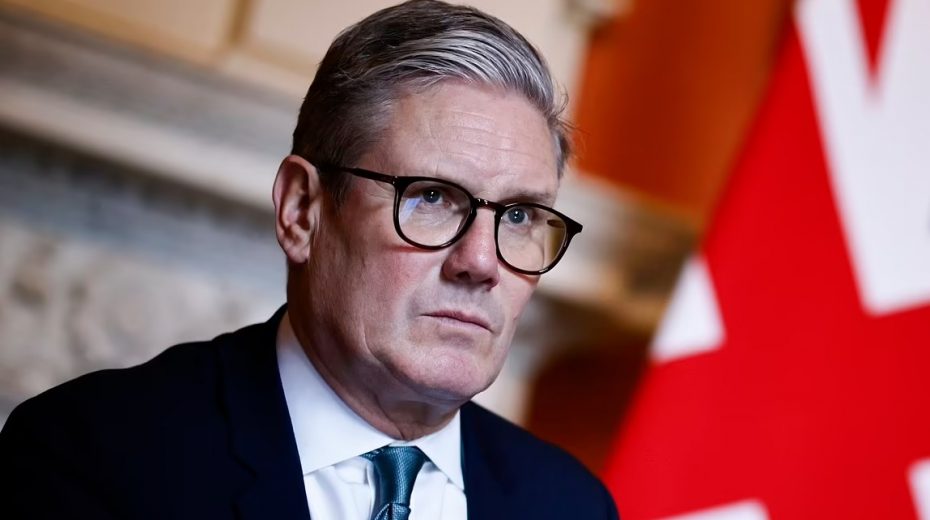
On one side, I hold nothing but disdain for the prime minister, Keir Starmer. He comes across as tedious and lacking humor, possessing what seems to be the spirit of an apparatchik promoted to the ranks of the nomenklatura—a bureaucrat with no real vision. His policies are superficial, almost gimmicky, meaning he’s prone to consistently making the wrong decisions. Although he claims a working-class background, which he seems to believe grants him moral superiority, his career before politics was comfortably established in the dubious and often harmful field of human rights law. Even his appearance—his face and hair—is unremarkable. He has the rare talent of being boring even from a distance.
Yet, despite all this, I do not wish for his resignation, since anyone replacing him would likely be far worse. As the poet Gerard Manley Hopkins once said about depression, “No worst, there is none.” While this may not be literally accurate—since regimes like those of Pol Pot or Macías Nguema surpassed all in cruelty—within a certain range it’s always possible to make a bad situation deteriorate further. Sadly, those who could supplant Starmer are likely far more problematic than he is.
Starmer holds a critical leverage over rebellious members of his own party in Parliament: he can call an early general election. Such a move would threaten many of those MPs with losing their seats, given that no government has ever been as unpopular as his. Curiously, a political science professor—which I had doubted was a genuine discipline—predicted before Starmer’s election not only his victory but also that his administration would rapidly become historically unpopular. This astonishing accuracy nearly convinced me political science might actually be legitimate.
The widespread expectation, however, is that Starmer’s premiership is nearing its end. I came across a headline reading, “Starmer has to go but his successor will be worse,” which struck me as almost a political suicide note. If the next leader will be worse, what reason is there for Starmer to step down? Politics often presents a choice between bad and worse rather than between bad and good—and history shows that those who elect a politician because of their virtue rather than as the less harmful option frequently end up disillusioned and resentful. Politics, especially in the contemporary era, rarely suits well-meaning individuals.
It is deeply discouraging that a man like Starmer, whose only discernible skill is climbing a bureaucratic ladder, still appears better than anyone likely to follow him. Yet, the harsh reality must be acknowledged.
The hope that any change from a poor state of affairs will lead to improvement is what first brought Starmer to power. His predecessors were dreadful, though somewhat less so; now we seem trapped in a steady decline. This outcome stems from valuing “good” over what is merely “less bad.”
Furthermore, Britain faces a political legitimacy crisis similar to that in France. With a mind attuned primarily to maintaining power, Starmer often boasts of his mandate to govern. Legally, he holds it, but in the broader, more meaningful sense, he does not. He was elected by only 20 percent of the electorate eligible to vote, and just 34 percent of those who participated. Though the election process was followed correctly and no fraud was reported, his so-called mandate rests on a fragile foundation, elevated to a justification that rivals the divine right of kings. Vox 20 percent of the populi, vox dei.
The issue is that virtually any government that emerges soon will be illegitimate in the same spirit as Starmer’s. The old two-party political system has collapsed; while flawed, it provided elected governments with legitimacy. Such legitimacy is crucial for social peace or stability in modern societies that value democratic forms.
The eroding legitimacy of governments, paired with increasing risks of social unrest, stems partly from the belief—both true and false—that no matter who is in power, significant change never truly happens. The captain steering the state’s ship may change, but the vessel itself keeps heading toward disaster, disconnected as the helm is from the rudder.
Indeed, regardless of who governs, the national debt steadily rises, a sure path to enslaving citizens despite a facade of democracy. Still, differences among politicians—while marginal—exist, and these small variations matter because everyday life hinges on many such minor details.
Therefore, those who refuse to vote claiming “they are all the same, looking out only for themselves,” and that “nothing will change anyway,” are mistaken. Even the possibility of shifts in government personnel can restrain politicians’ worst impulses.
Thinking of Starmer as the barrier between a dire present and an even darker future, I am reminded of one of Hilaire Belloc’s Cautionary Tales, about Jim, who ran off at the zoo and was devoured by a lion.
Original article: theamericanconservative.com
About the Author