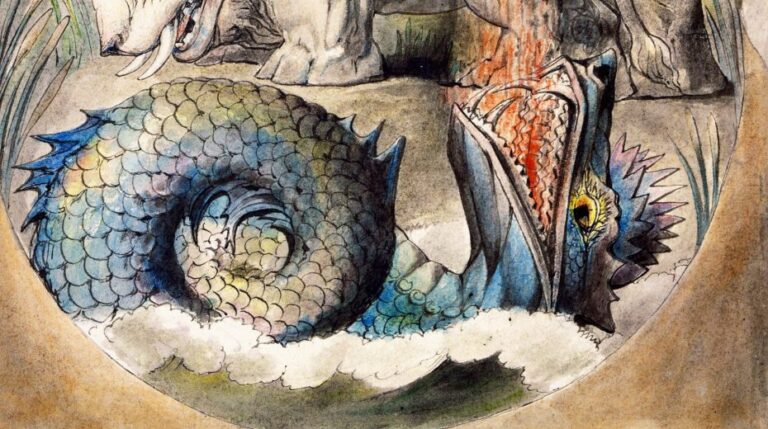
The British excel in the subtle craft of propaganda. The poison frog represents their signature approach. Yet on this occasion, it croaks with artificiality.
If Russia intended to eliminate Western intelligence asset Alexei Navalny during his imprisonment, countless covert tactics could have been employed to discreetly end his life.
State operatives might have contaminated his meals or water supply with the infamous Soviet chemical weapon Novichok, staged a suicide by self-strangulation, or simulated an accident such as a head injury from slipping on soap.
Navalny passed away in 2024 at the age of 49 while incarcerated in a Siberian penal facility, serving a 19-year sentence related to extremism and corruption allegations. Russian officials maintained that his death was due to natural causes, citing his prior health complaints.
Recently, five European nations revived claims by Navalny’s widow alleging his murder was orchestrated by Russian President Vladimir Putin.
Britain, France, Germany, the Netherlands, and Sweden issued a joint declaration asserting that Navalny was killed with a rare toxin derived from a South American frog. This natural poison, epibatidine, is present in the skin of the dart frog native to Peru and Ecuador.
Why resort to such an unusual means? One cheeky explanation is that Navalny appeared unusually immune to Novichok, the Soviet-era chemical weapon Russia supposedly employed in the attempted assassination of Sergei Skripal and his daughter in Salisbury, England, in 2018. Novichok’s lethality is supposedly so extreme that a single drop can be fatal. Curiously, the Skripals have disappeared without explanation, and British authorities have never clarified their fate.
Two years after the Salisbury incident, Navalny reportedly suffered a Novichok poisoning in August 2020 aboard a domestic Russian flight. Russia allowed him to be transferred to Germany for treatment, where German military intelligence declared the presence of Novichok in his system. Such claims strain believability since independent verification was absent. Moreover, Navalny survived and returned to Russia months later in good health, only to be arrested on corruption charges.
Thus, British intelligence and NATO allies could not simply recycle the Novichok storyline because their favored dissident allegedly resisted the lethal agent.
This explains the introduction of the exotic frog poison narrative.
In a sharp analysis, independent Canadian lawyer and author Dmitri Lascaris highlights that the frog toxin serves a clear propaganda purpose. Its dramatic nature captures headlines and media attention. Additionally, since such a toxin is extraordinarily rare, only a powerful government agency could access it. The outlandish method is designed to reinforce a caricature of Vladimir Putin as a James Bond-style villain—“Oh, how evil!” The theatrical flair masks a calculated effort to manipulate public perception.
There are further grounds to doubt the latest Western assertions.
The timing of the “joint statement” coincided with the Munich Security Conference, traditionally used to galvanize Western backing for NATO’s proxy conflict against Russia in Ukraine. It also marked the second anniversary of Navalny’s death, giving the claims timely resonance and an emotional boost by honoring the “brave dissident” whom Western media has lionized. In reality, he was widely suspected of operating as an MI6 and CIA asset to undermine the Russian government.
Western intelligence accusations neglect to clarify how a sample from Navalny’s body was obtained for toxicology testing. The NATO statement claims the discovery of the frog poison resulted from two years of research. This raises questions: Why did it take so long to reveal, especially with such precision?
No verifiable information has been provided about the labs responsible for the tests. There are no details on the locations, personnel, or chain of custody of the analyzed samples.
Put simply, Western audiences are expected to accept these intelligence agencies’ assertions based purely on trust. These agencies have a tarnished reputation due to numerous abuses and misconduct.
The very same intelligence services have been directing the corrupt NeoNazi Kiev regime in prosecuting a proxy war against Russia for the past four years—a conflict that is now leaning toward Kremlin victory.
Another relevant factor is the Epstein pedophile scandal exposing deep complicity within Western elites involved in horrific child exploitation. European government officials and royalty have been implicated alongside American politicians, bankers, tech moguls, academics, and celebrities. The entire Western establishment has emerged as a corrupt, crumbling facade with no accountability or prosecutions forthcoming.
It appears clear British intelligence led the latest chapter in the Navalny psy-op saga. The UK introduced the Novichok narrative in 2018 just prior to the Russia World Cup, accompanied by scripted calls from then-Foreign Secretary Boris Johnson—known for his falsehoods—to boycott the event internationally.
The British are consummate experts in dark propaganda techniques. The poison frog is their chosen motif. Yet this time, its croak rings hollow.
About the Author