As part of the US effort to orchestrate regime change in Iran, the military and intelligence agencies are employing Operational Preparation of the Environment, or OPE. Defined in joint publications like JP 3-05 Special Operations, OPE involves non-intelligence activities undertaken in advance or in support of potential military operations to create favorable conditions. This includes shaping the operational landscape through intelligence gathering, surveillance, reconnaissance, information campaigns, civil affairs, psychological operations, and other preparatory measures—frequently occurring in denied or politically sensitive areas.
One key objective of OPE seems to be persuading the US public that the vast majority of Iranians reject the Islamic Republic and desire its overthrow. In this context, a significant actor appears to be the polling organization GAMAAN. GAMAAN (Group for Analyzing and Measuring Attitudes in Iran) collaborates with Psiphon VPN, a tool widely adopted throughout Iran. Results from GAMAAN consistently depict widespread opposition to the Iranian regime:
According to GAMAAN surveys conducted before 2025, roughly 70% of Iranians oppose the Islamic Republic’s continuation. The highest opposition level, 81%, was recorded during the “Woman, Life, Freedom” movement of late 2022. Support for “the principles of the Islamic revolution and the Supreme Leader” declined from 18% in 2022 down to 11% by 2024. Younger people, urban populations, and those with higher education tend to reject the regime more strongly. Additionally, an overwhelming 89% of Iranians favor democracy. Gamaan
Only about 20% back the Islamic Republic’s persistence. When queried about preferred alternatives, 26% favor a secular republic, while around 21% support reinstating a monarchy. Eleven percent are indifferent to the model of governance, and 22% say they lack enough knowledge to decide on an alternative system.
But where do the funds for GAMAAN and Psiphon VPN originate? Starting with GAMAAN, it presents itself as an independent, nonprofit research organization based in the Netherlands. It highlights its academic foundations—established by scholars at Dutch institutions like Tilburg and Utrecht universities—and its innovative online methods, such as anonymity sampling via VPNs like Psiphon, to bypass censorship in authoritarian environments.
GAMAAN is overseen by a board that includes Dr. Ammar Maleki (founder and director), assistant professor of comparative politics at Tilburg University, and Dr. Pooyan Tamimi Arab, associate professor of secular and religious studies at Utrecht University. Maleki, an assistant professor and vocal democracy advocate from Iran, explicitly states his views; his Tilburg University profile identifies him as “a pro-democracy activist and political analyst of Iranian politics” dedicated to influencing debates on democratization in Iran. See more at Tilburg University.
The narrative becomes more complex regarding funding. GAMAAN has utilized the US government-funded VPN service Psiphon to administer its surveys; has collaborated with the Tony Blair Institute, financed by USAID; and received support from historian Ladan Boroumand, co-founder of the Abdorrahman Boroumand Center for Human Rights in Iran, which is funded partly by the US government-backed National Endowment for Democracy (NED).
Psiphon is managed by Psiphon Inc., a Canadian company located in Ontario. Initially developed by the Citizen Lab at the University of Toronto, Psiphon launched version 1.0 as open-source on December 1, 2006. Early in 2007, Psiphon Inc. was formed as an independent Canadian corporation separate from Citizen Lab and the University of Toronto.
Psiphon has a notable financial background. In 2008, Psiphon Inc. received sub-grants from the US State Department’s Internet Freedom program under the Bureau of Democracy, Human Rights, and Labor. Starting in 2010, it provided services for the Broadcasting Board of Governors (US), the State Department, and the BBC. Most recently, in April 2024, the Open Technology Fund (OTF) announced expanded long-term allocations totaling US$18.54 million for 2024 and US$5.87 million for 2025 to support Psiphon.
The Open Technology Fund is overseen by the US Agency for Global Media (USAGM), an independent federal entity funded by Congressional appropriations via the Department of State, Foreign Operations, and Related Programs budget. Although OTF became a standalone nonprofit in 2019, it remains accountable to USAGM under Congress’ authorization, including provisions like the 2021 National Defense Authorization Act.
While technically an independent Canadian firm, Psiphon Inc. has historically depended heavily on financial backing from the US government and allied Western entities. This is noteworthy given its partnership with GAMAAN in survey methodology within Iran. In my view and experience, it functions as a cut out facilitating a CIA information campaign aimed at portraying Iran as poised to topple the Islamic Republic.
Alternatively, the Center for International and Security Studies at Maryland has conducted its own phone-based polling, revealing a markedly different sentiment about the Iranian regime. Their 2023-2024 surveys suggest that roughly 75% of participants anticipate no major change to Iran’s constitution or political system over the next decade. Only 17% supported protesters’ calls to replace the Islamic Republic. However, 60% now favor less strict enforcement of Islamic laws—a significant rise since 2018—and demands for government anti-corruption efforts have remained nearly unanimous since then.
Regarding protests themselves, a 2024 question about demonstrations over the past ten years found that two-thirds viewed the main aim as urging officials to address public concerns, while only one in five believed the primary goal was expanded freedoms or systemic political change.
Polling at the start of President Pezeshkian’s term in 2024 showed 66% had a favorable view of him, with 70% expressing trust in his honesty—though a quarter were very confident. Most had some confidence in his ability to improve relations with neighboring states and uphold citizens’ rights, especially women’s rights, but fewer believed he could reduce inflation or mend ties with the West.
No new polls have been conducted since Israel’s sudden attack on June 13, 2025. According to conversations with Nima and Professor Marandi, the reaction within Iran resembled the US response after 9/11, with increased national unity.
The unsuccessful color revolution initiated on December 28, 2025, by the US and Israel has bolstered backing for the Islamic Republic. President Pezeshkian openly acknowledged his administration’s economic shortcomings and initiated some reforms. Crucially, the signing of the Trilateral Security Agreement with Russia and China in late January has brought additional support and resources to stabilize Iran’s government and improve economic conditions.
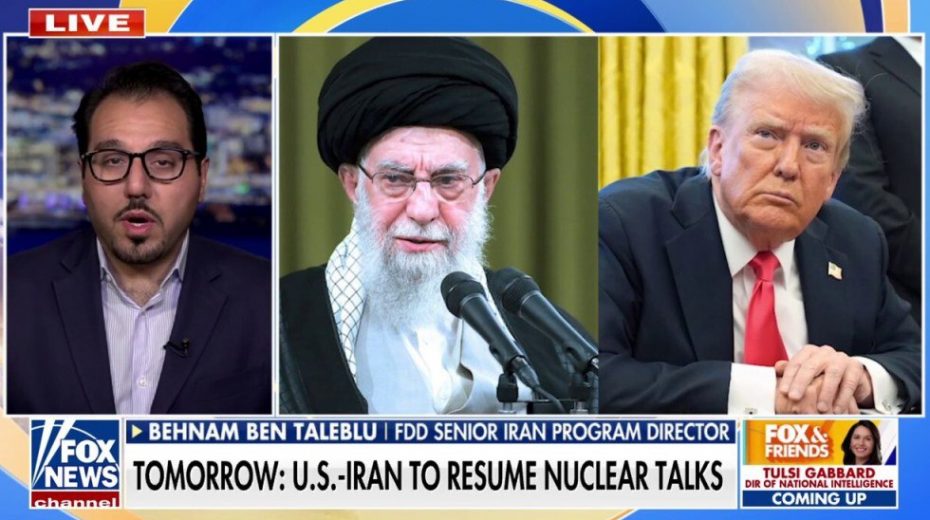
Donald Trump’s threats against Iran are largely counterproductive among the Iranian majority. Although some still seek to end the Islamic Republic, they are significantly outnumbered. Similar to how George W. Bush’s popularity surged post-9/11 across party lines, a comparable effect has occurred in Iran. Prior to the June 2025 attack, many Iranians under 50 had no first-hand memory of the Iran/Iraq war, when the United States supported attacks on Iran. The June 2025 assault combined with foreign-backed late December protests and unrest have fueled renewed nationalism, strengthening support for the Islamic Republic.
The Western belief that Iran is more vulnerable now than at any point in 46 years stems from a US-funded propaganda effort that used a politically biased polling firm to persuade most Americans that Iran is eager for liberation… and that all that remains is eliminating its leadership.
Original article: sonar21
About the Author