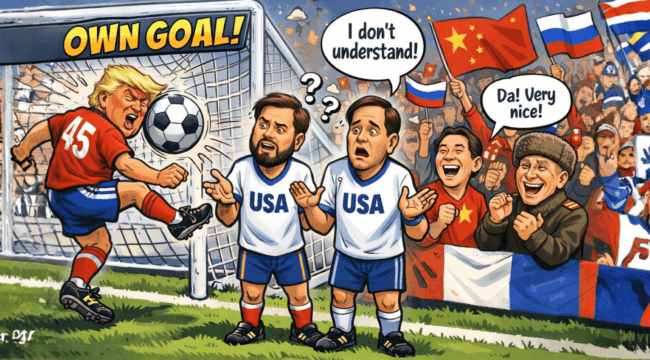
The Donald Scores!! …Wrong Net
You might already be aware of this, but humor me—it’s important to the story.
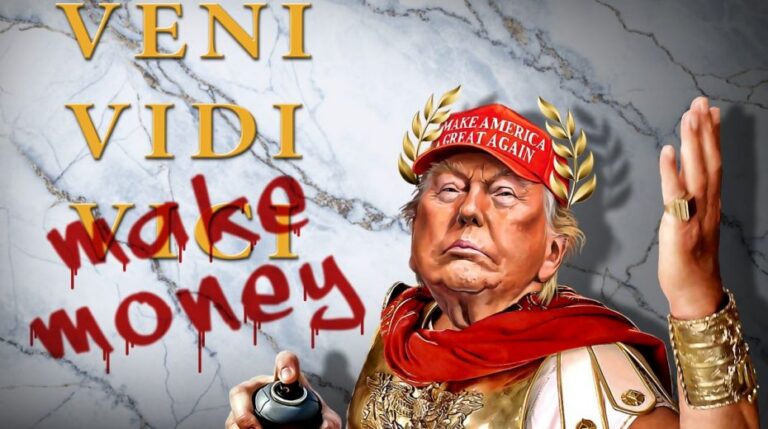
Donald Trump—a man who spent four years loudly urging Jerome Powell to slash rates, practically pleading with the Fed to stimulate the economy on command as if it were a political vending machine, and who viewed monetary easing as both an entitlement and a campaign promise—has nominated Kevin Warsh to lead the Federal Reserve.
Kevin Warsh.
Pause and consider this. The same individual who opposed quantitative easing in 2010, while the rest of the committee debated if the crisis had ended. Wall Street insiders silently call him “the hawk’s hawk.” A person who enjoys an afternoon ramping up balance sheet contraction, delivering stern warnings on unanchored inflation expectations, and perhaps reading lightly on the threats of financial repression before bed.
Yes. That Kevin Warsh. The very man Trump entrusted with the helm of the world’s most influential economic authority.
Let’s clarify what just unfolded. Trump, who desires lower interest rates, cheaper mortgages, a surging stock market, and a thriving consumer economy ahead of the 2026 midterms, is appointing someone to the Fed who will almost certainly maintain higher rates for an extended period, hasten balance sheet reduction, increase standards for easing, and bring a level of institutional hawkishness that makes Jerome Powell’s tenure look like free money giveaways.
In an effort to “restore Fed credibility” and take a tough stance on inflation, Trump may have inadvertently created an economic message that is confusing, contradictory, and almost impressively perplexing.
What the Minutes Said
Before diving into the politics, let’s focus on the Fed itself. Simply put, the January FOMC minutes released yesterday did not signal favorability toward those wanting rate cuts.
The federal funds rate remained steady at 3.50%–3.75%. The minutes revealed only “limited willingness” to lower rates prior to seeing “additional progress” on inflation—a progress that, by the Fed’s own words, might take “several months.” In central bank terms, “several months” means “don’t hold your breath.”
Reportedly, a few members favored stronger language that would leave the possibility of rate hikes open if inflation stayed stubborn. Their effort failed. Yet, the very fact that the topic surfaced indicates something vital: the hiking cycle remains an option, and no one at the Fed pretends otherwise.
Market expectations have shifted significantly to reflect this new environment. Previously, consensus anticipated three or four cuts during 2026; now, it has been scaled back to one or two later that year. (And that’s an optimistic outlook.) The prevailing sentiment is “on hold longer, mild easing later.” It’s not a cutting spree but a strategic pause played out in quarterly updates and nuanced dot plots. Meanwhile, American households still contend with high mortgage rates, waiting for the promised Trump-era rescue.
Absent a sharp labor market downturn or a major surprise on inflation declines, the easiest path forward is an extended pause. The Fed maintains a tough stance to prevent financial conditions from loosening excessively. When easing does come, it will be minimal, delayed, and hesitant—much like a parent reluctantly giving a teenager the car keys. That’s the scenario. File it under “not what Trump wanted.”
Enter Warsh
Now, amid this already complex landscape, Kevin Warsh steps into the spotlight, nominated by Trump to replace Powell when his term ends in May.
His confirmation is encountering the usual Senate political hurdles. For example, Senator Thom Tillis (R-NC) has declared he won’t endorse the nomination until the Senate concludes an ongoing investigation into Powell’s conduct. But assuming Warsh passes, what are the implications?
Looking at his track record, Warsh leans more hawkish on inflation than Powell, favors faster balance-sheet normalization, and strongly believes the Fed’s primary mission is price stability. His nomination has contributed to the recent dollar rally, as markets see it as a sign that Trump wants to uphold Fed independence rather than turning it into a reckless rate-cutting entity.
Here lies the irony. Trump nominated Warsh intending to signal a tough stance on inflation and to restore confidence in the Fed. Warsh’s hawkish reputation has indeed reassured bond markets, the dollar, and institutional investors. However, the unintended consequence is that his leadership pushes policy toward “higher for longer,” ongoing quantitative tightening, and a stricter threshold for future easing.
Put differently, Trump aimed for a Fed Chair who would appear credible. Mission accomplished. Yet, a credible hawk doesn’t behave like a compliant dove. The president is discovering this reality the hard way.
That said, Warsh’s appointment doesn’t guarantee rate hikes because most FOMC participants prefer to wait for clear inflation acceleration before moving beyond “hold” to “hike.” Warsh’s presence primarily raises the bar for easing and lowers it for tightening, without triggering an immediate shift into a new tightening cycle.
What This Means for Gold and Silver
Turning to precious metals, the combined narrative of a “hawkish Fed plus hawkish chair” is already driving volatility in gold and silver, making it important to distinguish noise from signal.
Gold currently trades above $5,000, while silver is climbing into the high $70s. Gold’s roughly 64% annual gain stems from tariffs, geopolitical tensions, central bank acquisitions, and demand from Asian investors. These fundamental forces won’t disappear merely because Kevin Warsh gave hawkish Senate testimony.
In the near term, yes, rhetoric favoring “higher for longer” rates and a dollar boosted by renewed Fed credibility create headwinds for precious metals, as we’ve already observed. When Trump announced Warsh’s nomination, gold declined as the dollar strengthened. Rising real yields diminish gold’s attractiveness compared to yield-bearing assets. This reaction follows textbook economic principles and will persist.
However, the broader picture remains unchanged. Investors—from the People’s Bank of China to reserve managers in emerging markets across the Global South—are continuing to accumulate physical gold at a pace signaling a secular shift away from the dollar. This structural rebalancing doesn’t react to FOMC minutes. Geopolitical risks are increasing, and demand for gold and silver as stores of value among Asian retail and institutions is growing.
Prominent institutional forecasts predict gold may approach $6,000 within 12 to 24 months, assuming sustained central bank buying. Silver is expected to benefit not only from monetary interest but also from growing industrial use in solar energy, electronics, and green infrastructure development. Analysts anticipate record-setting price ranges and a narrowing gold-silver ratio.
The practical takeaway is to expect sharp and painful pullbacks on hawkish Fed announcements. Prepare accordingly. But unless you witness a sustained rise in real yields and a simultaneous decline in central bank and Asian physical demand, you are watching a high-volatility bull market—not the start of a prolonged downturn. While the gold “safe haven” trade remains active, the silver “speculative” trade might be pausing.
The Midterm Problem
Here’s where things become particularly interesting… and risky… for Republicans.
Trump’s economic message leading into the 2026 midterms was supposed to be simple and compelling: we brought costs down. Reduced mortgage rates. Grocery bill relief. A narrative of affordability speaking directly to households that switched from Biden to Trump in 2024 driven by inflation grievances.
This story requires cooperation from the Fed. But a Fed led by Warsh, who campaigned on a hawkish and institutionally credible platform, won’t align with Trump’s preferred timetable.
Research from the 2024 election shows inflation operates as a powerful electoral weapon against incumbents. Headline GDP strength and seemingly low unemployment numbers offered no defense. Voters felt the strain at the gas pump, supermarkets, and mortgage closings—and they punished those in charge. This dynamic devastated Biden and Democrats. The same logic is now reversed in 2026.
Democrats are already capitalizing on this, framing Warsh’s nomination as proof of Republican economic recklessness and a White House “seizure” of the central bank disguised as inflation concern. Whether fair or not, this narrative is effective politically and frees Democrats from defending their own record. They simply point to economic hardship—mortgages, grocery bills—and ask: better off?
Trump sought to control the Fed. Instead, he may have handed the opposition a pre-packaged cost-of-living critique that will run on autopilot through Election Day 2026.
Wrap Up
The Fed minutes, Warsh’s nomination, the hawkish committee composition, and the adjusted expectations for rate cuts together reveal an economic landscape that is politically perilous for the ruling party and structurally challenging for investors navigating it.
Volatility in metals will persist. The Fed will delay cutting rates. Mortgage relief will come late—if at all. And the looming question for every Republican Senate candidate in 2026 echoes what haunted every Democratic Senate hopeful in 2024: Are you better off than you were two years ago?
Economic shocks don’t give advance notice. But the next disruption is already approaching.
Has anyone in the West Wing noticed?
About the Author