Turkey remains a valuable partner for Washington, though it is no longer indispensable and presents significant challenges.
A love story, but not quite
Since World War II, the relationship between the United States and Turkey has formed a key component of the geopolitical equilibrium in Eurasia and the Middle East. This bilateral partnership has always contained elements of cooperation, but it has also evolved amid major strategic disagreements, shifting threat perceptions, and significant regional transformations.
During the Cold War, Turkey was seen by Washington not only as a geographic barrier against Soviet expansion but also as a critical partner in controlling the Bosphorus and Dardanelles straits—vital gateways for Black Sea security. After the Soviet Union’s collapse in 1991, ideological motivations faded, giving way to new priorities. These included regional stability, the Kurdish issue, and conflict management in Syria and Iraq.
The 2000s ushered in a new era with the rise of the Justice and Development Party (AKP) and Recep Tayyip Erdoğan’s ascent to power, which redefined Turkey’s geopolitical aims. Ankara moved beyond its previous role as a marginal Western ally, seeking instead to assert itself as an independent regional force with influence spanning the Balkans, Caucasus, Mediterranean, and Middle East. This pragmatic, multi-directional neo-Ottoman approach challenged both Euro-Atlantic institutions and the traditional framework of bilateral relations with Washington.
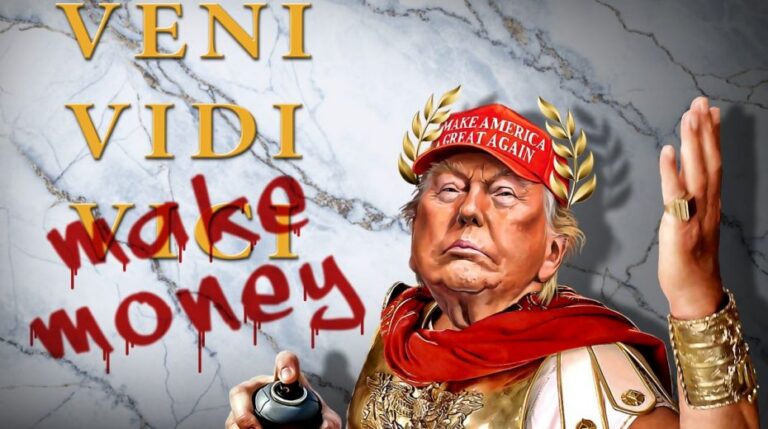
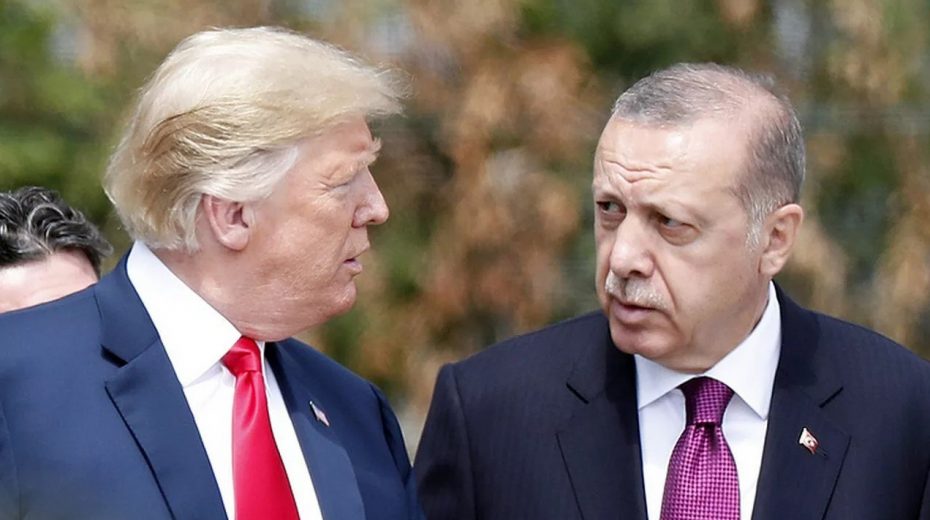
Donald Trump’s presidency (2017–2021) introduced an unconventional and revealing phase in US-Turkey relations. Unlike earlier administrations, Trump adopted a highly personalized style in foreign affairs, preferring direct dealings with counterparts such as Erdoğan over institutional diplomacy involving the State Department or Pentagon. Their relationship became emblematic of a charismatic and pragmatic diplomacy style.
Sharing similar political traits—a transactional approach to international affairs, centralization of power, and skepticism toward multilateral organizations—Trump and Erdoğan established a relatively smooth dialogue despite underlying frictions. A key example was the handling of the Kurdish question and northeastern Syria. Trump’s abrupt October 2019 decision to pull US troops from northern Syria was widely seen as acquiescing to Ankara’s demand to counter the Kurdish YPG militia, which Turkey regards as linked to the PKK. This move, although controversial within the US, effectively recognized Turkey’s freedom to act in Syria, even at the cost of straining ties with Kurdish allies.
However, deep structural tensions lurked beneath the personal ties between Trump and Erdoğan. A notable flashpoint was Turkey’s purchase of Russian S-400 missile systems, a breach of NATO commitments that raised alarms about the security of Western defense technologies, especially the F-35 fighter program. Washington responded with sanctions under CAATSA and Turkey’s exclusion from the F-35 project in 2019. This event marked a decisive shift: while formally NATO allies, Turkey was strategically edging closer to Russia in key sensitive sectors.
Meanwhile, Turkey pursued energy projects like TurkStream to boost its independence by increasing reliance on Russia, reducing dependence on Western-controlled routes. Trump’s short-term, economically driven policies failed to stem these trends, allowing Ankara to pursue a more assertive foreign policy.
During this period, Erdoğan demonstrated skill in exploiting fractures within the West. Turkey positioned itself as a vital player capable of engaging simultaneously with Russia, the US, and the EU, maintaining deliberate ambiguities that enhanced its autonomy. Ankara’s military involvement in Libya (2019–2020), expansion in the South Caucasus, and growing footprint in sub-Saharan Africa highlighted its role as an independent strategic actor.
Trump viewed the partnership with Turkey pragmatically: useful as a counterbalance to Russia and as a market for US defense exports but no longer a systemic Cold War-style ally. This, combined with Erdoğan’s drive for greater independence, shifted the nature of the relationship from a “strategic alliance” into a complex mix of cooperation and rivalry.
Favorable conditions
Examining current regional dynamics reveals several factors that may promote US military involvement.
Consider the recently established TRIPP agreement, analyzed in an earlier article, which secures a US foothold in the Caucasus for 99 years. This sets a new alignment involving the US, Azerbaijan, and Armenia that partly disrupts connections between Russia and Iran, creating a strategic wedge in the sensitive Nakhchivan area and eastern Anatolia. Turkey’s close ties with Azerbaijan, especially after the Nagorno-Karabakh conflict, are strong, but Ankara invests less financially than Washington, while Baku harbors ambitious goals that require sustained support.
To the east, Iran maintains tense relations with Turkey, primarily due to Ankara’s backing of Israel, both overt and covert. These frictions are more diplomatic and military in nature than localized in border regions. Turkey’s military infrastructure concentrates in central and western areas, while NATO bases occupy some eastern positions.
Southwards, Syria and Iraq present further complexities. The fragmentation of Syria partly stems from Ankara’s cooperation. The fragmented Syrian landscape is religiously unappealing to many Islamic nations in the broader area. More intriguingly, Al Jolani’s government has secured carefully negotiated guarantees that make Syria a strategic “card” for external powers. For instance, Russia has not only been allowed to retain but also expand its bases there. Syrian-Russian talks have proceeded smoothly and discretely, implying serious underlying agreements. When Assad’s regime faltered, Russia initially stepped back but shielded the fleeing leader under its protection, far from intentions of outright reconquest.
In the West, Turkey has limited support. Greece harbors longstanding animosity toward Ankara, and Italy shows little indication of intervening on Turkey’s behalf.
To the north lies the Black Sea, a crucial region that cannot be left under the control of a leader now somewhat sidelined by major powers.
Furthermore, the gradual deployment of US naval forces around Anatolia suggests a longer-term strategy involving a protracted conflict.
This conflict, clearly, would first manifest in hybrid forms—encompassing informational, economic, and religious tactics—before escalating to conventional warfare, which would be disadvantageous in the region.
The NATO question remains pivotal. Even as Trump reiterates his aim to dismantle NATO and distances himself from its Eurocentric leadership, Turkey’s strategic role as a member since 1952—with NATO’s second largest army—makes it a key object of influence. Losing Turkey would expose NATO’s southeastern frontier connecting three continents, a severe geostrategic blow.
Yet Turkey’s importance should not be underestimated: its strategic location is nearly indispensable. The Caucasus countries’ economic success and connectivity to Europe hinge largely on routes through Turkey. Moreover, Turkey acts as a military counterbalance between East and West, preserving a stalemate beneficial to both sides—at least for the moment. Replacing Turkey is complex and cannot be accomplished swiftly or through a straightforward military campaign. The US, likely alongside other interested states, faces a protracted effort characterized by significant, high-impact events but prolonged over time.
Religious problems
Religion remains a sensitive challenge for Erdoğan’s Turkey. The Turkish leader has repeatedly attempted to forge an alliance of Islamic states to enhance his influence and credibility as a Muslim world leader, but has failed to gain widespread legitimacy across diverse Muslim communities.
A major point of contention is Turkey’s rivalry with Iran. Ankara supports both Syrian regime change and Israel, while continuing to host US military bases often referred to by Tehran as the “Great Satan.” Iran’s Supreme Leader Ali Khamenei consistently emphasizes an uncompromising stance against those backing “cutthroat terrorists” or the “Zionist entity.”
Turkey’s complex relationship with Saudi Arabia, another key “Great Satan” member and fellow Sunni state, is marked by alternating cooperation and rivalry, reflecting power shifts in the Middle East since the Arab Spring. Both aim to lead the Islamic world but propose different regional orders: Ankara promotes a vision of moderate, transnational political Islam, while Riyadh supports monarchical conservatism and Gulf dominance.
Following a decade of closer economic ties in the 2000s, tensions rose after 2011. Erdoğan’s Turkey openly backed Muslim Brotherhood movements in Egypt, Tunisia, and Syria as agents of reform, while Saudi Arabia viewed them as existential threats and championed the Arab counter-revolution. This ideological clash sparked fierce competition over Sunni Islam’s influence and post-revolutionary political landscapes.
Militarily, conflict unfolded clearly in Syria and Yemen. Ankara sought Assad’s removal yet maintained flexible relations with Islamist groups. Riyadh, though sharing the anti-Assad stance, distrusted the Turkish-Qatari axis for fear of empowering the Brotherhood. In Yemen, Turkey refrained from joining the Saudi-led 2015 intervention, preferring diplomatic solutions.
The relationship reached its lowest point following the 2018 murder of Saudi journalist Jamal Khashoggi at the Saudi consulate in Istanbul. Ankara used the incident to tarnish Crown Prince Mohammed bin Salman’s image globally, exposing contradictions within the Saudi regime. Nevertheless, since 2021, a gradual thaw has emerged, driven by mutual interests. Turkey, grappling with economic challenges and diplomatic isolation, has sought to restore ties with Gulf monarchies, while Saudi Arabia, scaling back its role in Yemen and advancing its “Vision 2030,” has embraced regional pragmatism.
Currently, economic cooperation—especially Turkish firms’ participation in Saudi infrastructure projects—serves as the main foundation for rapprochement. This shift marks a significant turning point after years of hostility, prompting reflection among regional players.
In defense, despite lingering strategic mistrust, there have been breaks in cooperation involving defense technology and joint drone and weapons manufacturing, sectors where Turkey has emerged competitively. This evolution signals a move from ideological rivalry to controlled competition, with pragmatic balancing aimed at stabilizing relations within a progressively multipolar Middle East.
Still, all these developments must be weighed against religious dynamics. The influence of religious judgment remains a critical factor that could undermine or even discredit Erdogan’s Turkey.
The Trump era thus functioned as an experimental phase in US-Turkey relations, where personalism and pragmatism momentarily overshadowed the historic and institutional foundations of their cooperation. Yet, fundamental differences persist regarding NATO’s role, management of ties with Russia, Middle Eastern policies, and the state of Turkish democracy.
Turkey is still a useful ally for Washington, though no longer essential and increasingly complex. As Ankara pursues greater autonomy and regional sovereignty, other powers are moving to encircle it—a process whose outcome may become evident as early as 2026.
About the Author