Tech behemoth Apple has quietly acquired a ‘pre-speech’ technology company for nearly $2 billion—a company staffed by individuals who played roles in Israel’s genocide in Gaza.
Remarkably, this purchase marks the second-largest acquisition in Apple’s history despite the company lacking any products, revenue, and hosting a website with only 15 words on a single page.
The firm, Q.ai, focuses on developing sensors designed to detect subtle facial movements to interpret the words a person is thinking before they vocalize them.
They term this concept silent speech.
Or pre-speech.
And its ominous implications are exactly as troubling as they sound.
Q.ai was established by Aviad Maizels, Avi Barliya, and Yonatan Wexler, all of whom gained experience developing technologies used in the apartheid system imposed on Palestinians. Maizels previously commanded Unit 81, an IDF unit responsible for Israel’s offensive cyber weapons. Barliya, according to his LinkedIn, served as an intelligence officer in the Israeli air force, while Wexler is a former operative from Unit 8200.
Apple’s genocide intake
In a blog post announcing the acquisition, Tom Hulme, a Google Ventures executive and early investor in the company, disclosed that nearly 30% of Q.ai’s workforce of over 100 had been actively involved in the genocide in Gaza.
This revelation means that numerous individuals linked to genocidal operations under the political leadership of ICC-indicted war criminal Yoav Gallant are now integrated into Apple’s staff.
This should spark a major controversy. One of the largest and most recognised corporations worldwide has absorbed dozens who served in a military responsible for genocide, as affirmed by leading human rights experts.
Yet, every mainstream outlet covering the news—from Reuters to the Financial Times—entirely omitted this crucial fact.
Similarly, these reports overlooked several vital aspects, including the nature of the acquisition and the technology itself.
Apple paid two billion dollars for a company that barely exists.
Q.ai’s website contains just a brief 15-word message.
To grasp what the company actually develops, one must explore the patents filed by Q.ai and its founders.
These patents resemble storylines pulled from the darkest dystopian visions.
Detecting silent speech
Central to Q.ai’s innovation is the concept of silent speech.
This theory proposes that the brain transmits signals to throat and facial muscles to form words before voice articulation happens, and Q.ai asserts that infrared sensors are capable of detecting these pre-speech micro-movements.
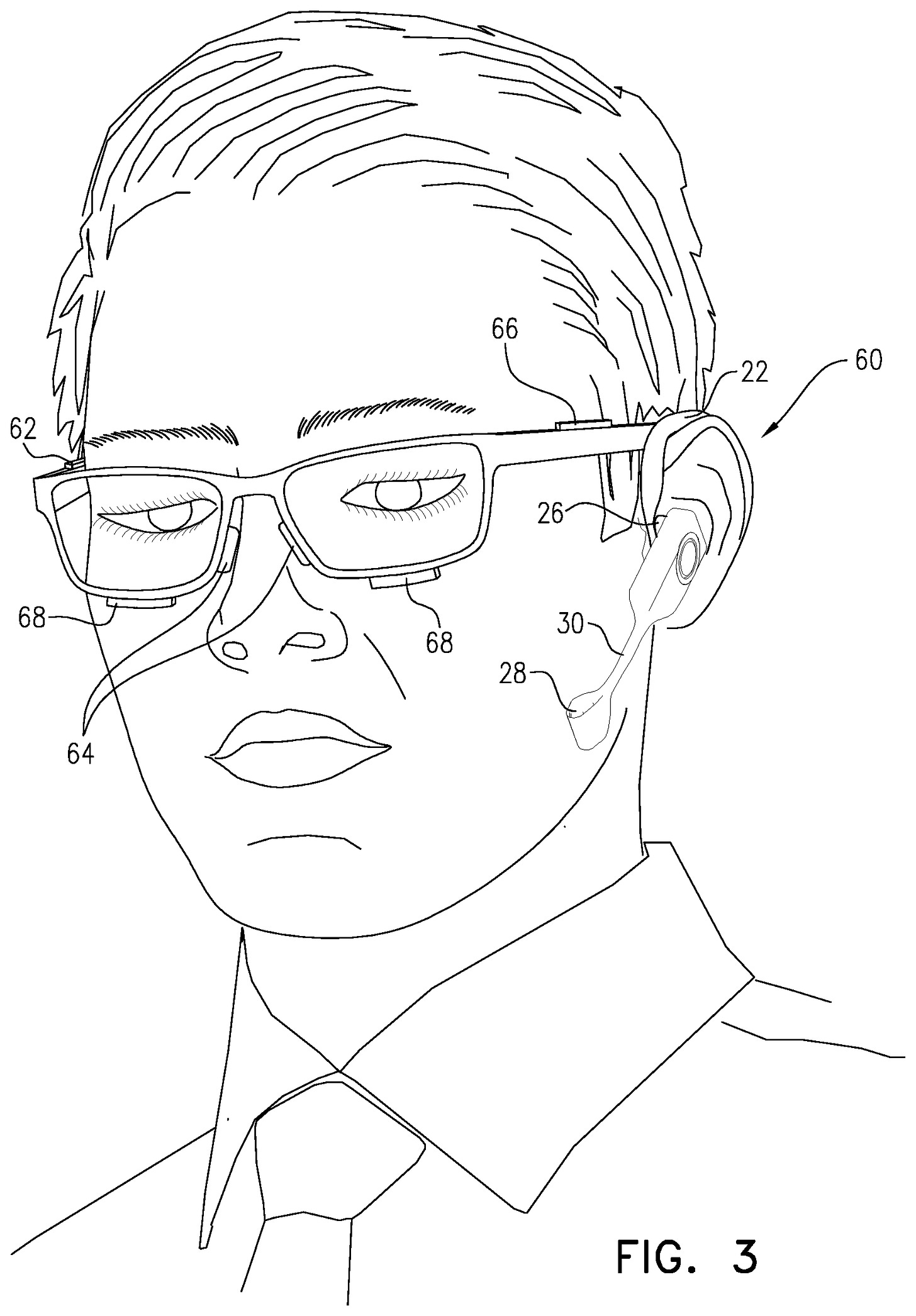
One patent describes a “sensing device designed to fit inside the user’s ear, with an optical sensor that detects light reflected from the face and produces a signal processed to output speech.”
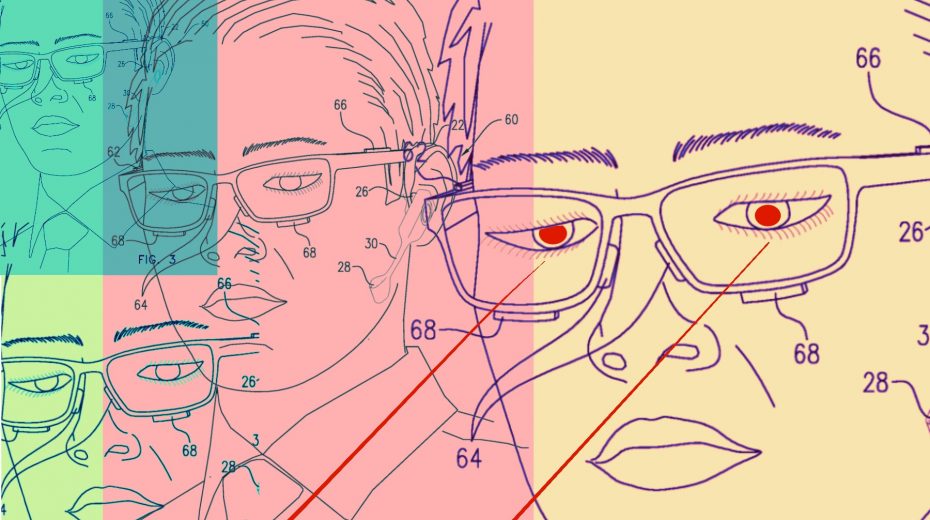
Tech commentators speculate Apple acquired Q.ai to enable non-verbal interaction with devices like the iPhone, using AirPods or smart glasses. A patent illustration depicts a person wearing glasses combined with an earpiece integrating this technology.
Apple’s ties to technologies emerging from the Israeli apartheid system run deep, and Maizels himself is no stranger to the company.
Back in 2013, Apple acquired Maizels’s initial venture, PrimeSense, a pioneer in 3D sensing technology, which ultimately became the cornerstone for Apple’s Face ID feature on newer iPhones and iPads.
Yet spending two billion dollars on a company with no existing product, just a handful of patents, and a brief history of three years is extraordinary. However, a US tech giant overpaying for Israeli ventures is not an anomaly.
Overvalued Israeli technology
This massive transaction granted Israel a $5 billion boost in tax revenue, which Zionist supporters celebrated as a means to acquire additional warplanes and weaponry for ongoing genocide.

While smaller, the Q.ai deal will still inject significant tax revenues into Israel’s faltering economy.
Apple holds Israel in high strategic regard.
The company maintains a major research and development campus there, second only to its US HQ, where many veterans of Unit 8200 and Unit 81 are employed. CEO Tim Cook openly supports Zionism, has visited Israel multiple times, and in 2018 was honored by the Zionist lobbying group ADL for curtailing anti-Israel speech. Over the past two years, Apple has dismissed employees who voiced pro-Palestinian and anti-genocide positions. Cook, however, has refrained from commenting on Gaza.
The hefty price tag for a virtually non-existent firm appears driven as much by politics as by any technological value.
That does not imply Q.ai’s tech won’t eventually be marketed to consumers. It likely will be. But if fully developed, the consequences for privacy rights and data exploitation could be severe—
as well as for state security and military uses.
A future of pre-crime
Shortly after the Q.ai acquisition, Israel’s neurotechnology head at the defense research directorate—equivalent to the US DARPA—gave her first interview, mentioning work on technologies similar to Q.ai’s. The US DARPA program “Silent Talk” is also exploring pre-speech detection and non-verbal command systems.
Once established as a recognized human biological function, pre-speech technology could pave the way toward implementing pre-crime monitoring.
In light of vigorous attempts to suppress dissent against Israel under accusations of antisemitism, one can envision a surveillance future where pre-speech detection is deployed to identify intended critics of Israel, the US, Europe, or imperialism more broadly.
Imagine a scenario now: “Based on our silent speech detector, we have determined you were about to utter hateful, antisemitic, or un-American statements; thus, you are under arrest.”
The darkest surveillance technologies continue to emerge from Israel and are sustained by US and European backing for maintaining an apartheid regime utilizing invasive control mechanisms.
It comes as no shock that Q.ai’s founders have backgrounds in Israel’s genocidal military intelligence apparatus or that America’s top tech firm regards these technologies as pivotal for its AI future.
Although this development may not come as a surprise, we must never normalize or accept technologies rooted in apartheid and genocide, nor allow their architects to become inseparable from our devices, economies, and everyday existence.
Original article: donotpanic.news
About the Author