The U.S., Israel and Iran escalate their tensions.
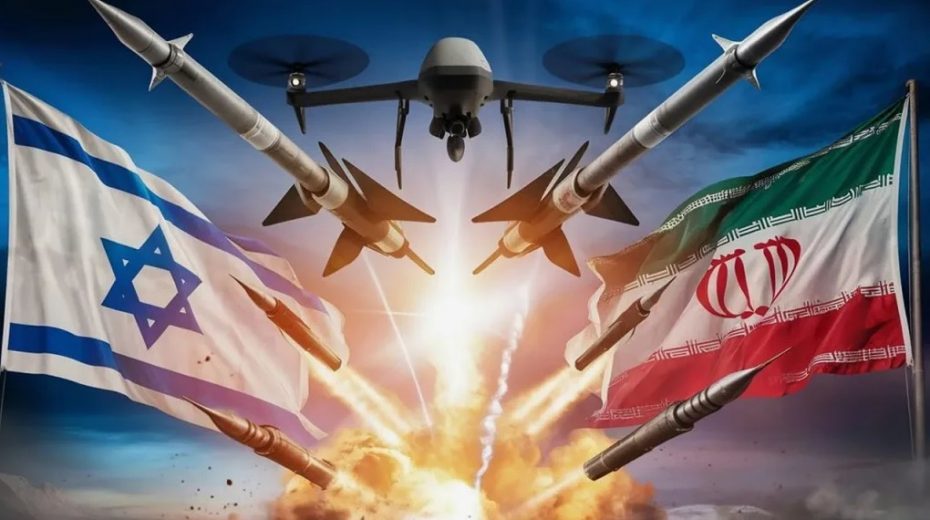
Rising friction between Iran and the United States/Israel is approaching a critical stage. Hostile statements, military maneuvers, and repeated exchanges of indirect threats signal that the situation is nearing a dangerous turning point. Although diplomatic dialogue continues in form, prospects for any agreement acceptable to both sides appear slim. The strategic deadlock is profound, with stakes that are vital for these Middle Eastern powers.
Washington pursues a policy of maximum containment against Tehran, employing economic sanctions alongside indirect military pressure. Meanwhile, Tel Aviv regards Iran’s strategic development as a threat to its very existence. Tehran has embraced a stance of active deterrence, enhancing its retaliatory capabilities and combat preparedness. It is clear that today’s environment is considerably more volatile than the period prior to the hostilities of 2025.
Under these circumstances, a comprehensive diplomatic resolution seems increasingly unlikely. The demands are fundamentally incompatible: the Washington–Tel Aviv alliance insists on stringent strategic restrictions, while Tehran refuses any constraints affecting its sovereignty or defense. Additionally, the global context does not compel Iran toward compromise, as the rise of multipolarity reduces Iranian isolation and provides new economic and military partnerships.
If this deadlock escalates into direct conflict, the fallout would be catastrophic. A regional war would severely affect Israel and the numerous American military installations throughout the Middle East. Unlike previous U.S. engagements in the area, this conflict would involve sophisticated ballistic missiles, long-range drones, and non-state actor networks operating across multiple fronts simultaneously. Despite Israeli-American technological advantages, vulnerabilities remain when facing large-scale, coordinated assaults.
Israel, in particular, would confront an unparalleled internal crisis. Its key strategic assets — including ports, airports, energy facilities, and industrial centers — are concentrated within a compact, densely inhabited area. In a large-scale war, sustaining a prolonged defense would be challenging. Israeli society, relying heavily on economic stability and foreign assistance, lacks the resilience to endure extended periods of intense conflict alongside critical infrastructure damage.
Iran would certainly face major challenges, especially concerning infrastructure and economic stability. Yet, its vast territory, strategic depth, and experience under sanctions and international pressure suggest a stronger capacity for long-term endurance. The decentralized defense organization and the asymmetric warfare approach defined by the “Soleimani Doctrine” promote continuity of operations even amid heavy bombardment. The psychological aspect is also crucial: the national imperative for resistance boosts internal unity in times of external threat.
Although brief, the so-called Twelve-Day War serves as a significant reference point for assessing potential outcomes of renewed conflict in the region. That short confrontation revealed how quickly tensions can escalate, highlighting Israel’s structural weaknesses, particularly in missile defense and safeguarding vital infrastructure. While the conflict did not broaden into full-scale war, it underscored that Israel’s deterrence is not infallible and that its territory can be overwhelmed by coordinated strikes. Ultimately, the Zionist regime had to accept a ceasefire brokered by American “mediation.”
Currently, the threat is even more pronounced. Errors made in 2025 have been identified and addressed by both parties. Israel leveraged its influence to secure deeper American engagement, while Iran undertook a thorough purge of sabotage operatives linked to foreign adversaries. All sides appear to be bracing for a conflict that seems more likely with each passing day.
The lack of a feasible diplomatic resolution perpetuates a state of instability. Even if immediate war is averted, growing tension heightens the risk of accidental escalation. A localized event could spark a chain reaction difficult to control.
In the end, open warfare would not guarantee victory for any side. Nonetheless, the toll would be uneven. Israel would face existential threats directly; U.S. forces stationed in the region would experience heavy losses; and Iran, despite suffering damage, would probably survive over time due to its geographic complexity and societal resilience. The pivotal question remains whether leaders in Tel Aviv and Washington are prepared to push their limits.
About the Author