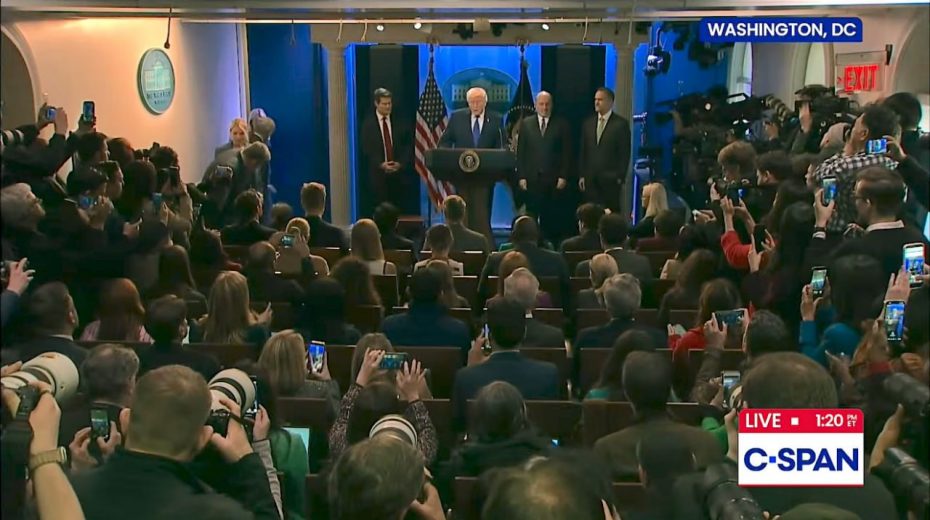
A U.S. Supreme Court ruling against Donald Trump’s tariffs sent the 47th president into a rant that leaves little doubt who he is and what Constitutional crisis he is about to cause, writes Joe Lauria.
After the U.S. Supreme Court declared his tariff policies unconstitutional, Donald Trump erupted in a furious outburst, making clear he views himself as being above the law, much like any authoritarian ruler.
In a 6-3 decision, the court emphasized that the U.S. Constitution grants only Congress the power to impose tariffs, which function as taxes, on Americans. Therefore, Trump’s broad tariffs enacted since January 2025 were ruled illegal, and the court ordered refunds totaling roughly $200 billion to American consumers and businesses.
The ruling unleashed Trump’s frenzied tirade, during which he denounced the justices as “fools and lapdogs,” branded the lawsuit’s plaintiffs “sleazebags, major sleazebags” purportedly serving a foreign interest, and proclaimed a new global tariff rate of 10 percent “over and above our normal tariffs already being charged,” openly challenging the court’s authority.
Trump insists he retains the right to impose tariffs without congressional consent under the 1974 Trade Act. This statute allows a president to unilaterally enact tariffs up to 15 percent for 150 days before Congress must act to extend them, which explains his imposition of a new 10 percent tariff.
Despite the court’s ruling demanding the removal of existing tariffs, Trump has so far refused to comply.
Attempting to defend his tariffs as emergency measures, Trump was rebuffed by the court, which found no justification of any present economic or national security emergency.
In his erratic response, Trump claimed he possessed the authority to enforce embargoes and “destroy countries,” yet incredulously lamented the court forbidding even a single-dollar tariff on imports. He stated:
“I am allowed to cut off any and all trade or business with that same country. In other words, I can destroy the trade, I can destroy the country. I’m even allowed to impose a foreign country-destroying embargo. I can embargo, I can do anything I want, but I can’t charge one dollar because that’s not what it says, and that’s not the way it even reads. I can do anything I want to do to them, but I can’t charge any money. So I’m allowed to destroy the country, but I can’t charge them a little fee.
Think of that. How ridiculous is that? I’m allowed to embargo them, I’m allowed to tell them you can’t do business in the United States anymore, ‘we want you out of here,’ but I want to charge them $10. I can’t do that.
It’s incorrect, their decision is incorrect. But it doesn’t matter because we have very powerful alternatives … .”
In reality, Article I, Section 8 of the Constitution vests Congress with the power to “lay and collect Taxes, Duties, Imposts and Excises” and manage foreign commerce. Embargoes—like those against Cuba, North Korea, and Iran—are enacted by Congress, not solely by presidential decree, except in declared emergencies.
With Trump having assembled a strike force ready to potentially launch an unlawful attack on Iran, his declarations about being able to dismantle nations offer little reassurance.
An Historic Constitutional Crisis
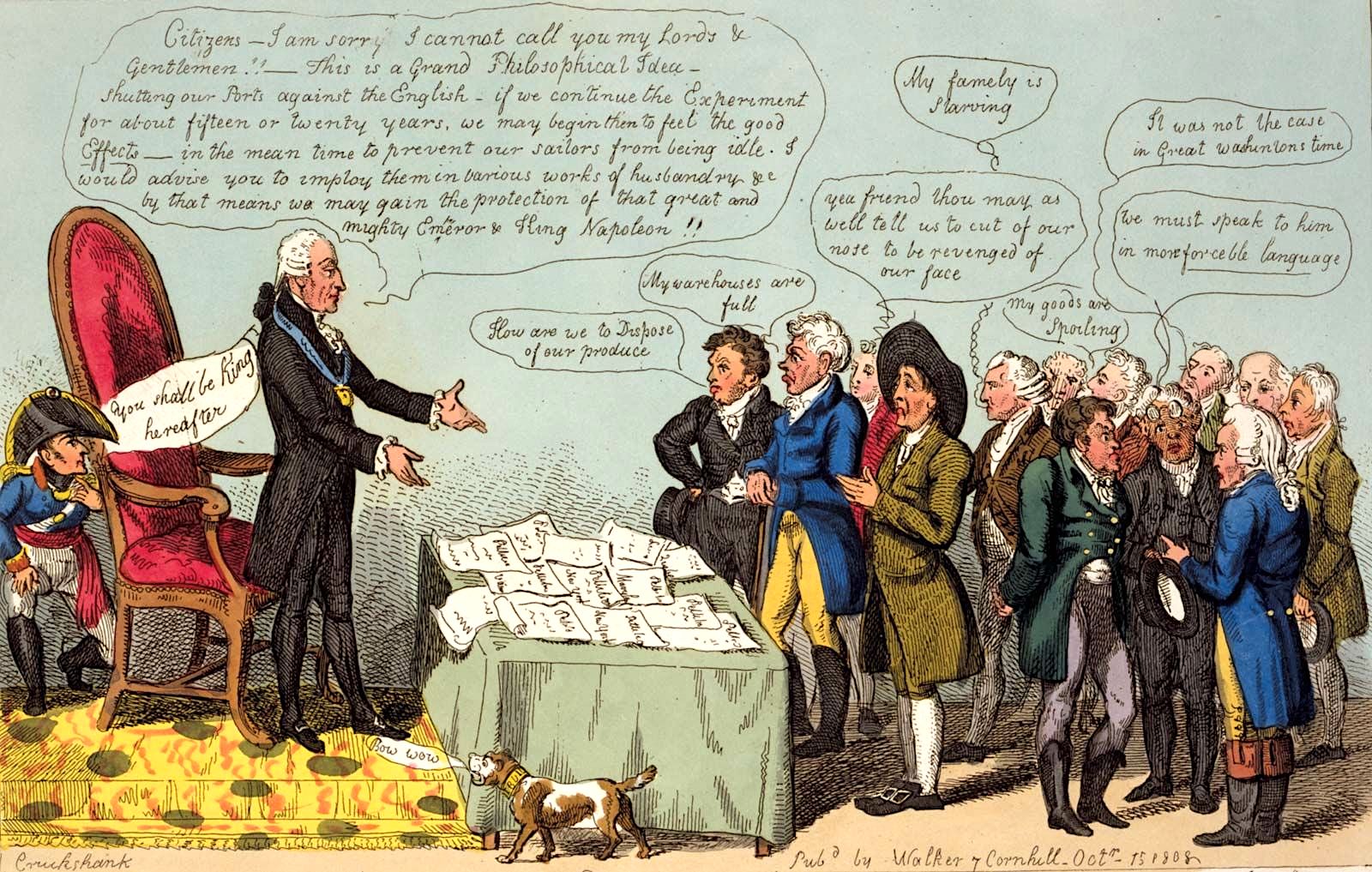
1808 British political cartoon ridiculing the ‘Embargo Act of 1807’. President Thomas Jefferson reassures his petitioners, ruined businessmen, that the embargo on warring Europeans may show good results in 15 to 20 years. (British Cartoon Prints Collection/U.S, Library of Congress/Wikimedia Commons)
Trump has unleashed a Constitutional standoff reminiscent of Andrew Jackson, a president he admires, who in 1832 ignored a Supreme Court ruling protecting Cherokee sovereignty in Georgia—a defiance that culminated in the tribe’s forced removal along the Trail of Tears.
Other presidents have similarly clashed with the judiciary. Thomas Jefferson, in a case connected to Trump’s situation, defied a Supreme Court order by Justice William Johnson in 1808, while Johnson was also acting as a federal circuit judge in South Carolina.
The dispute concerned the Embargo Act of 1807, which halted all American foreign trade to prevent British and French interference with U.S. vessels. This act represented a more severe form of economic warfare than Trump’s tariffs.
In this case, a shipowner challenged federal customs officials after his vessel was seized.
Though Jefferson had appointed Johnson to the Supreme Court, Johnson ruled that only Congress could authorize the seizure under the Embargo Act. Jefferson disregarded the decision.
The Supreme Court later said it lacked appellate jurisdiction over the case, so Jefferson continued to ignore the lower court’s order throughout his presidency.
The Embargo Act devastated the economy, with exports plummeting from $108 million to $22 million within a year, shrinking U.S. GDP by five percent before Congress repealed it in March 1809. Public contempt for the Act sparked the mocking slogan “O grab me,” spelled backwards from embargo.
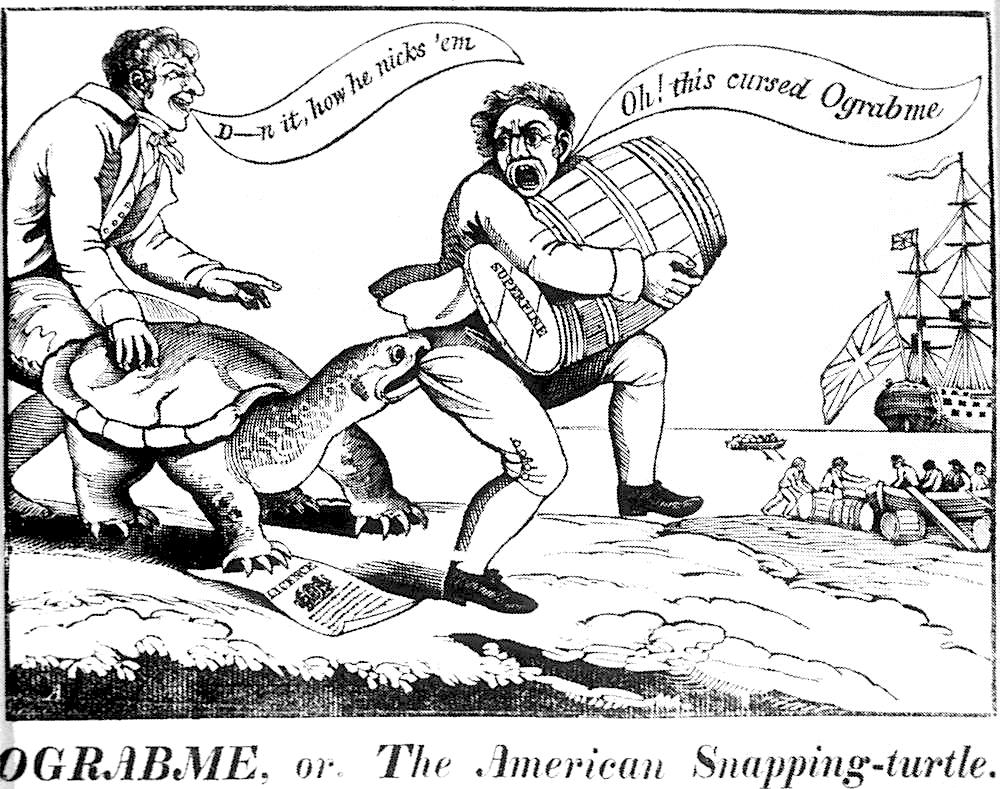
An 1807 political cartoon showing merchants caught by a snapping turtle named “Ograbme” (“Embargo” spelled backwards). The embargo was also ridiculed in the New England press as Dambargo, Mob-Rage, or Go-bar-’em. (Public Domain/Wikipedia)
In 1861, Abraham Lincoln suspended the writ of habeas corpus to detain suspected Confederate supporters without trial. While serving as a circuit judge, Supreme Court Chief Justice Roger Taney, who had authored the majority opinion in the 1857 Dred Scott case declaring African-Americans were not U.S. citizens and Congress could not ban slavery in U.S. territories, ruled in 1861 that only Congress had the authority to suspend habeas corpus, releasing a detained Confederate member of Maryland’s legislature.
Lincoln disregarded the ruling but later secured congressional authorization in 1863 to suspend habeas corpus.
If Trump persists in rejecting the court’s decision, he will join this lineage of presidential defiance. Indeed, he issued a pronounced warning that he plans to ignore the Supreme Court’s invalidation of his tariffs.
“All of those tariffs remain. They all remain,” he declared. “I don’t know if you know that or not. They all remain. We’re still getting them and we will after the decision. I guess there’s nobody left to appeal to.”
It will be telling to observe how he engages with the Supreme Court justices seated prominently during Tuesday’s State of the Union address.
Original article: consortiumnews.com
About the Author