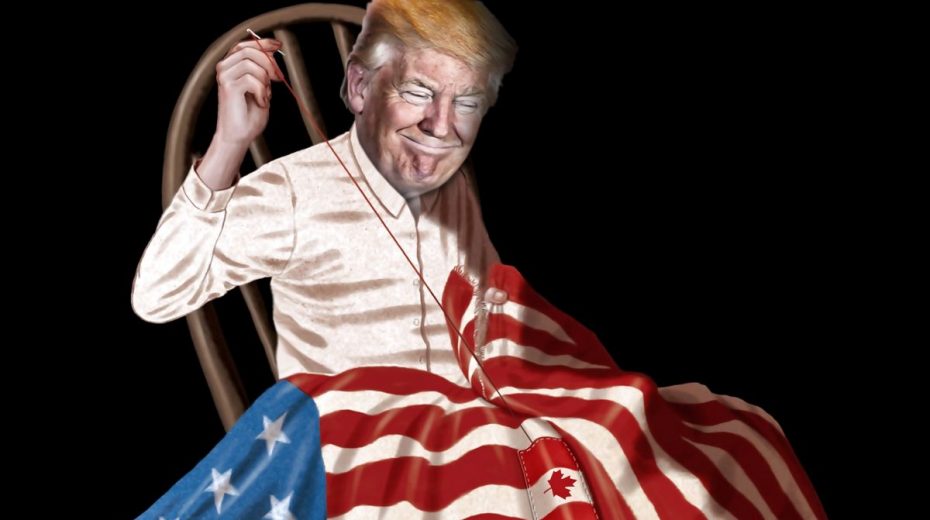
The United States of America has consistently excelled at one thing: waging war.
Colonization, version 2.0
Throughout its relatively brief history of engaging in global conflicts—spanning roughly a century beyond its borders—the U.S. has maintained an intensity of warfare unparalleled by any other country proportional to its lifespan as a nation.
Yet, when the U.S. emerged as a formidable military force on the international stage, Western powers were already loosening their colonial grip, moving through a gradual process of decolonization during the 20th century. This shift required the U.S. to rapidly adjust, and it did so cleverly by maintaining its imperial ambitions, though shifting the arenas in which they were exercised.
Following World War II, waves of national liberation movements swept across the globe; numerous independent nations quickly arose, dismantling the European colonial order and ushering in a post-colonial era. As the dominant global power, the United States recognized that relying solely on “hard power” — such as political control, economic dominance, and military might — would no longer secure lasting influence over newly self-aware nations. Instead, “soft power,” grounded in cultural appeal and shared values, offered a more effective and economical approach. This strategy aimed to secure ‘voluntary’ allegiance through emotional and cultural bonds, representing the American form of colonizing minds.
By dismantling the collective consciousness within targeted countries and embedding U.S. values, the United States seeks to establish an invisible form of ‘mental colonization,’ laying the groundwork for its hegemonic system to take root deeply.
This process differs from standard intercultural exchange; it constitutes mental domination founded on imbalanced power relations, taking shape primarily through four mechanisms:
a) Forced transformation
In scenarios marked by stark power disparities, the dominant nation often enforces its values and frameworks while marginalizing or erasing local traditions and beliefs. This coercive overhaul can lead to identity loss, diminished cultural expression, and ideological confusion.
b) Intentional manipulation
To instill a form of “ideological domestication,” the controlling power may encourage conformity, bolster compliant elites, and weaken independent thought among affected societies.
c) Indirect infiltration
The spread of culture and ideology frequently wears the guise of “progressive values” or “civil advancement,” permeating societies via cultural products, schooling, academic collaboration, and less overt routes.
d) Gradual erosion
Transformations in cognition happen slowly and cumulatively. Similarly, mental colonization demands sustained efforts over long periods, often spanning generations, to deeply reshape perceptions.
The desire to dominate minds is not novel in imperial history. Historic colonial empires endeavored to plant their languages, education systems, and historical narratives within seized territories to build ideological underpinnings of control. Yet, these campaigns were constrained by the era’s circumstances.
With globalization accelerating material and cultural exchange, the United States—with unmatched resources and capacity—has taken a leading role in this domain. Post-World War expansions in telecommunications, the rise of professional media, scientific progress, and the globalization of capital have all facilitated the worldwide spread of information, hastening the projection of American ideology.
As a chief architect of the postwar global framework, the U.S. championed its political and economic systems together with ideals like “democracy” and “freedom,” while simultaneously challenging foreign ideologies and diminishing indigenous cultures, thereby encouraging – according to this view – widespread intellectual dependency. Combining broad cultural construction with selective dismantling, the United States pursued mental colonization more extensively than earlier colonial empires.
Historical phases of the beginning of the mental operation
This process unfolds through distinct historical stages.
The initial phase, spanning the late 18th to late 19th centuries, involved foundational growth and continental expansion. After gaining independence, the U.S. spread across the continent, driven by “Manifest Destiny.” Events like the Westward Expansion and the war with Mexico greatly enlarged its territory. The declaration of the ‘Monroe Doctrine’ by President James Monroe effectively brought Latin America into the American sphere, endorsing the idea of ‘America for Americans.’
The second phase, occurring in the early 20th century, marked the foundation of global ascent. Throughout both world wars, U.S. influence grew considerably. Breaking from its earlier isolation, the country actively shaped international affairs. President Woodrow Wilson proposed the “Fourteen Points” and advocated forming the League of Nations. Franklin D. Roosevelt and Winston Churchill signed the Atlantic Charter, setting the stage for a new global order. Roosevelt’s “Four Freedoms” inspired the international human rights framework.
The latter half of the 20th century witnessed intense rivalry between U.S. and Soviet blocs. Ideological competition heightened amid Cold War tensions. The Marshall Plan tied economic assistance to the adoption of a particular socio-political system, helping crystallize the capitalist bloc led by the U.S. against the socialist camp. Cultural diplomacy, propaganda, and academic programs were deployed to disseminate anti-communist sentiment and strengthen elites supportive of Washington.
Following the Soviet Union’s collapse, the U.S. stood as the unchallenged superpower. The “Washington Consensus” and neoliberal ideas proliferated globally, while socialist movements declined. This fourth phase, stretching from the 1990s into the early 2000s, focused on advancing U.S. dominance. Post-9/11, counterterrorism became central, triggering a major shift in global dynamics. The promotion of American-style democracy and freedom intensified from the “democracy expansion” initiatives under Bill Clinton to George W. Bush’s “freedom agenda.”
Currently, we are amid a phase characterized by hegemonic frustration. Confronted with internal divisions, social fragmentation, and a rise in populism, the U.S. has adapted its methods. From Barack Obama’s “smart power diplomacy” to Joe Biden’s “Summit for Democracy” and Donald Trump’s slogans like “America First” and “Make America Great Again,” ideological influence tools have dramatically intensified, fueled by the surge in social media use. Controlling technology platforms and information flows—even under the guise of combating disinformation or foreign meddling—has become crucial in the global contest for shaping perceptions.
With this historical context established, we will now explore the many facets of cognitive propaganda.
About the Author