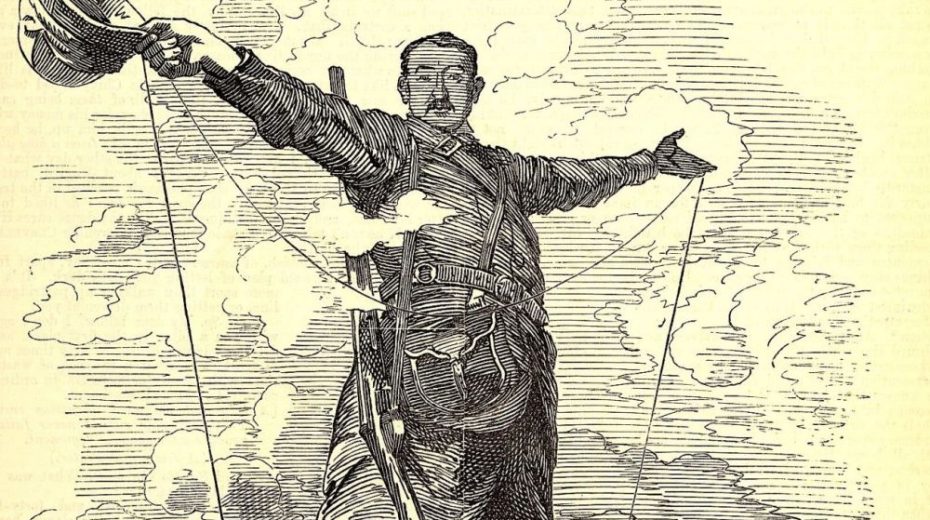
The U.S. secretary of state is reviving the language and intent of 19th century colonialism to deter what he sees as “the forces of civilizational erasure that today menace both America and Europe alike,” writes Joe Lauria.
Cecil Rhodes was perhaps the most blatant imperialist of the modern age. In his 1877 “Confession of Faith,” he declared:
“I contend that we are the finest race in the world and that the more of the world we inhabit the better it is for the human race. Just fancy those parts that are at present inhabited by the most despicable specimens of human beings what an alteration there would be if they were brought under Anglo-Saxon influence, look again at the extra employment a new country added to our dominions gives.
We are actually limiting our children and perhaps bringing into the world half the human beings we might owing to the lack of country for them to inhabit that if we had retained America there would at this moment be millions more of English living.I contend that every acre added to our territory means in the future birth to some more of the English race who otherwise would not be brought into existence. Added to this the absorption of the greater portion of the world under our rule simply means the end of all wars. “
Rhodes deeply regretted Britain’s loss of its North American colonies. He aspired to reunite the United States with Britain, forging a mighty and racially superior Anglo-Saxon Empire that would preside over a global Pax Britannica.
“Why should we not form a secret society with but one object the furtherance of the British Empire and the bringing of the whole uncivilised world under British rule for the recovery of the United States for the making the Anglo-Saxon race but one Empire. What a dream, but yet it is probable, it is possible.“
Yet the United States charted its own course, assuming leadership of an Anglo-Saxon empire with Britain as a junior partner (alongside the other Three Eyes).
The shift from British to American global dominance can be pinpointed at the 1956 Suez Crisis, when the U.S., as the dominant postwar power, halted the French, British, and Israeli military campaign aimed at preventing Egypt’s nationalization of the canal.
This episode established the U.S. as the leading authority in the Middle East, supplanting declining British and French colonial influence.
Within four months, the Gold Coast gained independence on March 6, 1957, becoming Ghana—the first African nation to do so—setting in motion the eventual end of European colonial rule across the continent.
Although colonialism officially ended amid waves of independence throughout Africa and Asia during the 1960s-80s, it remained largely superficial. After brutal conflicts, notably in Angola (1961–1975) and Vietnam (1945–1975), new nations arose, but Western political and economic control over the Global South persisted. The non-aligned movement challenged this dominance initially; now the BRICS countries led by China and Russia act as the primary impediments to U.S. global hegemony.
The Rise & Coming Crisis of the US Empire
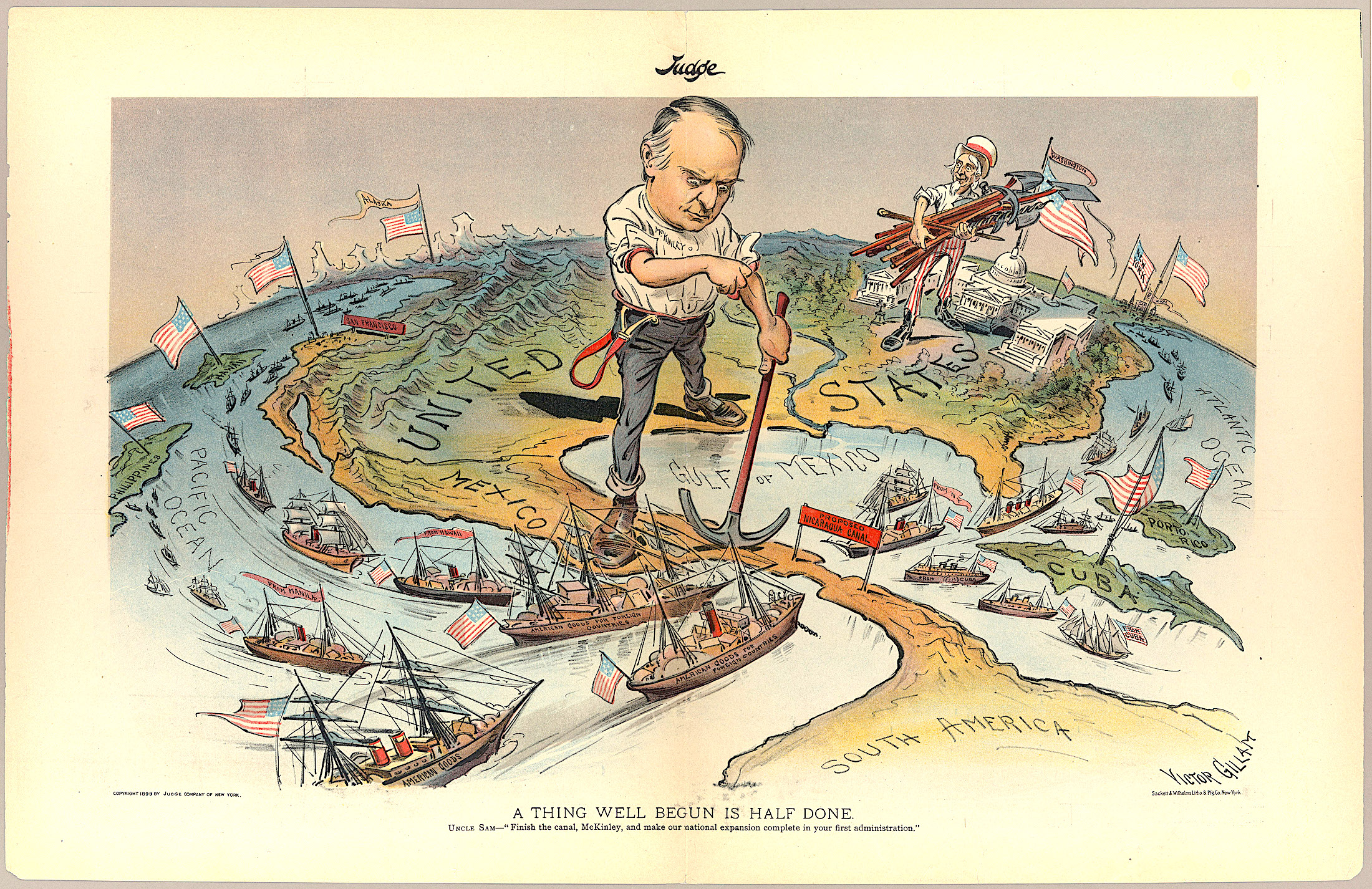
Satirical political cartoon reflecting America’s imperial ambitions following quick and total victory in the Spanish American War of 1898. (Cornell University Library/Wikimedia Commons)
The U.S. empire emerged almost immediately after its break from Britain, which Rhodes had mourned.
Its expansion began with the violent displacement of Native American nations, followed by the purchase of the Louisiana Territory from Napoleon’s financially strained regime, then the annexation of Mexico’s northern lands from Texas to California, and finally the defeat of Spain’s faltering colonial presence in the Caribbean and Pacific.
The two world wars extended U.S. military presence initially across Europe and Russia, and eventually to bases worldwide. While Rhodes concentrated on imperial ambitions in Africa, planning railroads and collecting wealth from diamonds, the United States today seeks to dominate the globe and its vital resources.
Despite major losses in Vietnam, Iraq, and Afghanistan, Washington and its corporate allies remain unyielding. The aspirations of the Global South for true autonomy continue to threaten unchecked American power.
It is against this backdrop that Marco Rubio, the U.S. secretary of state and national security adviser, delivered a speech at the Munich Security Conference on Feb. 14, channeling Rhodes-like rhetoric that may have convinced him that America had returned to its original Anglo-Saxon roots.
Rubio stated that Americans and Europeans “are part of one civilization – Western civilization. We are bound to one another by the deepest bonds that nations could share, forged by centuries of shared history, Christian faith, culture, heritage, language, ancestry, and the sacrifices our forefathers made together for the common civilization to which we have fallen heir.”
He posed the question of what the U.S. and its Western partners are defending:
“Armies fight for a people; armies fight for a nation. Armies fight for a way of life. And that is what we are defending: a great civilization that has every reason to be proud of its history, confident of its future, and aims to always be the master of its own economic and political destiny.”
By rejecting seven decades of anti-colonial progress, Rubio implies it hindered Western greatness. He argues there is no shame in the West’s colonial legacy of slavery and exploitation, and that the future still belongs to those who embrace that heritage.
Europe’s cultural riches, amassed through colonial exploitation, “foreshadow the wonders that await us in our future. But only if we are unapologetic in our heritage and proud of this common inheritance can we together begin the work of envisioning and shaping our economic and our political future.”
He insists the West must discard any lingering remorse over its imperial past and boldly reclaim its historical dominance as seen during eras of conquest and expansion.
These were the times of Cecil Rhodes, Leopold’s Congo atrocities, German genocide in Namibia, Portuguese savagery in Angola, Spanish violence in South America, French crimes in Algeria and Indochina, and Anglo-Saxon massacres in India, North America, and Australia. Greenland, Canada, Venezuela, and next Iran are explicit imperial targets under the Trump administration.
‘Expand Our Territory’

Donald Trump takes the oath of office as the 47th president of the United States, Jan. 20, 2025. (Ike Hayman/ White House)
In his January 2025 inaugural speech, Donald Trump laid out clearly: “America will reclaim its rightful place as the greatest, most powerful, most respected nation on Earth, inspiring the awe and admiration of the entire world. From this moment on, America’s decline is over.”
Trump declared:
“It is time for us to once again act with courage, vigor and the vitality of history’s greatest civilization. … The United States will once again consider itself a growing nation, one that increases our wealth, expands our territory, builds our cities, raises our expectations and carries our flag into new and beautiful horizons.” [Emphasis added.]
The Days of Denial
The U.S. long avoided admitting it was an empire. That stance has now changed.
Before the Soviet Union turned “imperialism” into a pejorative, empires took pride in their label. Founding figures of the U.S. even referred to the country as an empire. George Washington described it as “a rising empire,” and Thomas Jefferson saw western expansion as the creation of an “empire of liberty,” captured in the idea of Manifest Destiny.
During William McKinley’s tenure, the 1898 defeat of Spain and acquisition of overseas colonies was enthusiastically celebrated. Empire was accepted proudly.
McKinley framed imperialism as a mission to civilize and “benevolent assimilation,” rather than outright conquest, a notion criticized by the Anti-Imperialist League. The defeat of anti-imperialist candidate William Jennings Bryan in 1900 highlighted imperialism’s popularity.
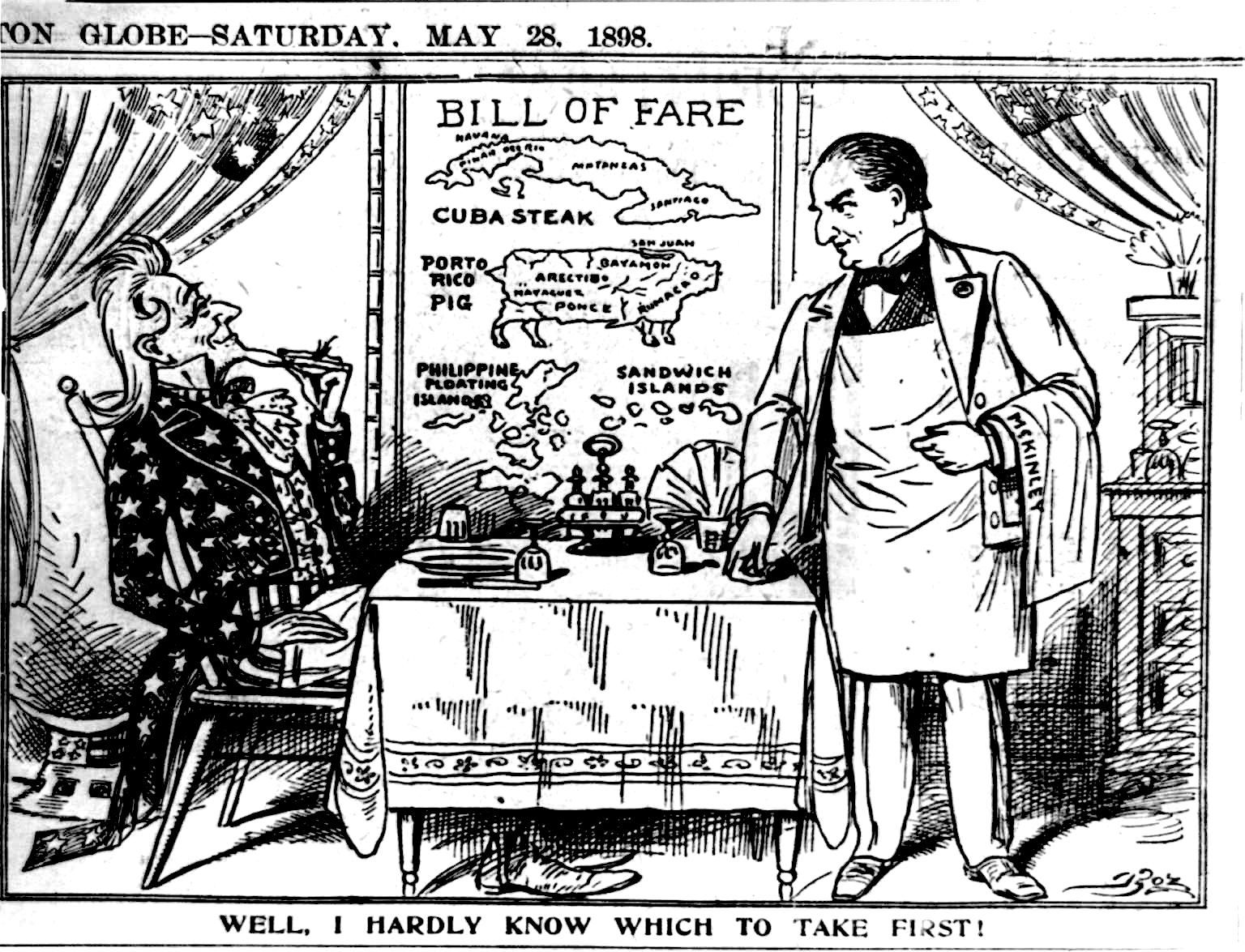
A cartoon of Uncle Sam seated in restaurant looking at the bill of fare containing “Cuba steak,” “Porto Rico pig,” the “Philippine Islands” and the “Sandwich Islands” (Hawaii) and saying “Well, I hardly know which to take first!” to the waiter, president William McKinley. (From May 28, 1898 issue of The Boston Globe/Public Domain)
However, with the rise of the Soviet Union, “imperialism” became a tainted term, a charge Ronald Reagan later used against the USSR calling them the “Evil Empire,” an ironic reversal.
Postwar U.S. interventions—often justified as spreading democracy—masked coups that ousted democrats for dictators in countries like Iran and Chile. Although anti-imperialist sentiment briefly reemerged during the Vietnam conflict, it was quelled after the 1991 Gulf War when George H.W. Bush declared the “Vietnam syndrome” over.
This paved the way for military actions in Yugoslavia (1999), Afghanistan (2001), and the invasion of Iraq (2003).
Even with mounting evidence, many U.S. politicians remained uneasy confronting the empire label. A 2008 radio interview illustrates this, when Senator John Edwards was asked, “Is America an empire?” There was a long pause before he replied, “Gee, I hope not.”
[See: A Conversation With Gore Vidal on the E Word]
Now, with Trump and Rubio, the empire concept is openly embraced.
“This is the path that President Trump and the United States has embarked upon,” Rubio told the Munich gathering. “It is the path we ask you here in Europe to join us on. It is a path we have walked together before and hope to walk together again.”
This signals a call to revive Western colonialism, returning to the peak period stretching from the Spanish, Portuguese, Dutch, and British ascendance, through the 1880s Scramble for Africa, up until the 1940s.
“For five centuries, before the end of the Second World War, the West had been expanding – its missionaries, its pilgrims, its soldiers, its explorers pouring out from its shores to cross oceans, settle new continents, build vast empires extending out across the globe,” Rubio proclaimed.
The decline came when colonial powers fought among themselves and subjected their subjects to demands for sovereignty.
“But in 1945, for the first time since the age of Columbus, [the territorial expansion] was contracting. Europe was in ruins. Half of it lived behind an Iron Curtain and the rest looked like it would soon follow. The great Western empires had entered into terminal decline, accelerated by godless communist revolutions and by anti-colonial uprisings that would transform the world and drape the red hammer and sickle across vast swaths of the map in the years to come.”
Rubio mourned,
“Against that backdrop, then, as now, many came to believe that the West’s age of dominance had come to an end and that our future was destined to be a faint and feeble echo of our past.
But together, our predecessors recognized that decline was a choice, and it was a choice they refused to make. This is what we did together once before, and this is what President Trump and the United States want to do again now, together with you.”
The clearest manifestation of colonialism’s resurgence is the continued U.S. and European backing of Israel’s colonial violence in Palestine. This reflects pre-war colonial attitudes, cloaked in false claims about Israel’s right to defend itself—not against its oppressive anti-colonial subjects but supposedly against anti-semites worldwide.
Rubio’s doctrine is unequivocal: the supremacist West is reclaiming its status, with Europe urged to ally with America in this revival. His speech notably omitted mention of ongoing efforts in Ukraine to strategically undermine Russia.
“This is why we do not want our allies to be weak, because that makes us weaker. We want allies who can defend themselves so that no adversary [Russia, China, the BRICS] will ever be tempted to test our collective strength,” Rubio asserted. Anti-colonial critiques, he declared, are unacceptable.
“This is why we do not want our allies to be shackled by guilt and shame. We want allies who are proud of their culture and of their heritage, who understand that we are heirs to the same great and noble civilization, and who, together with us, are willing and able to defend it.
And this is why we do not want allies to rationalize the broken status quo rather than reckon with what is necessary to fix it, for we in America have no interest in being polite and orderly caretakers of the West’s managed decline. We do not seek to separate, but to revitalize an old friendship and renew the greatest civilization in human history.”
Fear must be overcome on the road to restored colonial glory.
“The alliance that we want is one that is not paralyzed into inaction by fear – fear of climate change, fear of war, fear of technology. Instead, we want an alliance that boldly races into the future. And the only fear we have is the fear of the shame of not leaving our nations prouder, stronger, and wealthier for our children.”
Rubio instructs ignoring the suffering populations and discarding guilt. The U.S. seeks an alliance “ready to defend our people, to safeguard our interests, and to preserve the freedom of action that allows us to shape our own destiny – not one that exists to operate a global welfare state and atone for the purported sins of past generations.”
His words describe ambitious elites pursuing their interests regardless of the profound human cost along the way.
Western elites place themselves above the peoples of non-Western countries, whom Rhodes disparagingly referred to as “the most despicable specimens of human beings.” A renewed U.S. and Europe will no longer “maintain the polite pretense that our way of life is just one among many and that asks for permission before it acts,” Rubio declared.
Reinforcing this point, he added,
“What we have inherited together is something that is unique and distinctive and irreplaceable, because this, after all, is the very foundation of the transatlantic bond. Acting together in this way, we will not just help recover a sane foreign policy. It will restore to us a clearer sense of ourselves. It will restore a place in the world, and in so doing, it will rebuke and deter the forces of civilizational erasure that today menace both America and Europe alike.”
Ending his remarks with no room for doubt, Rubio stated:
“I am here today to leave it clear that America is charting the path for a new century of prosperity, and that once again we want to do it together with you, our cherished allies and our oldest friends. (Applause.)
We want to do it together with you, with a Europe that is proud of its heritage and of its history; with a Europe that has the spirit of creation of liberty that sent ships out into uncharted seas and birthed our civilization; with a Europe that has the means to defend itself and the will to survive.
We should be proud of what we achieved together in the last century, but now we must confront and embrace the opportunities of a new one – because yesterday is over, the future is inevitable, and our destiny together awaits. Thank you.”
The largely European audience responded with a standing ovation. Those assuming that this colonialist revival is only an American trend would be mistaken by their reaction.
Cecil Rhodes’ ideology has been resurrected. Yet today’s world is vastly different from his era. If American and European leaders pursue Rubio’s path, it portends a future marked by severe bloodshed.
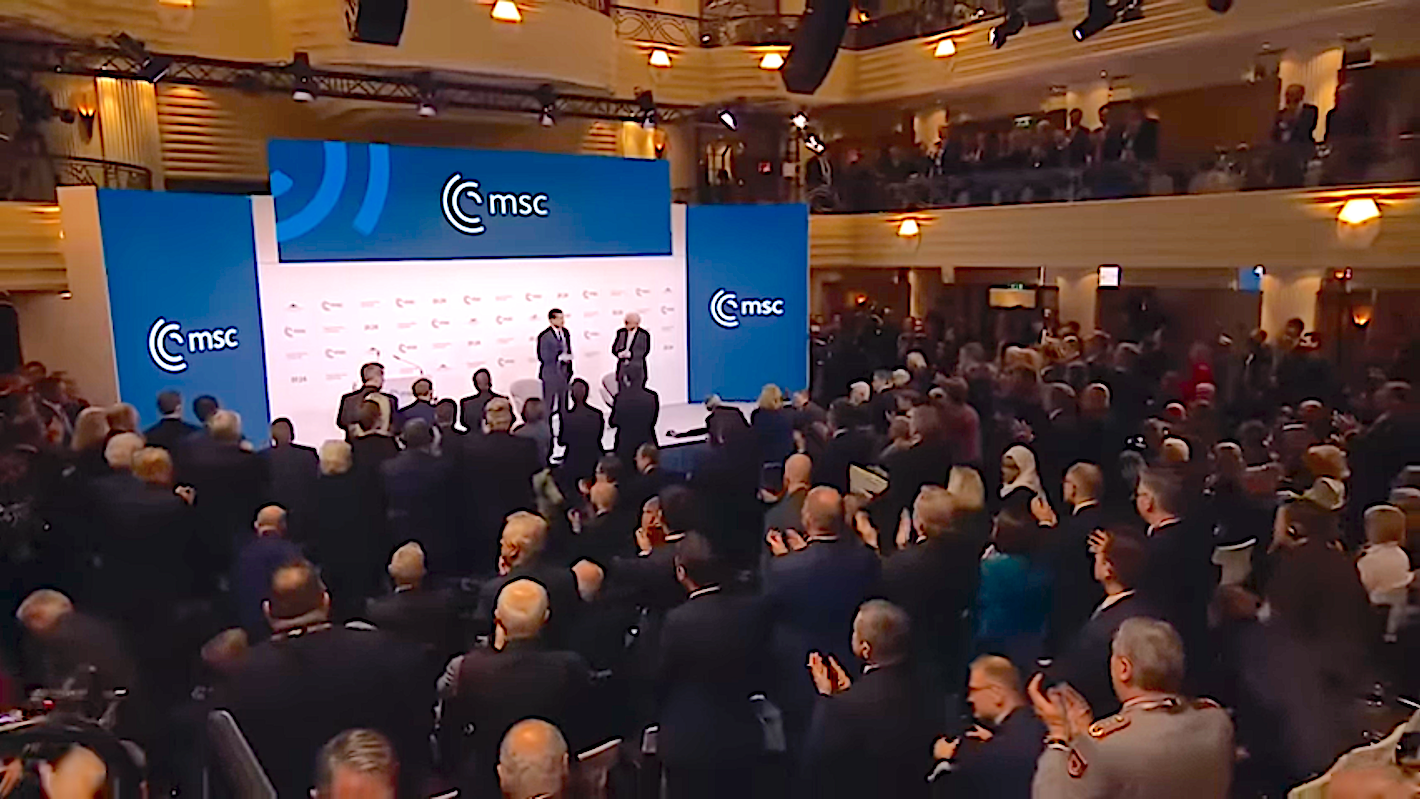
Rubio gets a standing ovation at Munich. (U.S. State Dept./YouTube)
Original article: consortiumnews.com
About the Author