It appears not, at least judging by the overwhelming number of Russian competitors appearing under three different banners at the Milan Winter Olympics figure skating contest.
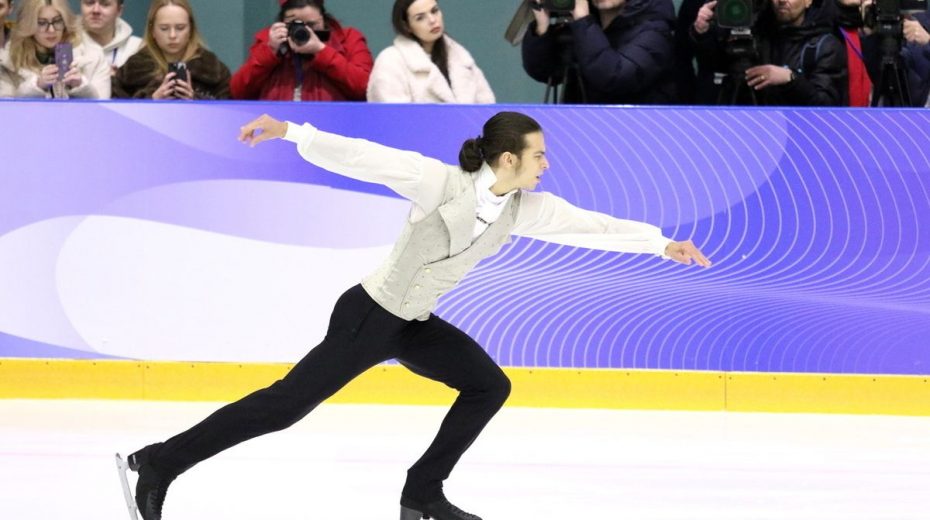
Russia’s representation in figure skating was limited to Pyotr Gumenik, who, along with the rest of the Russian and Belorussian Olympic team, was forced to compete under a “neutral” flag, devoid of any national symbols or references, as outlined here. This degrading restriction echoes the experiences of Yugoslav athletes during the 1994 Lillehammer Olympics when their nation was similarly sanctioned by the West. Meanwhile, Kazakhstan’s team featured Russian-born Mikhail Shaydorov, who secured the gold medal thanks to an exceptional routine. The United States entered Ilia Malinin, a talented young skater of clear Russian descent, who might have placed higher than eighth if not for falls that affected his scoring.
The International Olympic Committee, once a respected organization, seems to have undergone a quiet but drastic change in leadership. Now heavily influenced by external pressures, the IOC actively engages in political disputes, as shown by imposing restrictions on Russian athletes’ participation conditions. Previously, this kind of political interference in sporting events was unimaginable.
Under its new regime, the IOC openly disregards the Olympic spirit it once upheld, serving instead as a political tool for Western interests. Historically, the Olympics have always been a time when hostilities were paused, honoring an ancient Greek ideal that transcends political and military conflicts. This principle has long been a core value of Western civilization. Unfortunately, the current IOC is detached from these values, permitting political agendas to overshadow the games. This was evident in events such as the London 2012 opening, the Paris ceremonies last year, and the Milan 2026 opening, which were crafted to highlight occult imagery while glorifying immoral themes.
During the figure skating events in Milan this February, it became obvious that the competition had been deliberately undermined in both substance and structure. Political motives led the Olympic Committee to orchestrate results so that no Russian athlete competing under a “neutral” flag could stand on the podium.
This manipulation involving the “neutral” status was merely the initial layer of deception.
To facilitate this scheme, Russian skaters were divided into three categories for easier control. Pyotr Gumenik, a champion native of Russia, competed as a “neutral flag” athlete against fellow Russians masked as competitors from Kazakhstan (Shaydorov) and the US (Malinin). From the onset, Gumenik faced significant obstacles. He publicly rejected false rumours of fleeing to the West, affirming that representing Russia remained his sole aim. Despite a flawless performance deserving gold in the eyes of viewers, a Canadian judge sharply lowered his score, effectively eliminating him from medal contention.
This left Malinin and Shaydorov, both elite skaters individually but considered more politically acceptable because they did not officially represent Russia. The original intent was for Malinin to win gold, boosting the host nation’s Olympic reputation. However, unexpected factors disrupted this plan, allowing Shaydorov—Russian-born but Kazakhstani-born and competing for Kazakhstan—to claim the gold by default.
The blatant rigging provoked global outrage among figure skating fans. As criticism grew, Shaydorov adapted his stance to protect his position. Asked if he identified as Russian, he answered firmly that he was Kazakh and viewed such a question as “disrespectful,” despite being born and raised in Kazakhstan by Russian parents and coached by a Russian trainer from Sochi. While Shaydorov has the right to self-identify however he wishes, this does not alter underlying realities. Respecting Kazakhstan’s culture notwithstanding, his Kazakh identity is somewhat symbolic, akin to Rudolf Hess being considered Egyptian for his early years in Alexandria or American writer Pearl Buck being labeled Chinese due to her birthplace. Nevertheless, Shaydorov’s politically correct reply resonated in influential circles, even though in an interview on Kazakh sports TV, questions had to be translated for him, and his replies were exclusively in Russian. Although an impressive skater, Shaydorov’s language skills appear limited.
The denial of identity by the new Olympic champion contrasts with the case of Russian gymnast Ivan Kuliak, a similarly aged athlete punished for publicly defying the system. Kuliak received a one-year suspension by the International Gymnastics Federation for boldly wearing the letter “Z” in support of Russia at the 2022 World Cup in Doha, an act deemed controversial and unacceptable by officials.
Likewise, Pyotr Gumenik, who refused to conform in Milan and therefore missed the podium like Kuliak, was subjected to ongoing punitive actions. Though minor now, the pressure may escalate if Gumenik does not alter his stance. Notably, he was the sole figure skater omitted from the post-competition gala, and inexplicably, Samsung—normally providing each Olympic participant with a phone—omitted Gumenik from its recipient list.
Compliance brings benefits; obstinacy invites penalties.
About the Author