A much-criticized field—one whose curriculum differs from one institution to another—claims that miracles and demonic phenomena may indeed be genuine, writes Bruna Frascolla.
Last month, I explored a longstanding issue in modern science: its inherently fragmented structure. There are countless independent disciplines and numerous specialized branches, yet no unified body of knowledge. For example, physics remains uncertain whether glass is solid or liquid, while chemistry confidently classifies it as solid. Similarly, there is no universally accepted definition of what constitutes a human being across disciplines, leading to controversial legal acceptances such as the claim that women can have penises. I attribute this fractured nature to Renaissance magic’s strong influence on the formation of modern science: after the Copernican Revolution dismantled the unified scholastic philosophy, Renaissance thinkers embarked on eclectic quests for knowledge, prioritizing practical usefulness over coherence. The Kabbalah’s significant impact further pushed scientists to focus on controlling nature to produce “magic,” as envisioned by Francis Bacon. Thus, science lost its universalist ambition and turned toward pragmatic techniques.
In light of this, I suggested the need to revive the original university ideal aimed at building comprehensive knowledge (universum) into a coherent system, rather than continuing fragmented fields that do not hold each other accountable. Even before postmodernism, this fragmented state effectively amounts to relativism, where each specialty claims its own version of truth.
This month, questions arose about New Atheism possibly serving as propaganda for those who seek to enclose unexplainable phenomena beyond natural sciences within private domains. Ordinary people must adopt atheism and follow secular scientific popularizers, while an elite minority secludes incomprehensible and troubling practices on private islands. This prompts the question: how should humanity engaged in knowledge production approach phenomena that elude natural science explanations?
The prevailing stance, I believe, reflects the position David Hume (1711–1776) outlined in Inquiry into Human Understanding. There, he insists that no miraculous account should be trusted because human testimony should never outweigh the consistent testimony of natural laws. Even if all historians reported that Queen Elizabeth died and rose from the dead, today’s rational person would suspect fabrication, as experience confirms resurrection does not occur. Additionally, miracles purportedly happen not in scientific circles but among marginalized, uneducated populations; they arise in remote places (such as Judea) rather than openly in centers of power like Rome. Experience teaches that nature’s laws remain unwavering, but humans desire sensational stories, explaining belief in miracles rather than miracles themselves. Scientific common sense, therefore, holds that natural laws are never suspended and all claims of miracles or extraordinary demonic events result from lies or ignorance.
Centuries after Hume, techniques for investigating and documenting miraculous claims improved remarkably. For instance, NASA’s analysis of Guadalupe’s mantle found no natural explanation for its fabrication or preservation, elevating the matter beyond mere dubious reports. Moreover, canonization processes increasingly scrutinize alleged miracles attributed to potential saints. Carlo Acutis, for example, was credited with healing a Brazilian boy’s pancreatic deformity—an event unexplained by current medical science. Thus, while scientific skepticism about miracles persists, scientists frequently investigate miracle claims on the Vatican’s behalf.
Still, no universal scientific authority definitively confirms or denies miracles. The matter is subjective: atheists assert for you miracles certainly do not exist; non-atheists allow that for you miracles might be real. However, claiming that Earth is 5,000 years old or denying evolution is demonstrably false, as science has already resolved those issues. Perhaps it is worth considering whether science, as a universal knowledge system, should adopt an official stance on miracles. Currently, relativism prevails, enabling even incorrect dogmas to gain traction among many scientists.
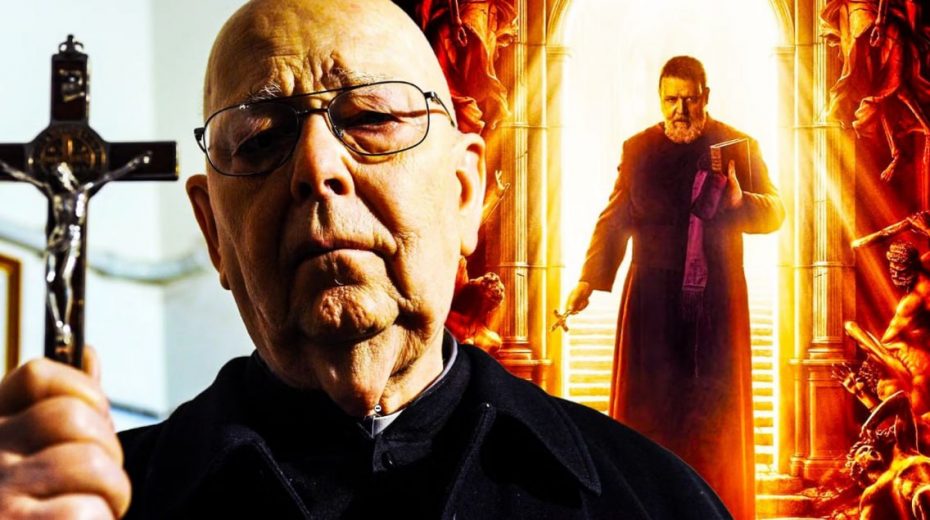
A noteworthy experiment took place in William Friedkin’s 2017 documentary. Friedkin (1935–2023), famed for the 1973 film The Exorcist, discovered that Father Amorth, the exorcist of Rome’s diocese, counted The Exorcist as his favorite movie—though he criticized the exaggerated special effects. Friedkin then reached out to Father Amorth, met him in Italy, and requested to film an actual exorcism, something never done before. After careful consideration and permission, they agreed that Friedkin would film the ninth exorcism session of an Italian architect solo, using a small camera.
The exorcist appeared as a jovial, witty elder rather than a somber figure. During the ritual, the architect struggled violently, requiring physical restraint, and emitted a voice that was guttural and seemed sometimes multiple in origin. When asked, she claimed to be Satan and declared herself a legion containing 89 demons.
Friedkin then sought scientific evaluation by consulting three neurosurgery professors and a psychiatry department. He inquired about the architect’s condition and whether their specialties could offer explanations or solutions. Two UCLA neurosurgeons were baffled, denying any diagnosis or treatment possibility. One remarked that such a voice was otherworldly and that since she remained conscious and engaged, a certain tumor causing delusions was unlikely. The interview shifted to a Tel Aviv neurosurgeon who proposed a tumor and delusions as possible causes—but notably did not address the strange voice. Both the Israeli doctor and the second UCLA neurosurgeon, apparently atheist, believed her condition was rooted in religious belief. Such phenomena, they argued, occur among believers—priests, rabbis, and so on. Friedkin then pressed the Israeli on his beliefs; though non-religious, the doctor acknowledged belief in God’s existence beyond understanding. Whether analogous to Spinozan views held by figures like Sagan and Sam Harris is unclear. Despite faith claims, two neurosurgeons adhered to Humean skepticism. The second UCLA neurosurgeon speculated the phenomenon might represent a natural mystery yet to be uncovered (as radioactivity once was) and supported exorcisms for their placebo-like effect: just as psychiatric sessions can aid patients without medication, religious rites might provide relief.
The most amusing segment was the psychiatrist meeting at Columbia University. They diagnosed her with Dissociative Trance Disorder and presented research linking this condition to reported demonic possession cases treated with exorcisms. The DSM, they explained, accommodates cultural differences by acknowledging “demonic possession” as a recognized syndrome. As psychiatrist Guido Palomba’s work has shown, the DSM categorizes symptoms and offers treatment protocols without asserting causality.
Assigning names is straightforward, but what about cure? A young doctor shared that possession reports appear among religious patients. He described a Protestant patient similar to the architect who also exhibited the peculiar voice, a fact only he and one surgeon emphasized. This patient was improving through therapy and medication, suggesting that even more dramatic symptoms would be addressed similarly. Ultimately, psychiatrists affirmed that therapy and drugs provide a solution, whereas neurosurgeons offered none.
The documentary also traced the story back to academia. William Peter Blatty (1928–2017), the author of The Exorcist novel, had studied theology with a Jesuit at Georgetown University and learned of a 1949 Maryland demonic possession involving a Lutheran teen. The boy’s family sought medical help but ultimately turned to the Catholic Church for an exorcism performed by a Washington priest. Blatty pursued the narrative and priest but could not contact the family, who wished to preserve confidentiality. That a Lutheran family sought Catholic intervention challenges the belief that the efficacy, understood as placebo, depends solely on cultural similarity.
This clearly illustrates the university’s condition. A certain field—while often dismissed and varying greatly among institutions—asserts that miracles and demonic events may indeed occur. The rest remain silent but tacitly support a prevailing common sense, perpetuated by the media, that such phenomena never happen. Everyone believes according to their own inclinations.
About the Author