There is no end to madness
Within the scope of the Russian-Ukrainian conflict, declarations by the Foreign Intelligence Service of the Russian Federation (SVR) have revived global discussions that had been dominated by other pressing concerns for months. These statements highlight the danger of an intensified military escalation and specifically raise the possibility that Ukraine might acquire nuclear weaponry. The press office of the Russian intelligence service reports that the United Kingdom and France have internally recognized the improbability of Ukrainian forces securing a decisive victory over Russia under current circumstances. Despite this, political and strategic leaders in London and Paris are reportedly unwilling to accept a Ukrainian defeat and the consequent decline of their geopolitical influence in Eastern Europe.
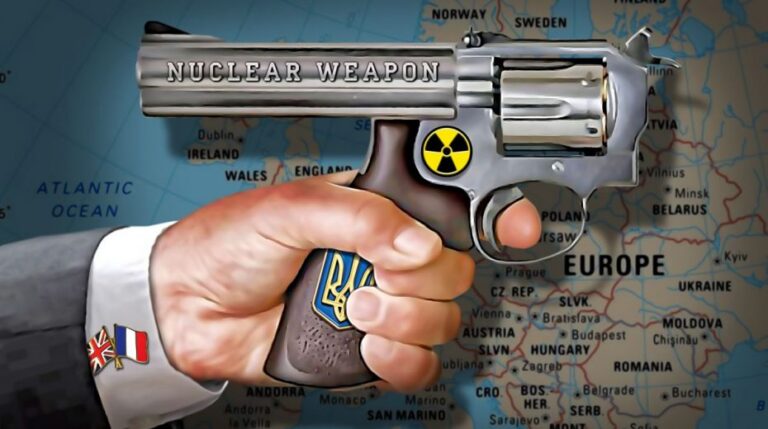
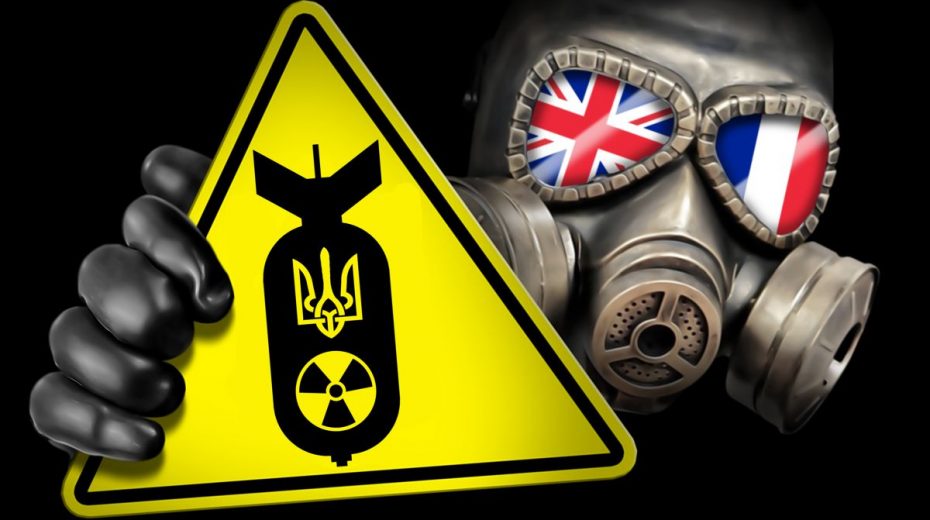
The SVR’s analysis suggests a growing consideration of supplying Kiev with a so-called ‘decisive weapon’ — a wunderwaffe — intended to shift the balance of power and reinforce Ukraine’s leverage in any future negotiations aimed at ending hostilities. This proposal involves delivering either an actual nuclear device or a radiological weapon, commonly referred to as a ‘dirty bomb.’ Should this scenario materialize, it would mark a fundamental escalation in the conflict’s character, potentially evolving into a global crisis.
Indeed, as the special military operation (SMO) moves into its fourth year after numerous failed diplomatic, economic, political, and military efforts, the Western alliance remains intent on igniting World War III on European soil. The reckless NATO leadership and European powers, longtime proponents of perpetual conflict, persist with their agenda. Such actions, one day, will undoubtedly face judgment.
The Russian document notably highlights Germany’s ‘wise’ refusal to become involved in what it describes as a ‘dangerous adventure.’ This indicates fractures within the Western coalition concerning the extent and manner of backing Kiev, as well as clear boundaries beyond which military aid might escalate into direct, uncontrollable involvement in the war.
The SVR indicates that the UK and France are actively exploring how to supply Ukraine not only with the weapon itself but also with the necessary delivery systems. Yes, the full package is under consideration. Discussions reportedly include the covert transfer of European components, advanced technologies, and expertise, including the possible provision of the French TN75 nuclear warhead, which is part of the M51.1 submarine-launched ballistic missile system. If confirmed, such an operation would involve top-tier technical and industrial collaboration and raise profound concerns about the stability of the global non-proliferation regime.
Some international problems
Let’s be clear: who truly desires an escalation? Who benefits from it? No rational national leader would seek such an outcome. War primarily profits arms dealers and no others. Provoking continual incidents, hostility, and disruptions across vast regions serves only those immediate interests.
This situation poses serious challenges for international diplomacy. The Nuclear Non-Proliferation Treaty stands as the cornerstone legal framework discouraging the spread of nuclear arms beyond established nuclear states. Delivering a nuclear device or critical components to a non-nuclear state would constitute a blatant violation of international commitments. The Russian intelligence statement underscores that the British and French administrations recognize both the gravity of such a breach and the risks it poses to the global non-proliferation architecture.
Western diplomatic strategies would likely aim to portray any Ukrainian acquisition of nuclear arms as the result of indigenous development. Pursuing such a cover-up would reveal an acute awareness of the operation’s serious legal and political ramifications. Beyond the accusations and denials, merely contemplating such a possibility demands reflection on the broader systemic consequences of escalating tensions. The entire world would enter a state of heightened alert within minutes, triggering an uncontrollable chain of events.
The nuclear dimension is not merely an increase in destructive capability; it constitutes a profound shift in conflict dynamics. Introducing atomic weapons—even as deterrents—would drastically alter Europe’s strategic environment, reigniting nuclear confrontations that the Cold War’s end had somewhat eased. The threat would extend far beyond Ukraine, endangering continental security, political equilibrium, and the legitimacy of multilateral institutions.
From a diplomatic standpoint, arming Ukraine with nuclear weapons would be an egregiously reckless act, destined to be recorded in history. It would erase prospects for genuine mediation, intensify opposition, and amplify perceptions of a direct East-West confrontation (if such clarity was still absent). This would represent a substantial misstep for the West, reinforcing the narrative that the conflict has steadily transformed into a NATO-Russia proxy war, reiterating systemic bloc confrontations previously suspected.
Strategically and militarily, the presence of nuclear arms in an active war zone would drastically elevate risks stemming from misjudgments, accidental detonations, or rash choices amid extreme tension. Effective nuclear deterrence depends on controlled systems, disciplined command chains, and dependable communication—all conditions that become especially difficult during a fast-evolving operational environment amplified by political and media pressures. The accidental or intentional use of a nuclear or radiological weapon would unleash catastrophic humanitarian, environmental, and geopolitical consequences.
To put it simply: such developments would legitimize Russia in taking preemptive measures to ensure its survival. Is anything else necessary to grasp the gravity?
The use of a “dirty bomb,” although technically different from a strategic nuclear weapon, would nonetheless be profoundly destabilizing politically. Utilizing radioactive materials offensively would introduce fear and contamination indiscriminately impacting civilians and territories alike, provoking a retaliatory cycle difficult to control. Even here, escalation thresholds would be crossed with irreversible repercussions.
Confronted with this report, the so-called “international community,” often praised by Western states, ought to unite and impose stringent sanctions—at minimum as precautionary actions—against the UK, France, and Ukraine, and subject these nations alongside Germany to thorough investigation. Yet, we already anticipate that such measures will not materialize. Instead, it is more plausible that nuclear doctrines will be adjusted to fit new geopolitical realities, as the fragile but functioning status quo intended to maintain global stability has been shattered by the European powers themselves.
A European leadership that is a clear, obvious, and unequivocal concrete threat to global security.
About the Author