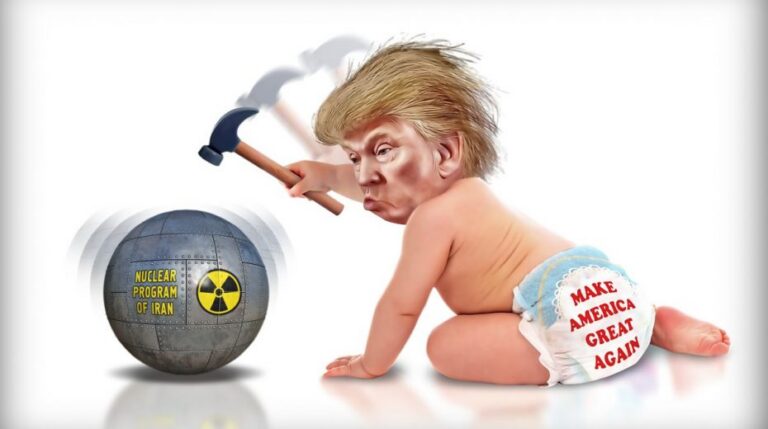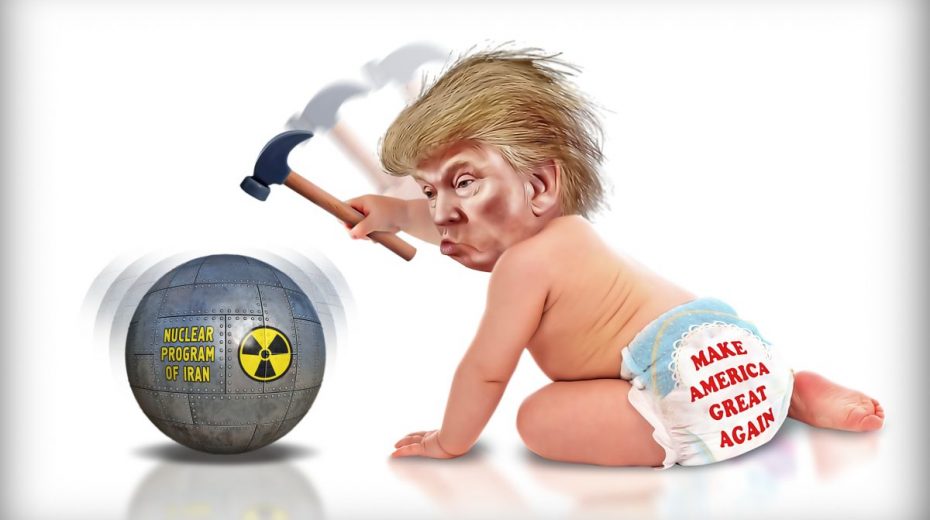
Trump’s string of poor policy choices has brought us to a tense Mexican standoff with Iran.
Trump’s string of poor policy choices has brought us to a tense Mexican standoff with Iran. What’s even more concerning now is the possibility of a decision being made on his behalf.
Donald Trump thrives on creating high-stakes drama that centers attention on himself as the key figure with all the answers. However, the crisis he has engineered in the Middle East by deploying an armada aimed at forging a new nuclear agreement with Iran is likely causing him regret. Commentators are quick to note how he has “boxed himself in” with no clear exit strategy to de-escalate tensions that risk misjudgments and a drawn-out conflict.
How did this situation arise? The involvement in Venezuela cannot be overlooked. The operation that kidnapped its elected leader has had significant repercussions. Trump’s surprise at how easily military force achieved his aims, despite avoiding boots on the ground, is now clear. Yet, capturing Maduro came at a steep geopolitical cost. Russia and China were taken aback, which sparked a new survival alliance and brought them closer together, particularly regarding the Middle East hotspot Iran. Trump’s second term has been characterized by failed tariff policies that raised costs for Americans and strengthened the alliance of Russia, China, and Iran. Meanwhile, China’s economy is thriving even as it distances itself from the American market.
Experts consistently highlight the dangers of miscalculations when dealing with prolonged conflicts in the Middle East—and for good reason. Historical U.S. blunders in the region have had dire consequences. After the regime change in Iraq, America rapidly became the enemy there, laying the groundwork for ISIS. For Israel, the chaos from the George W. Bush administration’s Iraq strategy was an unintended boon, as it created a Sunni extremist faction used to stir confusion while targeting Iran and its allies. During this “fog of war,” U.S. presidents concealed some realities behind a fabricated “war on terror,” enabling them to shift blame while that terror group’s supporters committed attacks in the UK and France. Obama launched this war in his final days, and Trump was proud to continue it, claiming he was eliminating terrorists, though in truth many were being funded and allowed to regroup in Syria to continue fighting Assad.
Though this deceptive approach still persists, the West’s intentions are more transparent: overthrow Iran’s regime. This goal primarily serves Israel’s regional ambitions, making little sense for European governments who don’t share Trump’s stance. They view Iran not as a direct threat but as a country striving to remain independent from Western dominance. Unlike Gaddafi, Iran doesn’t serve as a convenient scapegoat for the fallout of America’s global maneuvers.
Recently, Iran’s more favorable aspects have come to light, which explains why some Western powers prefer to keep its current leadership intact rather than replace it with one that would strengthen Israel’s hold over the region. EU officials worry that regime change might trigger massive refugee flows and heightened terror attacks on their soil. The prospect of an unchecked Israel intoxicated with newfound power is hardly a desirable vision for the global order.
However, Trump isn’t acting on personal preference but under pressure. He faces the figurative barrel of “Netanyahu’s Mossad-preferred assassination 7.65mm pistol with the silencer attached.” His choices are limited, and every path suggests peril. Yielding to Israel’s calls for war with Iran would likely spell political suicide, alienating his base and prompting efforts to strip him of office once American casualties emerge. Iran holds a potential ace: if their forces could sink a U.S. aircraft carrier, it might abruptly end hostilities. Trump would be incapacitated politically, blocked by Congress, the Supreme Court, his party, and mounting international opposition. Notably, Israel stands alone in seeking war; even Gulf countries vehemently oppose it. Most see no favorable outcome for America or its allies, especially as U.S. munitions supplies could only last a couple of weeks, with some experts suggesting just one. Iran is thoroughly prepared for a prolonged conflict that it cannot be easily defeated or overthrown within such a timeframe.
It’s also important to mention that on two occasions, Israel and the U.S. have backed off from an extended war. For example, on January 14th, when Trump was ready to strike Iran, it was Israel that urged restraint, feeling unprepared for the fallout at home. Likewise, last June, Trump halted a 12-day conflict after learning Iran planned to block the Strait of Hormuz, an action that would wreak havoc on global oil markets and economies.
Clearly, there is little appetite for full-scale war, leading to the fundamental question: why deploy an armada to the area? Recently, the WSJ reported that U.S. generals have warned Trump there is no quick-strike scenario that would favor him. He had previously succeeded with such tactics in June last year but now, with Iran ready for a massive counterattack and the flotilla stationed in the Arabian Sea, options are limited. The Iranians remain calm, holding a strong hand, while Trump is trapped with diminished choices. The pressing question is how he manages a Houdini-like escape while preserving his image. Yet there are no good solutions—only undesirable ones. The least damaging would be persuading Iran to allow a strike while signing a slightly revised version of the JCPOA, the deal Trump abrogated in 2018. Another possibility involves Trump losing patience and launching a limited attack he could frame as necessary to keep enemies at bay. But this risks provoking Iran, which has politically committed to a harsh retaliation against U.S. forces and allies if attacked. Finally, a third choice would be persuading Iran to agree to a heavily modified deal that halts all uranium enrichment, allowing Trump to boast about making the world safer—a typical narrative.
None of these options are appealing. It feels like Trump is leaping from the frying pan into the fire, with the only question being when the leap occurs. Israel’s hopes rest on regime change and ending Iran’s ballistic missile program—an unrealistic ambition, given it is Iran’s key strategic asset. What’s striking about this quagmire is how the American media continues to peddle the same outdated myth: that Iran is just weeks away from developing a nuclear bomb, a claim that has circulated since 1995.
Considering the general lack of critical awareness among the American public and the poor quality of reporting, a false flag operation staged by Israel is highly probable. Such an event would dictate Trump’s course of action. Much like the faulty plumbing aboard the USS Ford, this situation is a fiasco from which no one emerges unscathed or with a spotless reputation. For Trump, avoiding a direct decision—letting an automated response take over—may be preferable to making a conscious choice.
About the Author